

 By
Three manufacturers enter Tallinn tram competition
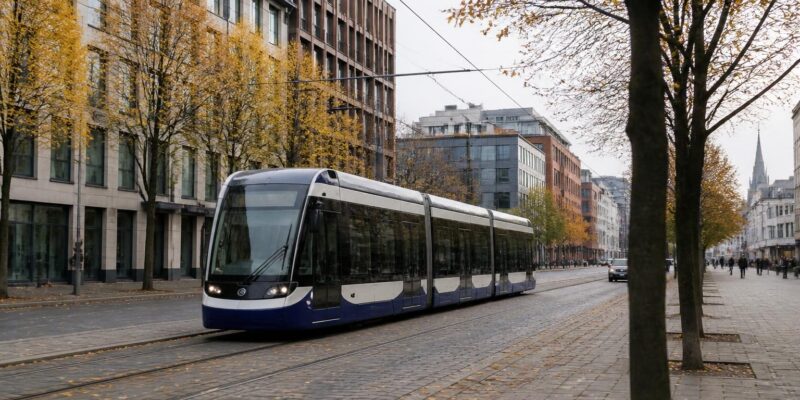
Tallinn’s public transport company, Tallinna Linnatransport, has received participation applications from three manufacturers for a planned purchase of new bidirectional trams. CAF, PESA and Škoda are taking part in the negotiated procurement procedure, according to the city and Estonia’s public broadcaster ERR.
The initial plan is to buy 11 trams, with the possibility of ordering a further 11 vehicles later. The development marks a new step in Tallinn’s effort to modernise its tram fleet and create more flexibility for future extensions of the network.
The procurement is not yet a final contract award. TLT board chairman Kaido Padar said the preferred supplier is expected to be known by 2 February 2027. The first trams are expected to arrive within 33 months of the contract being signed.
Why bidirectional vehicles matter
Unlike most of Tallinn’s current trams, bidirectional vehicles have a driver’s cab at both ends and doors on both sides. This allows them to change direction at a terminus without using a conventional turning loop.
That technical feature can influence how a city designs and builds new tram lines. A line can terminate at a temporary or compact stop while construction continues elsewhere, rather than requiring a large loop at the end of every section. The city says this could make it easier to extend existing routes in stages, save space and reduce some infrastructure costs.
For passengers, the change would not necessarily be visible in everyday travel, but it could affect how quickly new sections are brought into service. Bidirectional trams can also be useful during staged construction or temporary operating arrangements, when a route needs to end before a permanent terminal has been completed.
A network carrying about 20 million annual trips
Tallinn currently operates around 45 kilometres of tram tracks. During peak periods, 46 trams serve the network, and the city estimates that its trams carry approximately 20 million passenger journeys each year.
The new procurement comes as Tallinn is also preparing several infrastructure projects. Tram-track renewal is planned for sections of Narva maantee, Maneeži Street and the Majaka curve in 2027. According to ERR, the summer interruption is expected to affect tram traffic on Narva maantee, while other sections are planned in ways intended to limit disruption.
Fleet renewal and track renewal therefore form two parts of the same urban transport challenge. New vehicles can improve reliability and accessibility, but their benefits depend on the condition of tracks, switches, power systems and stops. The procurement announcement places the vehicle question within that wider programme of maintenance and network development.
Room for gradual expansion
Tallinn’s tram network has expanded in recent years, including the airport connection, while the city continues to consider additional extensions. Bidirectional vehicles would give planners another tool for managing those projects, particularly where space is limited or where a new line is built in stages.
The option for 11 additional trams also leaves room for the fleet decision to develop with the network. The city has not yet identified a winning manufacturer, and the final number of vehicles will depend on the procurement and any later option being exercised.
For now, the immediate development is procedural but significant: three established manufacturers are competing to supply a tram type that Tallinn does not currently use as the standard for its network. The result will help determine how the capital balances fleet renewal, construction costs and the practical design of future routes.























Comments