

 By
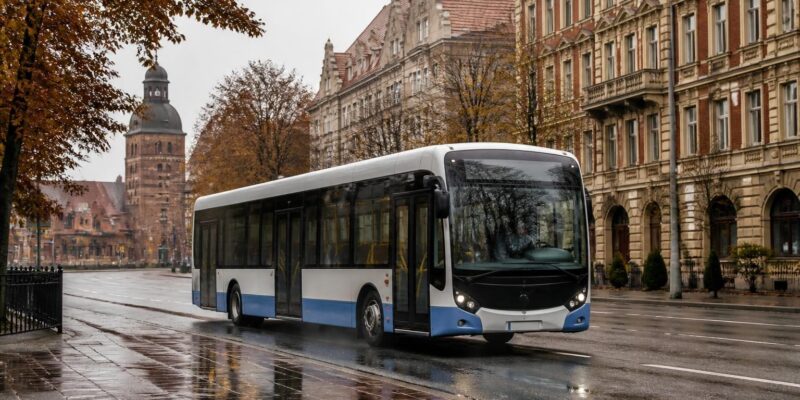
Kaliningrad’s municipal transport operator has expanded a planned purchase of new city buses from 44 vehicles to 52 after the winning bid came in substantially below the initial estimate. The contract, signed by Kaliningrad-GorTrans, is valued at about 849.2 million roubles, with deliveries scheduled by February 2027.
The development was reported on October 28, 2026, by the city administration and local media. It gives Kaliningrad a modest but concrete addition to its public-transport renewal programme at a time when the city is preparing to replace older vehicles and strengthen the municipal fleet.
Eight additional buses within the same procurement
The original tender called for 44 diesel buses in the M3 category, designed for regular urban and suburban passenger services. The starting contract value was approximately 860.5 million roubles. Following the electronic auction, the winning offer reduced the contract price to about 718.5 million roubles.
Under the procurement arrangement, the saving was used to increase the number of vehicles rather than leave the unused funds unallocated. The final contract therefore covers 52 buses, while the reported unit price remains approximately 16.33 million roubles. The city has said that the additional vehicles can be acquired within the existing financing framework and with the supplier’s agreement.
This means that the result of the tender is not simply a cheaper purchase. It also provides eight more vehicles for the city’s transport system without an increase in the announced overall contract value. The procurement is being carried out by Kaliningrad-GorTrans, the city’s municipal carrier.
What the new buses are expected to provide
According to the published tender details, the vehicles are to be low-floor, large-capacity buses suitable for city routes. Each bus is expected to accommodate at least 87 passengers, including roughly 29 to 30 seated passengers.
The specification also includes equipment intended to make daily travel more practical and accessible. The buses are expected to have facilities for wheelchair users, air conditioning, video-surveillance systems and USB charging points. They must be manufactured no earlier than 2026.
These features place the purchase within a broader shift in urban transport expectations. For passengers, fleet renewal is not only about adding capacity. It can also improve boarding for people with reduced mobility, make journeys more comfortable during warm weather and provide basic digital conveniences for longer trips across the city.
Delivery first, route allocation later
The contract is scheduled to remain in force until February 2027. The exact routes on which the additional buses will operate have not yet been announced. Before entering regular service, the vehicles will need to be delivered, registered, insured and equipped for the city’s operating system, including ticketing and tracking technology.
The city previously indicated that newly purchased vehicles would be placed on routes only after the necessary preparation. This approach means that the contract announcement should be understood as a fleet-renewal step rather than an immediate timetable change. Passengers should not expect all 52 buses to appear on the streets at once.
Route allocation will probably depend on operating requirements, vehicle availability and the condition of existing buses. The final decision may also reflect where additional capacity is most needed. At present, the authorities have not identified specific lines for the new vehicles.
A larger order in the context of public-transport renewal
The purchase follows federal and regional support for the renewal of public transport in the Kaliningrad region. Earlier in October, Interfax reported that the region had been allocated more than 685 million roubles in 2026 for the purchase of at least 44 large buses. The latest contract shows how competitive procurement affected the number of vehicles that can be obtained through the available funding.
For Kaliningrad, the practical significance lies in the additional eight buses as well as in the planned replacement of older equipment. A larger municipal fleet can give the operator more flexibility when vehicles require maintenance, demand rises on particular routes or service patterns change.
The purchase is therefore a forward-looking infrastructure measure rather than a one-day service announcement. Its benefits will become visible only after delivery and preparation, but the final contract has increased the scale of the planned renewal programme.
The next milestones will be the production and delivery of the buses, their registration and technical preparation, and the publication of information about the routes that will receive the new vehicles. Until those steps are completed, the most definite result is that Kaliningrad has secured 52 buses where 44 had originally been planned.




















Comments