

 By
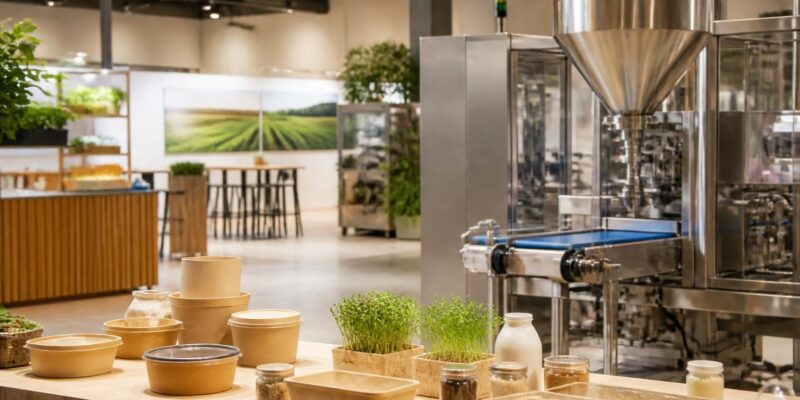
Denmark’s food industry is putting technology under the microscope this week as FoodTech 2026 brings companies, researchers and professional visitors together at MCH Messecenter Herning. The trade fair runs from 27 to 29 October and is presenting practical solutions for one of Scandinavia’s most important industrial sectors.
The event’s organisers say 286 exhibitors are taking part in this year’s edition, which focuses on knowledge-sharing, new products and technologies that businesses can apply in everyday production. FoodTech is held every two years and describes itself as the Nordic region’s leading destination for food technology. ([uk.foodtech.dk](https://uk.foodtech.dk/articles-and-inspiration/article/286-exhibitors-ready-foodtech-opens-its-doors?utm_source=openai))
From factory efficiency to future food
FoodTech 2026 is broader than a conventional equipment exhibition. Its programme covers processing, automation, hygienic design, packaging, labelling, food safety, water use and energy management. The emphasis is on solutions that can help manufacturers improve efficiency while responding to changing expectations around sustainability, traceability and resource use.
A dedicated Food Life Science programme is examining how emerging technologies could influence the next generation of food production. Topics include artificial intelligence, digital twins, cultivated meat and alternative protein sources. These subjects are often discussed in abstract terms, but the Herning programme is designed to connect them with production challenges and commercial applications.
One example is the demonstration of digital twins alongside industrial artificial intelligence. Such systems can create a digital representation of production processes, allowing companies to monitor performance, test adjustments and identify possible improvements before changing a physical line. The fair is also presenting technology based on microorganisms, carbon dioxide and electricity as part of a wider discussion about alternative ways to produce protein.
Water, energy and packaging receive equal billing
The event’s practical character is particularly visible in its Water & Energy Stage. Presentations are addressing energy efficiency, flexible energy consumption, lower water use and alternative water sources. For food manufacturers, these are not only environmental questions but also operational issues connected with costs, resilience and compliance.
Packaging and labelling have their own area and conference programme. Organisers say the sessions will address traceability, two-dimensional barcodes, the Machinery Regulation and the development of circular packaging. Food safety is another central theme, with professional presentations on hygienic design and food-contact materials.
This combination of production technology and resource management reflects the structure of Denmark’s food cluster, where companies, research organisations and public institutions often work closely together. Food Nation Denmark presents FoodTech as a place where businesses can meet suppliers, potential partners and specialists working on more efficient and resource-conscious food production. ([foodnationdenmark.com](https://foodnationdenmark.com/events/foodtech-2026/?utm_source=openai))
A trade fair with a taste of the industry
FoodTech also retains a strong connection with food itself. The International Food Contest is being held alongside the exhibition, with approximately 1,100 dairy products entered for professional assessment. Visitors can follow the judging process and see the products selected for recognition in the Nordic dairy sector.
The programme includes a World of Beer area, where breweries, technology suppliers and industry experts are exploring flavour combinations involving beer and cheese. While these activities add a consumer-friendly element, they also underline the relationship between production technology, quality control and the final eating experience.
Organisers have additionally created a startup area where entrepreneurs can present new ideas to investors and established food companies. A 3D-printing area and a national competition for vocational students are intended to connect technical skills and education with the needs of the food industry.
Why the event matters beyond Herning
FoodTech is a professional event rather than a public food festival, but its themes have a direct bearing on everyday life. More efficient production can support food availability and business competitiveness. Better traceability can strengthen confidence in supply chains. Lower water and energy use can reduce pressure on resources, while new protein technologies may broaden the range of products available in the future.
The fair also offers a snapshot of how the Danish food sector is approaching change: through demonstrations, partnerships and applied knowledge rather than a single technology or grand promise. The central message from Herning is that the future of food will be shaped not only in laboratories, but also on factory floors, in packaging rooms and through cooperation across the supply chain.


















Comments