 By
A landfill becomes an outdoor classroom
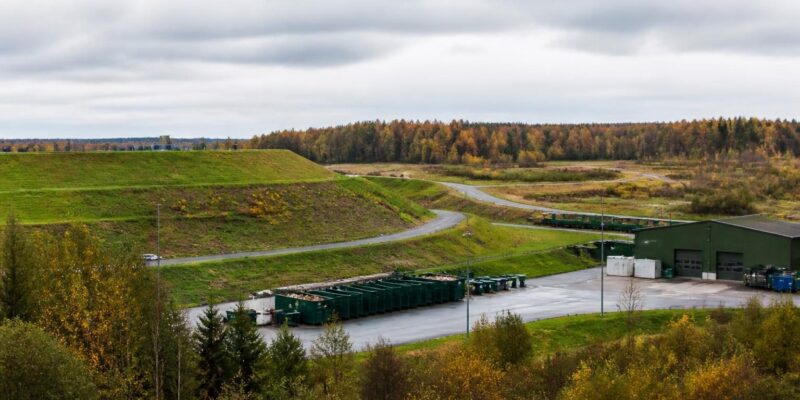
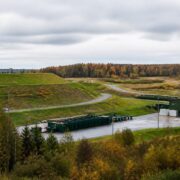
A waste-management site in Latvia’s Dienvidkurzeme region has begun offering educational tours designed to show children and families what happens after household rubbish leaves the bin. The initiative at the Ķīvītes landfill, operated by Liepājas RAS, combines a guided visit to the facility with a short ride on a tourist train and a stop at the company’s “Museum of Undervalued Things”.
The first school-focused tour took place on Friday, 20 November 2026. A public session for families and individual visitors is scheduled for Saturday, 21 November, with another pair of tours planned for 4 and 5 December. The programme is being offered as a practical way to discuss waste sorting and consumption without relying only on classroom explanations or campaign posters.
Seeing the process behind the bin
During the 45-minute tour, visitors can travel through the industrial area, learn how different waste streams are handled and go up onto the landfill mound. The mound has been forming since 2004 and is roughly as high as a seven- to nine-storey building, according to Latvian public broadcaster LSM. Its scale gives visitors a direct sense of the material volume created by everyday consumption.
The organisers are presenting the visit not as a spectacle, but as an opportunity to make an invisible process visible. Most people encounter waste only at the moment it is placed in a container. At Ķīvītes, the tour follows the next stages: collection, sorting, biological treatment, energy recovery and final disposal for materials that cannot be usefully separated or recycled.
That approach is particularly aimed at younger visitors. Pupils who took part in the first tour told LSM that seeing the amount of waste in one place made the importance of sorting easier to understand. Their teacher described the practical experience as memorable because it connected environmental responsibility with a physical location rather than an abstract instruction.
From waste treatment to energy production
Ķīvītes is the only landfill serving the Dienvidkurzeme waste-management region. Liepājas RAS says the facility has operated for more than two decades and has produced biogas for the past three years. Food and green waste can be processed into gas, which is then used to generate electricity and heat.
According to figures reported by LSM, the site accepted about 35,000 tonnes of waste last year. More than 6,000 tonnes were sent for burial, a volume reported as 64 percent lower than the previous year. At the same time, the amount of sorted waste increased by 32 percent compared with 2024.
The company also reported that the landfill generated 1.74 million kilowatt-hours of electricity during the year. Around 89 percent of that production was used for the facility’s own needs. These figures give the educational programme a second dimension: the site is not only a destination for unwanted material, but also part of a regional system for recovering energy and separating resources.
A small public programme with a wider purpose
Liepājas RAS has long used Ķīvītes for environmental education. Its public information programme covers household waste management, the role of a modern landfill, landfill-gas collection, renewable energy, leachate treatment and the correct use of sorted-waste collection points. The company also runs activities, competitions and lessons linked to reducing waste at source.
The new train-based tours add a more accessible format for families. Places are limited to 28 participants per trip, and advance registration is required. The contribution is €2.50 for adults and €1.50 for children who require their own seat. The meeting point is the Liepājas RAS customer service centre at Ķīvītes in Grobiņa parish.
The “Museum of Undervalued Things” is intended to reinforce the message that objects discarded as rubbish can sometimes have another use, a story or a material value. In that sense, the excursion links three questions that are often treated separately: what people throw away, what can be recovered and how habits can change before waste is created.
Connecting regional policy with daily habits
Latvia, like other European Union member states, is working to reduce the amount of unsorted waste sent to landfill. Liepājas RAS says it is working towards the EU target for 2035 under which only 10 percent of unsorted waste should reach landfills. Achieving that goal depends not only on infrastructure and industrial processes, but also on decisions made in homes, schools and workplaces.
The Ķīvītes tours offer a modest but concrete response to that challenge. They do not present waste management as a distant technical issue. Instead, they invite residents to see the machinery, the landscape and the energy system connected to their own household bins. For the families and pupils taking part this weekend, the lesson begins with a train ride—but ends with a more precise understanding of what “sorting” actually changes.



Comments