

 By
From promising research to usable technology
Germany will turn its attention to the practical side of innovation this week as the Digital Technologies Days take place in Berlin on November 9 and 10. The two-day event is designed to connect research, industry and public institutions around a question that is increasingly important for the country’s economy: how can new technologies move more quickly from promising research projects into products, services and everyday applications?
The event is part of the Federal Government’s High-Tech Agenda Germany and is being hosted by the Federal Ministry of Research, Technology and Space. The agenda’s official website lists the Digital Technologies Days as a current programme highlight and says the meeting will address key technologies and topics linked to the national innovation initiative. A company participating in the programme describes the central theme as “Today’s Research for Tomorrow’s Value Creation”.
A broad technology portfolio
The programme is expected to reflect the breadth of Germany’s current technology policy. The High-Tech Agenda identifies artificial intelligence, quantum technologies, microelectronics, biotechnology, fusion and battery technology as six priority areas. These fields sit at different points on the path to commercial use, but they share a need for long-term research, specialist skills, investment and cooperation between universities, companies and public agencies.
That combination makes the Berlin meeting relevant beyond the technology sector itself. Artificial intelligence and robotics are already being tested in manufacturing and services. Quantum technologies remain a research-intensive field, but companies and universities are developing early applications in computing, sensing and simulation. Battery technology connects laboratories with transport, energy storage and industrial production. Microelectronics and biotechnology likewise depend on a close relationship between research infrastructure and commercial partners.
The difficult middle stage of innovation
Many innovation strategies are strongest at the beginning and the end of the process: research funding supports new ideas, while established companies can eventually bring successful products to market. The more difficult stage is often the middle, when a prototype must be tested, improved, certified, financed and adapted to the needs of customers.
The Digital Technologies Days are intended to focus on that transition. According to the event information published by participating technology company asvin, the programme will examine how digital technologies can move more quickly from research into business and daily life, as well as which framework conditions can help that happen. The schedule includes discussions on generative artificial intelligence, humanoid robotics, quantum computing and digital battery-cell manufacturing.
This emphasis on application gives the event a practical economic dimension. Research results create value only when organisations can use them reliably and at a viable cost. That requires more than technical performance. Companies need access to skilled workers, suitable data, testing facilities, capital and customers willing to adopt new solutions. Smaller firms in particular may need partnerships with universities, larger industrial groups or public-sector users to bridge the gap between experimentation and scale.
Berlin as a meeting place
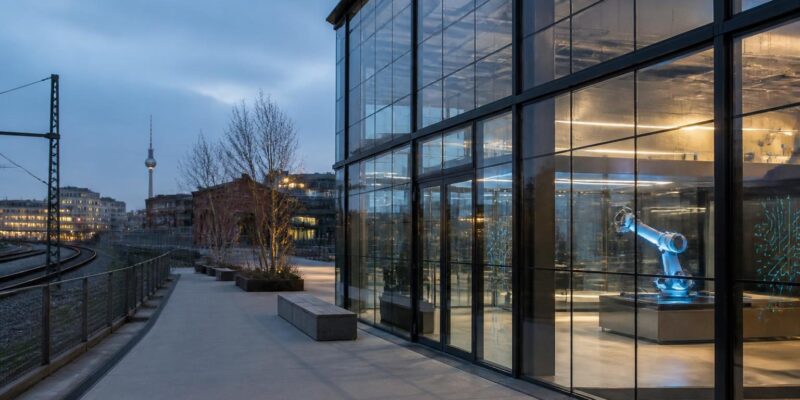
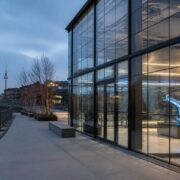
Berlin is hosting the event at the Westhafen Event and Convention Center, according to the programme information published by a participating company. The venue reflects the city’s role as a meeting point for research institutions, start-ups, technology companies and federal policy-makers. The capital is also home to a large network of universities, applied research organisations, incubators and industrial technology firms.
The organisers’ choice of a cross-sector format is significant. Germany’s innovation debate is no longer limited to individual technologies. Questions of procurement, regulation, training, infrastructure and investment increasingly determine whether a technical breakthrough can become an economic success. Bringing these perspectives into one programme can help companies understand public priorities while giving policy-makers a closer view of the practical obstacles faced by researchers and entrepreneurs.
Part of a longer innovation effort
The Digital Technologies Days are not presented as a single solution to Germany’s innovation challenges. Instead, they form part of a wider effort to strengthen links between research, development and application. The High-Tech Agenda says it aims to build stronger innovation ecosystems and accelerate the transfer of research into practical use through technology-specific roadmaps, funding instruments and flagship initiatives.
That approach places cooperation at the centre of economic policy. New products and services often emerge from networks rather than from one organisation working alone. Universities contribute knowledge and talent, companies bring production experience and market access, while public institutions can provide funding, standards and early demand. The quality of those connections may be as important as the size of individual research budgets.
For businesses, the Berlin meeting offers an opportunity to identify partners and follow developments in fields that could shape future competitiveness. For researchers, it provides a forum to discuss what industry needs before a technology can leave the laboratory. And for public institutions, it offers a chance to examine how funding and regulation can support useful experimentation without losing sight of reliability and public benefit.
With the event beginning on Monday, November 9, the immediate outcome will be measured less by headline announcements than by the connections it creates. If the discussions lead to new pilot projects, research partnerships or clearer routes to market, the Digital Technologies Days will have addressed one of the central tasks in Germany’s innovation economy: converting scientific capability into durable value.


















Comments