

 By
By 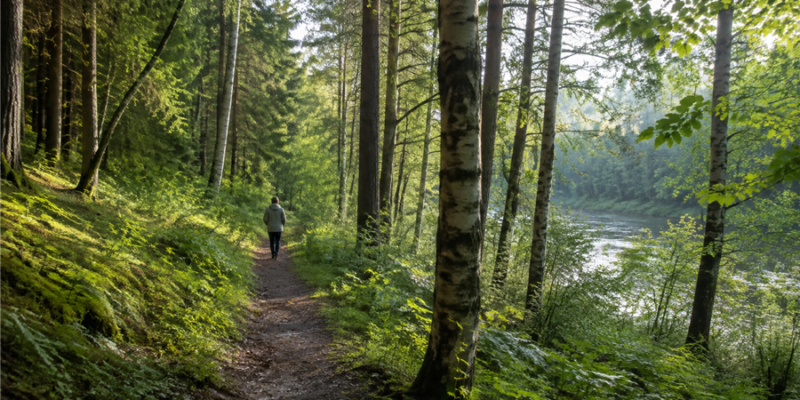
Vilnius has mapped ten self-guided forest-bathing routes across the Lithuanian capital, inviting residents and visitors to slow down, engage their senses and experience the city’s green spaces in a more attentive way.
The initiative brings the Japanese practice of shinrin-yoku—usually translated as “forest bathing”—into forests, parks and protected landscapes that can be reached without leaving Vilnius. No water, swimsuit or athletic challenge is involved. The idea is to move slowly, notice sounds, textures and scents, and allow the landscape itself to become the focus.
The routes were selected and the sensory exercises prepared by forest-bathing specialist Liudas Basiulis for Neakivaizdinis Vilnius, the city-exploration initiative supported by Vilnius City Municipality. Together they reveal an unusually broad range of urban nature: steep ravines, river slopes, pine woods, historic hillforts, wetlands and quiet valleys.
What makes these routes different from ordinary walks?
Forest bathing is not a race, a workout or a conventional hike from point A to point B. The ten Vilnius routes are generally only around two to four kilometres long, but visitors are encouraged to spend two or three hours exploring them. The slower pace leaves time to listen to birds and flowing water, examine the surface of a tree, notice the smell of damp soil or simply sit quietly.
The routes are not specially marked. Visitors should follow the directions and map coordinates provided in the official guide and use their own judgement on the ground. That lack of signs is intentional: orientation becomes part of the exercise in attention and presence.
Scientific research into forest bathing is still developing. A 2026 systematic review and meta-analysis associated the practice with favourable short-term changes in heart rate and some psychological outcomes, but rated the certainty of the evidence as very low because of bias, inconsistency and imprecision. Forest bathing should therefore be viewed as a complementary wellbeing practice, not a substitute for medical care.
Ten places for forest bathing in Vilnius
1. Ribiškės Landscape Reserve
Deep valleys and steep hills help soften the background noise of the city, creating a strong contrast between sheltered woodland and open ridgelines. The route is approximately 2.5 kilometres and includes more demanding hilly sections. The suggested public-transport options are buses 31 and 33 to the Juodasis kelias stop.
2. Ancučiai Landscape Reserve
Located between Viršupio and Kojelavičiaus streets, Ancučiai offers ravines, meadow views and traces of local history close to the urban fabric. The route is about 1.8 kilometres. It has hills, but the official guide describes them as manageable. Buses 37 and 119 serve the Šilo stop, which is only a short walk from the starting area.
3. Karoliniškės Landscape Reserve
This route begins near the Plikakalnis outcrop and can be approached from the Vilnius Television Tower. It follows part of the 100-kilometre trail around the capital and rewards walkers with striking views across the Neris valley. Some stretches are steep and require suitable footwear.
4. Paneriai Erosional Hills
One of the quieter options begins near Užusienis Stadium, where a path between the basketball court and football field leads into a wooded ravine. High slopes quickly reduce human-made noise and create a secluded atmosphere. Bus 41 to the Dieveniškių stop is the recommended public-transport connection. The terrain includes difficult and hilly sections.
5. Bukčiai Forest Park
Bukčiai offers a gentler introduction to the practice. The terrain is largely level and avoids steep slopes, making it one of the more approachable choices in the collection. Visitors travelling by public transport can use the Užutekio stop.
6. Verkiai Regional Park
The Verkiai route starts near Žaliųjų Ežerų Street 3 and leads towards a pond and wooded stream valley. At approximately 2.5 kilometres, it combines water, forest and hilly terrain. The nearest public-transport stops include Petro Baublio and Žaliųjų ežerų.
7. The Ravines of Kalnų Park
Close to the historic centre, Kalnų Park demonstrates that forest immersion does not require a journey to the city’s outskirts. The route descends towards the Vilnia River valley and includes very steep slopes. It can be reached from the Dailės akademijos stop, Bernardine Garden or Užupis.
8. Rokantiškės Castle Site
Woodland and history meet at the remains of the Rokantiškės castle complex. The route includes hills and more demanding sections. Buses 74 and 6G serve the Lelijų stop, while drivers can use the parking area beside Stepono Batoro Street near the information board.
9. Neris Slopes near the Grioviai Geomorphological Reserve
This landscape combines deep ravines, forested river slopes and viewing points over the Neris. The terrain can be challenging, with hills and pronounced gullies. The suggested access point is near the Monikos Mironaitės public-transport stop.
10. Valakupiai
Pine woods, sandy ground and the nearby river beaches give Valakupiai a distinctly different character. The route is flat, sandy and comparatively easy to follow, making it another suitable starting point for newcomers. The closest recommended stop is Valakupių II paplūdimys.
How to prepare for a forest-bathing walk
Because the routes are unmarked and several pass through protected or uneven landscapes, a little preparation is essential:
- open or download the official route map before setting out;
- wear sturdy footwear suited to hills, mud or sand;
- take drinking water and clothing appropriate for changing weather;
- use tick and insect protection during the warmer months;
- silence notifications while keeping a charged phone available for navigation and emergencies;
- stay on established paths where required and follow the rules of reserves and regional parks;
- leave plants, wildlife and natural objects undisturbed.
People with limited mobility should review the terrain before visiting. Bukčiai and Valakupiai are described as relatively level, while Kalnų Park, Ribiškės, Paneriai, Rokantiškės and the Neris slopes contain more demanding sections.
A different perspective on the Lithuanian capital
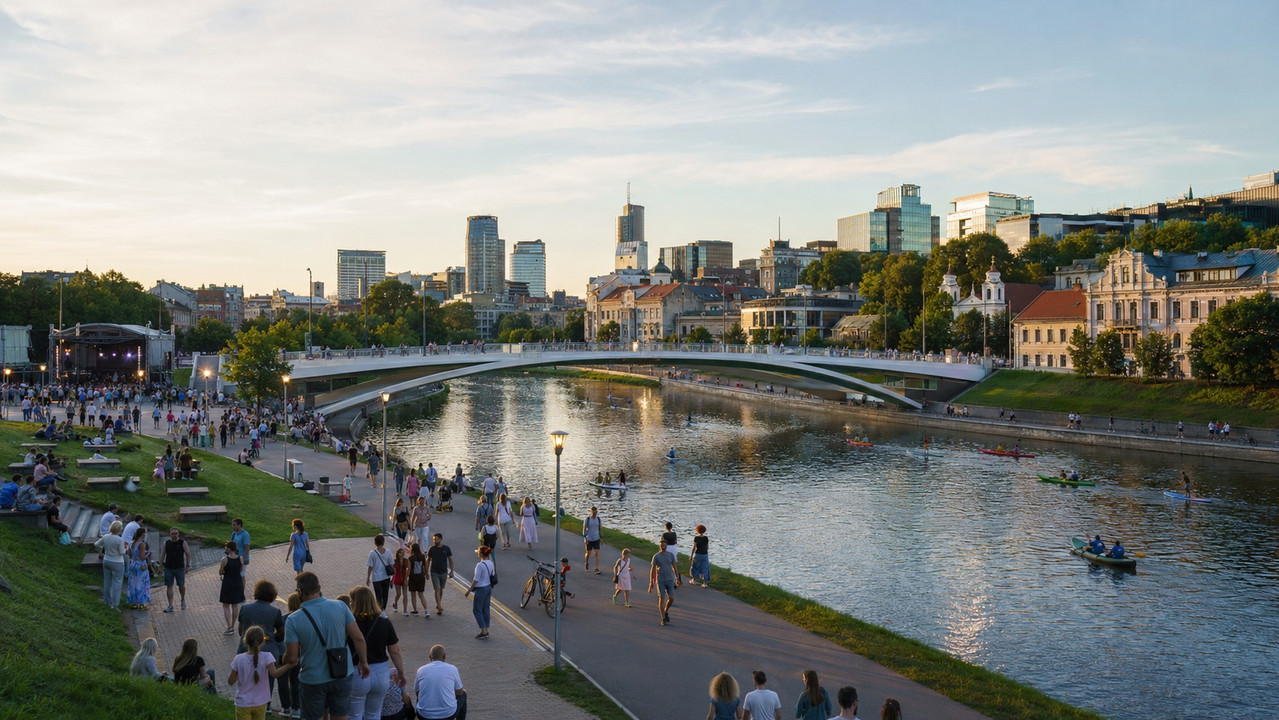
Vilnius often promotes itself as a green capital, but the new collection turns that identity into a practical invitation. The routes are not presented as attractions to be completed and checked off. Instead, they encourage people to spend more time in familiar landscapes and notice details that an ordinary walk might miss.
That approach also connects the Japanese idea of shinrin-yoku with Lithuania’s own long cultural relationship with forests. In a city where protected landscapes reach deep into residential districts, forest bathing becomes less an exotic wellness trend than a new way of paying attention to what is already nearby.
Detailed directions, exercises and map links for all ten locations are available in the official Neakivaizdinis Vilnius guide.
Sources: Neakivaizdinis Vilnius / Vilnius City Municipality; Made in Vilnius; Andrade et al., Frontiers in Psychology (2026).















Comments