 By
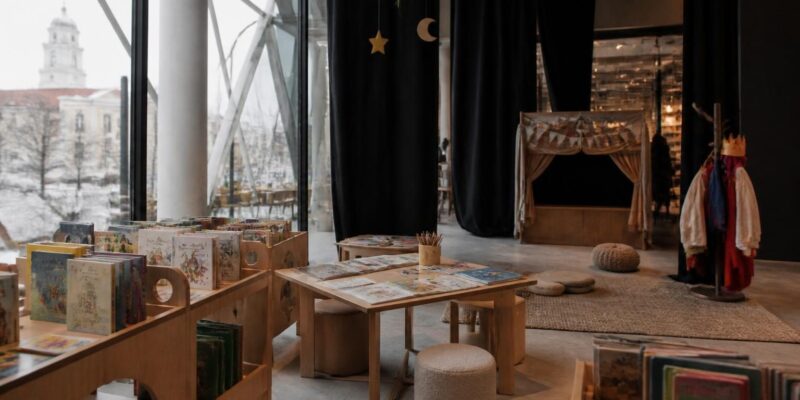
Vilnius is closing November with a cultural weekend devoted to children’s literature. The tenth edition of Children’s Book Island, an international literature festival for families, is taking place on 28 and 29 November at the Arts Printing House in the Lithuanian capital.
The anniversary programme is built around the theme “POP!”, with organisers presenting books through theatre, music, film, interactive installations and hands-on activities rather than limiting the festival to traditional author meetings. More than 30 events are scheduled, bringing together creators from Lithuania and abroad. Sweden is this year’s guest of honour.
A book festival designed as a shared experience
Children’s Book Island has developed into a broad cultural programme for different ages, from young children to early teenagers and their families. The official programme includes theatrical and musical performances, meetings with writers and illustrators, creative workshops, educational activities and a book fair.
One of the featured events is a theatrical presentation by Table Theatre based on A Story about Book Smugglers, a book by Lithuanian writer Marius Marcinkevičius and illustrator Lina Itagaki. The presentation is followed by creative workshops with the book’s authors, linking the performance directly to reading and making.
The festival’s approach reflects a wider effort to make literature accessible through several artistic forms. A child may encounter a story through a stage performance, music, movement, images or a practical workshop before returning to the printed book. That format also gives families with different interests a reason to take part together.
Swedish connections and a wider professional programme
The 2026 festival has a particularly strong international dimension. Sweden is the guest of honour, and Swedish creators are appearing alongside Lithuanian participants. The partnership is also connected with Lithuania’s preparations to become the guest of honour at the Gothenburg Book Fair in 2028.
The wider Children’s Book Island programme began before the public festival. From 25 to 29 November, Vilnius is also hosting “Creators’ Island”, an industry programme for professionals working in children’s literature. According to Lithuanian public broadcaster LRT, the professional strand brings together 22 guests from eight European countries, including Sweden, Belgium, Germany, Iceland, Finland, Estonia, Latvia and Lithuania.
The professional meetings are intended to support exchanges between authors, illustrators, publishers and other cultural practitioners. The festival organisers have also announced joint Lithuanian-Swedish creative projects, suggesting that the guest-country focus is designed as a continuing partnership rather than a one-off appearance.
From a festival weekend to year-round learning
The organisers describe Children’s Book Island as a community that has grown over a decade through returning visitors, creators and volunteers. In a recent interview with LRT, programme curator and director Sigita Pikturnaitė-Kamandulienė said the festival had expanded beyond book presentations while keeping the book at its centre.
The 2026 programme also extends beyond Vilnius. LRT reports that meetings with creators are being held in other Lithuanian locations from 27 to 30 November, including Kaunas, Anykščiai, Merkinė and Trakai. An online education week for schools is scheduled for 30 November to 4 December.
That combination gives the anniversary edition two functions: it is a public cultural event for families in Vilnius and a platform for continuing literary education. It also makes the programme accessible to schools and readers who cannot attend the main weekend in person.
Why the anniversary matters
Children’s Book Island arrives at a time when cultural organisations are looking for new ways to connect young audiences with reading. Its model places books inside a larger environment of performance, music, visual culture and participation. The result is less a conventional book fair than a family-oriented meeting point built around stories.
For Vilnius, the festival adds an international literary focus to the final weekend of November. For its organisers, the tenth anniversary offers an opportunity to show how a specialist event can grow into a wider community linking creators, families, schools and cultural institutions.










Comments