

 By
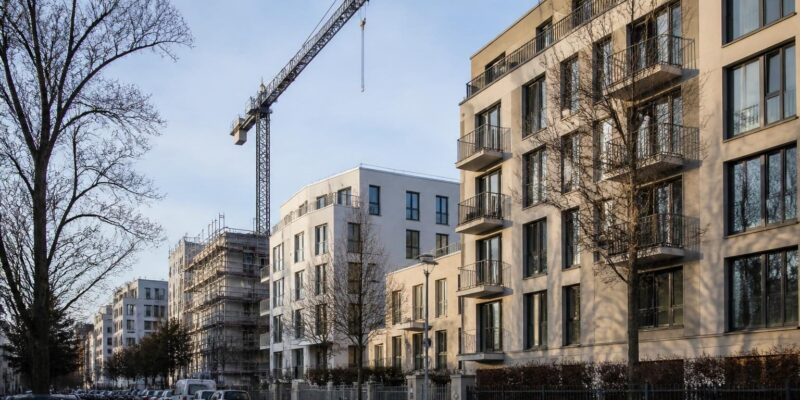
Bavaria and residential property company Vonovia have announced a planned investment programme worth €2.1 billion through 2031, combining new housing construction, renovation of existing homes and wider neighbourhood development. The agreement was presented in Munich on November 26, making it one of the most recent major urban-development announcements in Germany.
The arrangement is based on a letter of intent rather than a final construction contract. According to the Bavarian state government, the programme is intended to support around 3,800 new homes and the renovation of up to 6,400 existing apartments. The plans cover projects across the Free State, while a first scheme in Munich-Schwabing-Freimann has already reached the groundbreaking stage.
From a regional agreement to a local project
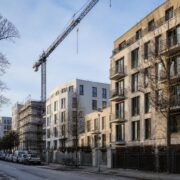
The Munich project on Lützelsteinerstraße will add 62 apartments through infill development. The approach uses land within an existing residential area rather than opening a completely new settlement on the urban edge. At the same site, buildings dating from the 1960s are scheduled for energy-efficiency improvements.
That combination gives the announcement a practical urban-development dimension. It links the creation of additional homes with the renewal of established housing stock, a model increasingly relevant in cities where available land is limited and infrastructure already exists. Infill construction can also place new residents closer to public services, established streets and existing transport connections, although the precise design and timetable for the Munich project were not detailed in the announcement.
Planning and construction methods under review
The Bavarian government and Vonovia say they want to examine ways of making housing projects faster and more cost-effective. The areas under discussion include standardised planning and approval procedures, serial or standardised construction, pragmatic parking and mobility concepts, and the possible use of the “Gebäudetyp-E” planning approach.
These elements are presented as areas for cooperation rather than as completed policy changes. Their significance lies in the attempt to address several parts of the development process at once: land use, design, approvals, construction methods and the relationship between new housing and everyday mobility.
For municipalities, this type of cooperation can offer a framework for testing repeatable solutions across several sites. For residents, the central question will be whether the planned investment produces homes that are both additional and suitable for different household types. The public announcement did not provide a full breakdown by city, tenure or rent level for the 3,800 planned new homes.
Housing pressure and public support
The initiative arrives as Bavaria continues to promote housing construction as a priority for a growing population and a strong regional economy. The state government says it is allocating €3.6 billion for housing support in its 2026–2027 budget period. It also reported that 54,000 homes received planning approval in Bavaria in 2025, while approvals in private housing construction had recently risen by 13 percent.
Those figures provide the wider policy context, but they should not be confused with guaranteed delivery under the new Vonovia agreement. The €2.1 billion figure describes intended investment through 2031, and the letter of intent will need to be followed by project-specific planning, financing and approvals.
The announcement nevertheless illustrates how housing policy is increasingly being tied to neighbourhood renewal and construction productivity. Rather than treating new homes as isolated buildings, the partners describe a broader programme involving existing properties, energy performance and local development.
What happens next
The first test will be the Munich scheme, where the symbolic groundbreaking has been matched by a defined addition of 62 apartments. Further projects will depend on the identification of suitable sites and on the planning and approval procedures that the partners now intend to explore.
If implemented, the programme could give Bavaria a substantial pipeline of new and modernised housing over the next five years. Its long-term value will be measured not only by the number of apartments announced, but also by how effectively new construction is integrated into existing urban areas and how clearly the projects respond to local housing needs.



















Comments