

 By
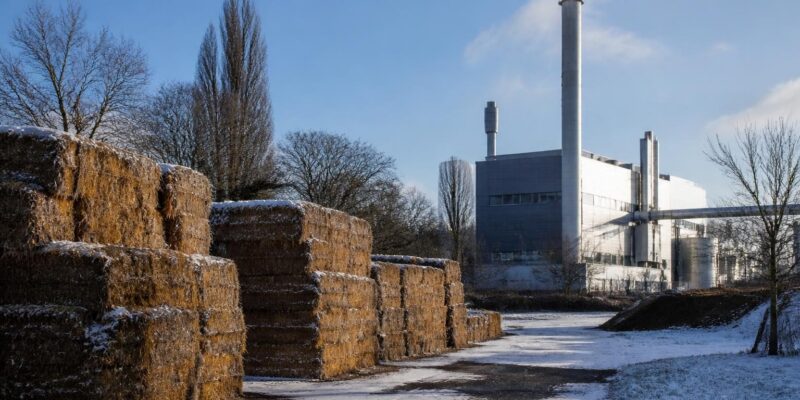
GRUDZIĄDZ, Poland — A district-heating project in northern Poland has become a current case study in how agricultural by-products can be incorporated into urban energy systems. The municipal heating company OPEC Grudziądz used a visit by Energy Minister Miłosz Motyka on 26 November 2026 to outline the first results of its boiler fuelled by loose straw and to discuss whether similar installations could be developed elsewhere.
The project is notable because it uses straw in a conventional municipal heating system rather than in a small farm or private boiler. OPEC says its 12.5-megawatt steam boiler produces approximately 360,000 gigajoules of heat per year. The installation was commissioned in 2025 and has now been operating through most of its first full heating season.
A local supply chain
The fuel is sourced from farms in the surrounding region. According to information presented by OPEC and reported after the minister’s visit, the company works with close to 100 agricultural producers, mainly in the Kuyavian-Pomeranian and Pomeranian voivodeships. Straw is delivered in large bales, then prepared for use in the boiler.
That arrangement gives the project an economic dimension beyond the heating plant itself. Farmers receive an additional outlet for straw left after grain and other crops are harvested, while the heating company obtains a fuel available within a relatively short distance of the city. The model is intended to keep part of the value chain in the region and reduce dependence on coal and gas markets.
OPEC’s current system uses more than one form of straw fuel. The company has reported that the loose-straw boiler supplies about a quarter of the plant’s heat, while straw in loose and pellet form together accounts for approximately 42 percent of heat production. The distinction matters: the larger figure describes the whole straw component, not the output of the new boiler alone.
Why the project is attracting attention
District heating is a particularly important issue in Poland, where many towns still rely on coal-fired plants and where operators are under pressure to modernise ageing systems. A locally available biomass fuel cannot solve every problem, but it may offer municipalities another option alongside heat pumps, solar thermal systems, geothermal resources, biogas and energy-efficiency measures.
The Grudziądz plant was built as a high-efficiency cogeneration unit, meaning that it is designed to produce heat and electricity. OPEC describes the investment as part of the decarbonisation of the city’s heating system and as a way to strengthen local energy resilience. The company’s own project information says the installation represents an investment of more than 100 million złoty.
Technology supplier DP CleanTech has separately estimated that the plant could reduce coal use and carbon-dioxide emissions. Those figures come from the supplier rather than an independent audit, so they should be treated as project estimates. The more firmly established point is that the plant has introduced a new fuel into Grudziądz’s municipal system and is now being operated at commercial scale.
From one city to a wider debate
The 26 November meeting in Grudziądz brought together OPEC, the Chamber of Commerce for District Heating and representatives of the Energy Ministry. The discussion focused on the regulatory and financing conditions that would be needed for agricultural biomass to play a larger role in Polish heating.
OPEC says its strategy for 2025–2030 includes consideration of a second, similar loose-straw boiler. That is not yet the same as a completed investment decision, but it indicates that the company sees the first unit as a platform for further diversification.
Any expansion would require careful attention to transport distances, competing uses of straw, air-quality controls, seasonal storage and the sustainability of biomass supply. Straw is not an unlimited resource: it also has uses in soil management, animal husbandry and agricultural production. The value of the Grudziądz example therefore lies less in presenting straw as a universal replacement for fossil fuels than in showing how one city is testing a locally adapted option.
For now, the project offers a measurable and practical development: a Polish municipal heating company has completed a first year of operation with loose straw as a significant fuel, and the experience is informing a national conversation about cleaner and more locally anchored heat.

















Comments