 By
By 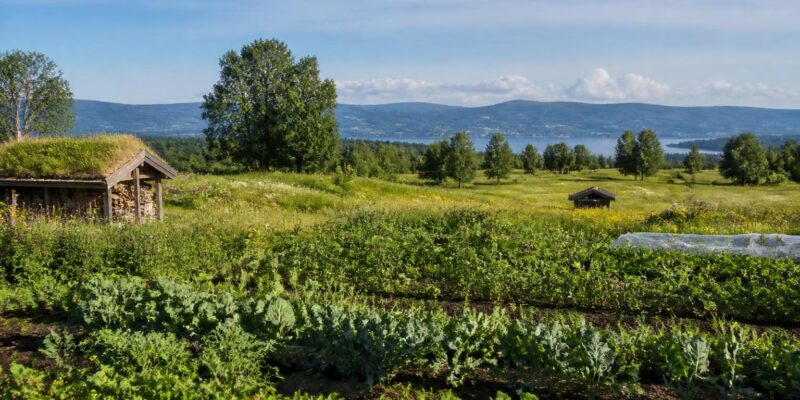
Outside Trondheim, a new public festival has placed one of the most basic elements of the food system at the centre of the conversation: soil. Jord Festival, held on 13 and 14 August 2026 at Reppe Søndre in Ranheim, has combined agricultural learning, local food, community activity and live music in a format designed to reach both specialists and the wider public.
The event is presented as Norway’s first festival dedicated specifically to soil health and regenerative agriculture. Its timing, in the middle of the growing season, has allowed the subject to be approached not only as an environmental question but also as part of everyday food culture, rural livelihoods and family life.
From farm practice to public knowledge
Jord Festival was created to bring together farmers, researchers, advisers, students, families and people simply interested in how food is produced. The organisers describe Reppe Søndre as one of Europe’s notable regenerative farms, making it a working landscape rather than a conventional conference venue.
That setting gives the festival a practical emphasis. Instead of treating regenerative agriculture as an abstract concept, the programme has been built around knowledge forums, field demonstrations, workshops and conversations between people working with soil in different ways. The stated focus includes soil health, climate-conscious farming and local food systems.
This approach reflects a broader interest in reconnecting food with the places where it is grown. For visitors, the subject can begin with familiar questions: how vegetables are cultivated, how animals are integrated into a farm, how compost is used, or how local producers can reach customers more directly. For farmers and students, the same gathering offers a chance to compare methods and discuss what works under Norwegian conditions.
A food story with a wider horizon
The festival’s food dimension is deliberately connected to agriculture rather than separated from it. Local food is presented as the result of healthy land, functioning farms and relationships between producers and consumers. That makes the event relevant to lifestyle readers, but also to anyone interested in the resilience of regional food systems.
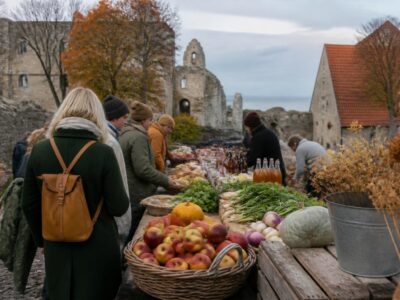
Jord Festival has also made room for people who do not work in agriculture. Its public-facing programme invites visitors to meet farmers, taste local products, take part in guided activities and learn more about the connection between soil, food and climate. Families and children are included through animal encounters, activities involving seeds and soil, and a generally informal festival setting.
The organisers have emphasised that the event is intended to be welcoming to different levels of experience. A professional farmer, a student of ecology, a household gardener and a curious visitor may arrive with very different questions. The common ground is an interest in how land can remain productive, living and capable of supporting communities over time.
Building connections around the land
Beyond the technical subject matter, the festival has been designed as a meeting place. Its organisers describe the event as a combination of knowledge-sharing, culture and community-building, with evening music alongside the daytime programme.
That mixture is significant. Agricultural innovation often depends on cooperation between people who possess different kinds of knowledge: farmers with practical experience, researchers with analytical tools, advisers who translate evidence into recommendations, and consumers whose choices influence what is produced. A public festival can create a less formal environment for those groups to meet.
Jord Festival also grows out of an effort to build stronger bridges between local producers and consumers. The idea is not simply to promote particular products, but to encourage greater understanding of the systems behind them. In that sense, the festival belongs as much to Trondheim’s civic and cultural life as to its agricultural calendar.
Why this matters now
Soil health can sound like a specialist concern, yet it underpins the availability and quality of food, the vitality of farms and the long-term condition of rural landscapes. Bringing the topic into a public setting helps make those connections visible without reducing the discussion to a single solution or slogan.
The first edition of Jord Festival has therefore offered a constructive model for food communication: combine expertise with direct experience, invite the public into a working landscape, and treat local food as part of a larger relationship between land and community.
For Trondheim, the event adds a new late-summer meeting point between city residents and the farms around them. For visitors, it offers a grounded way to explore regenerative agriculture—not as a distant trend, but as a set of questions about soil, food, work and shared responsibility.





Comments