

 By
By 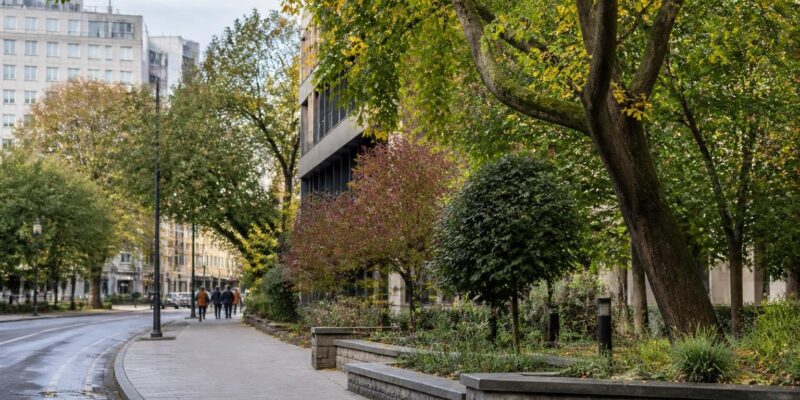
Vilnius will host an international conference on 8–9 October focused on one of the most practical questions facing European cities: how to keep urban greenery healthy, resilient and useful as the climate changes.
Green Dialogues: Urban Green Management & Practice will bring together municipal green-space managers, arborists, landscape architects, urban planners and sustainability professionals at Cyber City in Vilnius. The conference is organised under the Green Vilnius initiative and is presented as a platform for exchanging practical approaches rather than simply discussing environmental ambitions. The organiser’s programme lists the venue, agenda and registration details. ([zaliasvilnius.lt](https://zaliasvilnius.lt/en/renginiai/green-dialogues/?utm_source=openai))
From symbolic greenery to working infrastructure
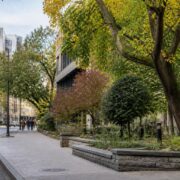
The programme places urban trees at the centre of the discussion. That focus reflects a broader shift in how cities understand green space: trees are not only decorative features or elements of public parks, but also part of the infrastructure that helps neighbourhoods cope with heat, polluted air, intense rainfall and the loss of urban biodiversity.
Speakers will address climate-resilient tree species, long-term tree policy, soil health, pruning and tree biomechanics. The agenda also includes discussions about the ecological, social and economic value of an individual tree. That emphasis is significant because decisions about urban greenery are often made street by street, where questions of space, maintenance, safety and public expectations meet.
Among the listed international speakers are Francesco Ferrini of Italy, who will discuss the future of urban trees in European cities, and British green-infrastructure specialist Gary Grant. The programme also includes contributions from experts in Finland, Germany, the United Kingdom and Lithuania. ([zaliasvilnius.lt](https://zaliasvilnius.lt/en/renginiai/green-dialogues/?utm_source=openai))
Soil, biodiversity and the urban biowaste loop
One of the conference’s practical strands will focus below the surface. Sessions will examine urban soil as critical green infrastructure and consider how cities can improve soil conditions beneath trees. Another presentation will explore whether urban biowaste can be returned to productive use through a “closing the urban biowaste loop” approach.
These subjects matter because even well-chosen trees can struggle when their roots are confined by compacted soil, road construction or insufficient water. Treating soil as part of green infrastructure widens the conversation beyond planting targets. It directs attention to the conditions that determine whether trees survive, mature and continue delivering benefits over decades.
The agenda also connects soil management with biodiversity. Discussions on resilient planting, flowerbeds and urban nature are expected to examine how cities can combine attractive public spaces with habitats for insects, birds and other species.
A conference that moves outside the meeting room
The second day is designed as a series of study visits around Vilnius. Participants can choose between a cycling tour of newly greened streets, a route through urban flowerbeds, a forest-bathing session and an urban nature discovery walk. The organiser says the visits will show how different kinds of greenery are incorporated into the city and how residents experience them. ([zaliasvilnius.lt](https://zaliasvilnius.lt/en/renginiai/green-dialogues/?utm_source=openai))
This field-based element gives the event a distinctly municipal character. Rather than presenting urban forestry as a specialist issue separated from everyday city life, it links tree management to mobility, public space, wellbeing and neighbourhood change. It also creates an opportunity to discuss the trade-offs that are difficult to capture in a conference presentation: where trees can be planted, how streets can remain accessible, and how maintenance responsibilities are shared.
Vilnius continues its green-city conversation
The 2026 event follows an earlier Green Dialogues conference in Vilnius and continues the city’s effort to keep urban sustainability on the European agenda. The European Green Capital network has also highlighted the October meeting as an opportunity for cities to exchange ideas on tree policy, soil health, biodiversity and climate-resilient greenery. ([linkedin.com](https://www.linkedin.com/posts/egca-egla_vilnius-eugreencapital-greencities-activity-7470489273494913024-Fz2C?utm_source=openai))
Participation in the conference is free, although registration is required. The organiser says the conference will be held in English and that participants will cover their own travel and accommodation costs.
For Vilnius, the value of the event will ultimately depend less on the number of speakers than on what can be transferred into daily practice: better tree inventories, healthier planting sites, more informed pruning, stronger biodiversity measures and closer dialogue with residents. Those are modest-sounding goals, but together they determine whether a city’s green spaces remain resilient long after a project or conference has ended.










Comments