
 By
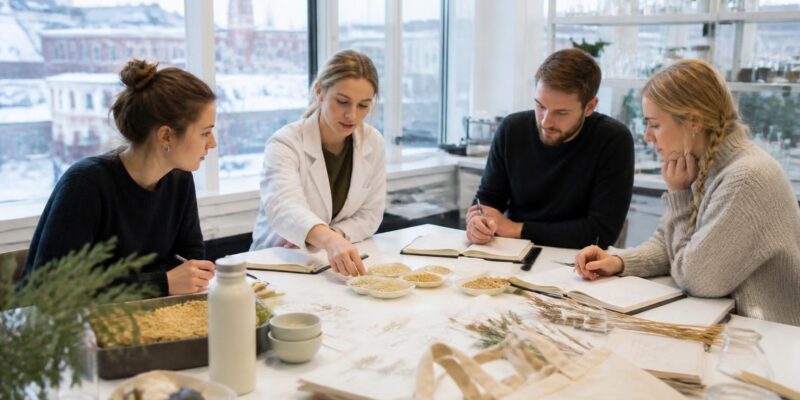
TARTU — A two-day food innovation hackathon beginning in Tartu on Friday, November 27, is bringing students, researchers, startups and professionals together to work on practical challenges facing agriculture and food production.
“Hack the Future of Food 2026” is organised at Alexela Loomelava by Tartu Biotechnology Park, the Centre of Estonian Rural Research and Knowledge, the Food and Fermentation Technology Development Centre, A. Le Coq and the Estonian University of Life Sciences. The programme is supported by EIT Food and is designed to move ideas from scientific discussion towards early prototypes and possible business solutions.
The event is timely for Estonia’s research and education community because it places students alongside people who work with food production, biotechnology, farming data and product development. Instead of treating innovation as a separate academic exercise, the organisers are asking participants to work on defined problems supplied by partner organisations.
From research questions to workable ideas
The format combines design-thinking training, team formation, mentoring and final pitches. Participants do not need to arrive with a finished business plan or a complete team. They can bring their own idea or join a group working on one of the challenges proposed by the partners.
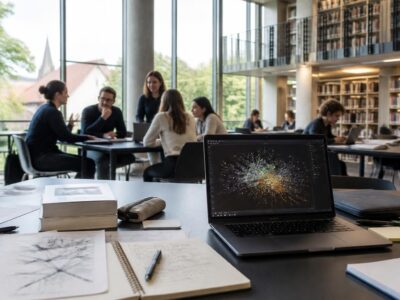
The Centre of Estonian Rural Research and Knowledge has proposed challenges linked to digital twins for agriculture and food production, the use of satellite and drone imagery for crop decisions, new uses for agricultural by-products and better decision-support tools for choosing production technologies. These topics connect data science with everyday questions faced by farmers and food manufacturers.
Other challenges focus on how smaller producers can test new products with consumers, how environmental and social costs could be made more visible to shoppers, and how grocery data might be converted into useful dietary feedback while respecting privacy. A further proposal looks at ways to help people learn about safe fermentation and reconnect with community food traditions.
A bridge between classrooms and industry
The event’s educational value lies in its hands-on structure. The first day includes idea pitches, team-building and two sessions on design thinking. On the second day, teams will receive mentor feedback, practise presenting their concepts and pitch their proposals to a jury.
Among the programme contributors are food-science specialist Mary-Liis Kütt, who is associated with the Estonian biotechnology company ÄIO, PRIA representative Taavi Tamm and Startup Estonia’s Vaido Mikheim. Their roles reflect the organisers’ intention to combine scientific knowledge with practical development and communication skills.
For students, the format offers an opportunity to test knowledge outside a conventional classroom. Researchers can see how technical work is interpreted by entrepreneurs and potential users, while companies can present problems that may benefit from fresh perspectives. The organisers describe the process as a way to create solutions that could be implemented in real life rather than remaining only as competition entries.
Prizes are intended to support the next step
The strongest teams will compete for a €1,500 cash prize pool, places at sTARTUp Day 2027 for first- and second-place teams, access to EIT Food business-support programmes and a consultation package from the Food and Fermentation Technology Development Centre.
The awards are relatively modest compared with the cost of developing a food technology product, but they are designed to provide follow-up opportunities. Access to mentors, technical advice and entrepreneurship programmes may be more valuable to early-stage teams than a one-off prize.
One of the proposed challenges also illustrates the circular-economy focus of the event. A. Le Coq is inviting participants to examine the liquid fraction obtained when brewer’s spent grain is pressed. The material is currently connected to cattle-feed use, but organisers want teams to consider whether it could provide ingredients for food, cosmetics or pharmaceutical production.
Why Tartu is a suitable setting
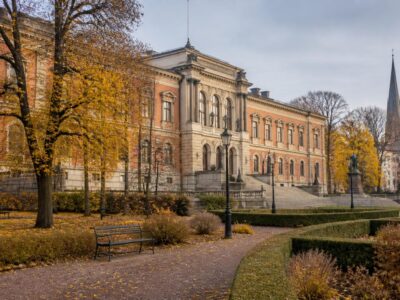
Tartu has a dense network of universities, research centres and biotechnology organisations, making it a natural setting for an event that links education with applied innovation. The Estonian University of Life Sciences contributes agricultural expertise, while Tartu Biotechnology Park provides an environment connecting researchers and companies.
The hackathon also reflects a broader shift in science education: students are increasingly expected not only to understand research findings, but also to work across disciplines, communicate ideas and evaluate whether a proposed solution can function outside the laboratory.
“Hack the Future of Food 2026” runs from November 27 to 28. Its outcome will be measured not only by the final pitches, but by whether participants leave with tested concepts, new collaborators and a clearer route from research to practical use.
















Comments