

 By
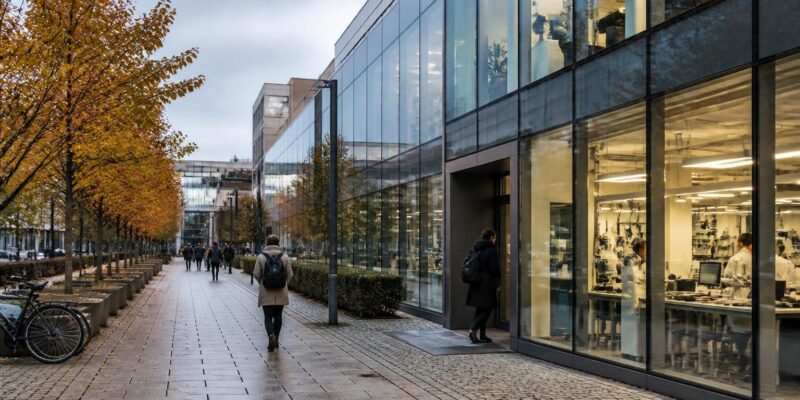
A new research hub at the University of Copenhagen is holding its first annual conference this week, bringing together scientists working on one of biotechnology’s fastest-developing fields: the design of proteins that do not occur naturally.
The Novo Nordisk Foundation Center for Protein Design, known as CPD, is hosting its inaugural annual conference on 3–4 November 2026 at the university’s North Campus. The meeting follows a welcome and inauguration programme announced for 2 November and is intended to introduce the centre’s research community, present early scientific work and build collaborations across Denmark, the Nordic region and international partner institutions.
The event is a constructive development in Scandinavian science because it combines research, training and cooperation rather than focusing on a single commercial product. Its programme is centred on both the fundamentals of protein design and potential applications, according to the University of Copenhagen.
Designing new biological tools
Proteins are essential working molecules in every living organism. They help cells communicate, transport substances, catalyse chemical reactions and maintain biological structures. Traditional biotechnology has often adapted proteins found in nature. De novo protein design takes a different approach: researchers use biological knowledge, laboratory experiments and computational methods to create new sequences intended to fold into specific structures and perform chosen functions.
The Copenhagen centre describes its work as an intersection of biology, chemistry, drug design and computer science. Its research may eventually support new approaches in areas such as molecular medicine, biotechnology, materials science and environmental applications. Those possibilities remain research goals, not established outcomes, and the centre’s current emphasis is on understanding how protein structure and function can be designed reliably.
That distinction is important. Designing a sequence on a computer is only one stage of the process. Scientists must also produce the protein, determine whether it folds as expected, test its stability and examine whether it performs the intended task. The conference therefore brings together computational and experimental researchers rather than treating either approach as sufficient on its own.
A cross-disciplinary centre
CPD is a joint initiative of the University of Copenhagen’s Department of Biology and Department of Drug Design and Pharmacology, with links to chemistry and computer science. The centre says it is designed to work across the university’s Faculty of Science and Faculty of Health and Medical Sciences, while also developing partnerships in Denmark and abroad.
Its scale is unusually substantial for a newly established academic centre. The University of Copenhagen says the centre is funded by a DKK 700 million grant from the Novo Nordisk Foundation over seven years, with the possibility of an extension. At full capacity, CPD is expected to bring together approximately eight research groups and around 70 researchers and support staff.
The funding does not guarantee scientific success, but it gives the centre the resources to build laboratories, recruit researchers and support doctoral training over a sustained period. The centre’s public description also identifies education as part of its mission, including the development of the next generation of protein scientists.
Training and collaboration in focus
The annual conference is intended for the centre’s core and associate researchers, partners and other delegates interested in protein design. The university describes it as a forum for showcasing science and strengthening collaborations. That role may be particularly valuable in a field where expertise is distributed across several disciplines.
Biologists can contribute knowledge about natural protein systems and cellular processes. Chemists can help with synthesis and molecular characterisation. Drug-design specialists can assess whether a designed molecule interacts with a target. Computer scientists can develop models and tools for predicting structure and function. Bringing these groups into a shared research environment can make it easier to test ideas through the complete cycle from computation to laboratory validation.
Training is another practical element. CPD announced fully funded doctoral fellowships for students entering in 2026, with research areas including new protein folds, catalytic activity, molecular machines and designed peptides. The programme is intended for applicants with backgrounds in biological, chemical, computational or physical sciences.
Why the development matters for the Nordic research landscape
Denmark already has a strong international profile in protein science, pharmaceuticals and biotechnology. A dedicated centre focused on de novo design adds a more specialised platform to that ecosystem and connects established strengths with newer computational methods.
The centre’s outward-facing model also reflects a broader Nordic research trend: building institutions that combine university research with international partnerships and practical training. The Copenhagen conference is therefore more than a ceremonial opening. It is an early test of whether a large, interdisciplinary investment can create a durable community around a technically demanding field.
For the public, the immediate significance is not a finished medicine or an instant industrial breakthrough. It is the creation of a research and education environment in which scientists can explore how biological molecules might be designed for specific purposes. Results will take time, and many projects will remain exploratory. But the first annual meeting gives the centre a visible platform for sharing methods, attracting collaborators and explaining why protein design has become a strategic area of modern life-science research.




















Comments