

 By
By 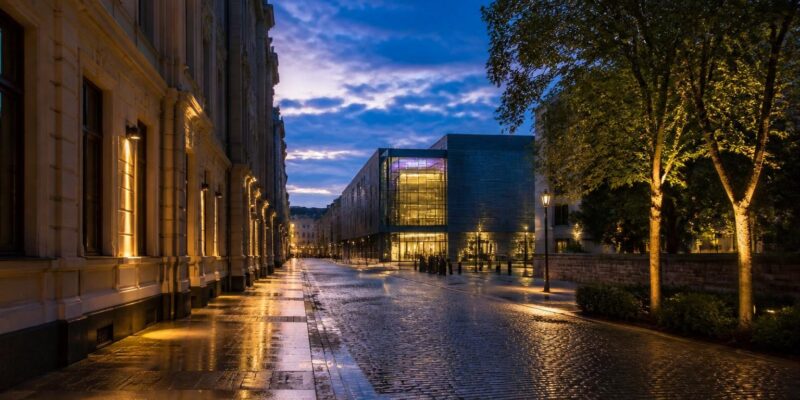
A single night, spread across the city
Riga is preparing for one of its most accessible cultural evenings of the year as the contemporary culture forum White Night returns on the night of 5–6 September. The municipality’s late-August announcement presents the event as a citywide programme rather than a single festival site: 30 free cultural events will be staged in the Old Town, central Riga and several neighbourhoods.
For visitors, that format offers a different way to experience the Latvian capital. Instead of following one fixed route through the historic centre, audiences can move between galleries, parks, museums, courtyards and other urban spaces. The programme extends to Āgenskalns, Zasulauks and Dzirciems, Brasa, Skanste, Grīziņkalns, Teika, Vecmīlgrāvis and Sarkandaugava.
The event is scheduled mainly for Saturday, 5 September, with activities continuing into the early hours of Sunday. LiveRiga lists the programme as beginning at 17:00, while the official White Night information describes the forum as running through the night. Admission is free across the programme, making the event particularly suitable for visitors who want to explore Riga without committing to a single ticketed venue.
Art beyond traditional venues
White Night’s central idea is to open the city to contemporary culture for one evening. This year’s theme, “The city comes alive wherever we are”, frames Riga as a living ecosystem in which people, nature and the built environment overlap. The theme gives the programme a unifying direction without limiting it to one artistic discipline.
The official listings bring together installations, performances, experimental and electronic music, cinema, poetry, street art and multimedia work. Several established cultural initiatives will also contribute their own White Night programmes, including the contemporary art festival Survival Kit, the short-film festival 2ANNAS, the poetry event Dzejas dienas and the late-night gallery programme Riga Last Thursday.
That mixture is important for the event’s tourism appeal. A visitor can combine a museum visit with an outdoor installation, a neighbourhood walk with live music, or a poetry programme with an experimental performance. The result is less a conventional festival than a temporary cultural network linking parts of the city that are often experienced separately.
A beaver construction site beside ARSENĀLS
One of the programme’s most distinctive new works will be unveiled at Independence Square beside the ARSENĀLS Museum of Art. The Latvian National Museum of Art says artist Oto Holgers Ozoliņš will present an environmental installation titled “Beaver Construction Site” on 5 September.
The installation will be open during White Night from 17:00 until 03:00 and will remain in place until 17 September. It transforms the square into a symbolic construction zone, drawing on the museum site and the nearby Riga canal, where beavers live. The work therefore connects an everyday urban setting with the traces of wildlife that occupy the city alongside its residents.
For travellers, the installation provides a useful daytime extension to the event. Those unable to stay overnight can still see the work after White Night, while visitors attending the forum can use it as a central stop between programmes in the Old Town and the surrounding cultural quarter.
A practical late-summer city experience
Riga’s White Night is well suited to short cultural visits because the programme is distributed across locations rather than concentrated in one ticketed complex. The official programme advises visitors to check individual event times and locations, since activities vary from afternoon installations to concerts and performances continuing after midnight.
The neighbourhood emphasis also encourages visitors to look beyond the most familiar parts of Riga. Areas such as Sarkandaugava, Teika and Vecmīlgrāvis become part of the cultural itinerary, offering a chance to see how contemporary art works in different urban contexts. For local residents, this decentralised model makes the event easier to join without travelling across the whole city; for visitors, it can turn a familiar weekend break into a more exploratory journey.
The forum’s free-entry policy lowers another barrier. Visitors can choose a small number of events, follow a particular artistic interest or simply walk through the city and stop wherever a programme catches their attention. That openness is central to White Night’s identity and helps explain why the event has become a recurring feature of Riga’s cultural calendar.
What visitors should know
The main programme takes place on Saturday, 5 September, continuing into the night of 6 September. Events are spread across Riga, with a strong concentration in the Old Town and centre but a significant presence in neighbourhood venues. The official programme is the best reference for exact starting times, addresses and any venue-specific arrangements.
With its combination of free admission, public-space installations and late-night performances, White Night offers a constructive portrait of Riga at the end of summer: not only as a historic destination, but as a city where art can be encountered while walking, travelling between districts and looking more closely at the urban environment.









Comments