 By
By 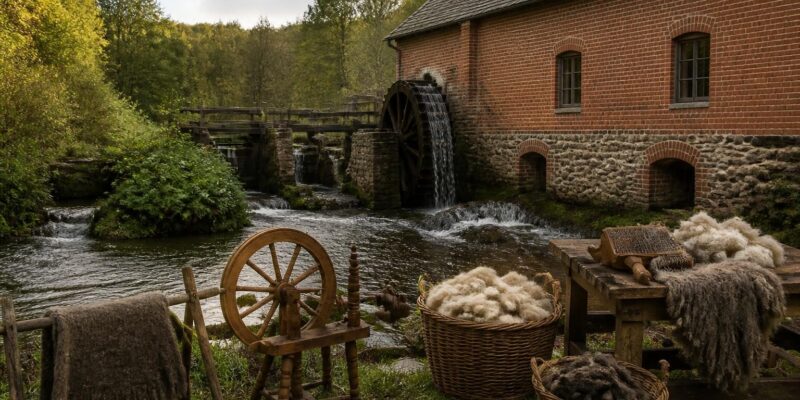
A small village in northern Lithuania has placed wool, music and industrial heritage at the centre of a two-day cultural programme. The 11th international Vilnonės dienos festival took place on 29–30 August in Raubonys, Pasvalys district, beside the village’s historic water mill and wool-carding and spinning facility.
The event was announced shortly before its opening and is one of the latest cultural developments in Lithuania’s late-summer calendar. Its focus is deliberately practical: visitors are invited not only to watch performances or browse a market, but also to try traditional techniques, taste regional food and learn how local heritage is connected to everyday work.
The festival’s organisers describe Vilnonės dienos as a meeting point for traditional crafts and music. The event has been held in Raubonys since 2015, growing from local efforts linked to the revival of the water mill and its former wool-processing functions. According to the festival’s official history, the surrounding Tatula River valley has become part of the event’s identity, giving the programme a setting where landscape, architecture and craft can be experienced together.
From wool fibre to a finished object
Wool remains the festival’s central material, but the 2026 programme extended well beyond a single craft. It included folklore, concerts, educational activities, culinary heritage, exhibitions, theatre, discussions and an outdoor film programme referred to as “Mill Cinema”. A craft market added a commercial element, allowing makers to present and sell their work while meeting visitors interested in handmade production.
One of the most participatory activities was a slipper-felting championship. Instead of receiving a prepared product, participants had to create slippers from loose wool themselves. The format turns an old technique into a shared challenge and makes the time, patience and manual skill behind a finished object visible to people who may normally encounter wool only as a retail product.
The mill complex offered another layer of interpretation. Visitors could see authentic equipment and follow the path of wool from sheep to yarn. The programme also included a shearing demonstration, linking the material on display to the agricultural and household practices from which it traditionally came. These elements give the festival a clear educational purpose without separating heritage from entertainment.
Music, food and neighbouring traditions
Music provided the programme’s second major thread. Because 2026 has been designated the Year of the Kanklės in Lithuania, the organisers gave special attention to the traditional string instrument. The festival opened with the Daujėnai kanklės ensemble, while the Vilnius-based folk group Kankleliai was scheduled to perform on the second day.
The wider music programme brought together Lithuanian and Latvian performers, including folklore ensembles, traditional musicians and Latvian groups such as Igauņu ģimene and Karikste. The organisers presented this cross-border participation as a cultural dialogue built around shared regional traditions rather than as a formal conference or institutional exchange.
Food heritage was treated in a similarly hands-on way. Researchers Rimvydas and Anželika Laužikai led a session on traditional flavours in which visitors prepared Aukštaitian dumplings and compared culinary customs from Lithuania and Latvia. Other discussions addressed textile patterns and the role of song in passing traditions between generations. A talk on old water mills in the Pasvalys region connected the festival’s programme to the wider history of local industry and settlement.
A rural festival with a broad cultural brief
Vilnonės dienos is notable less for scale than for the number of functions it brings together in one place. It operates as a village festival, a craft fair, an informal heritage lesson, a music programme and a tourism invitation. The restored mill provides the physical anchor, while the river valley supplies a setting for walking, conversation and outdoor activity.
That combination reflects a wider approach to cultural heritage in which preservation is not limited to maintaining buildings or storing objects. The festival’s model depends on use: traditional knowledge is demonstrated, discussed, performed, cooked and adapted through participation. The result is a form of heritage programming that can appeal to families, craftspeople, folk-music audiences and visitors looking for a quieter alternative to large city events.
For Raubonys and the surrounding Pasvalys district, the festival also creates a recurring reason to visit a rural heritage site at the end of summer. Its latest edition has now concluded, but the 2026 programme shows how a historic mill can serve as more than a monument. With wool at its centre, the site became a place where local history, Baltic cultural connections and contemporary community life could meet.
Sources
- Vilnonės dienos official festival website
- Pasvalys Cultural Centre events calendar
- Agrobitė report published on 29 August 2026
([vilnonesdienos.lt](https://vilnonesdienos.lt/))











Comments