

 By
By 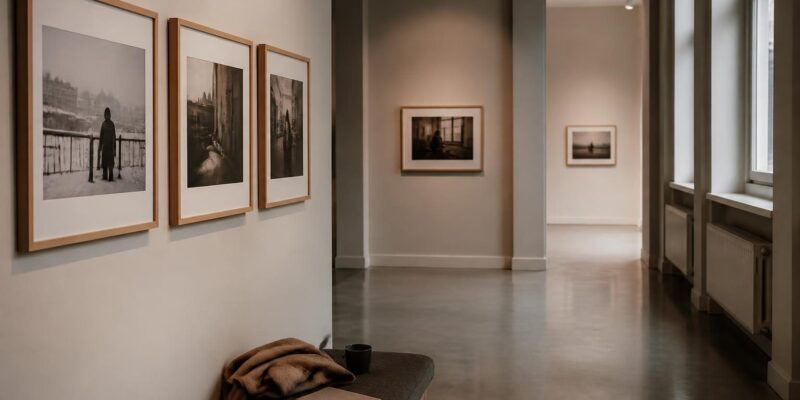
A public portrait of the work behind everyday life
A new exhibition in Stockholm is asking visitors to look more closely at work that is essential to daily life but often difficult to measure. The Unmeasurable, by Swedish filmmaker and photographer Nils Petter Löfstedt, opened at Fotografiska on 28 August and will remain on view until 7 February 2027.
The exhibition combines still photography, video and personal stories from people working in care-related professions. Its focus includes preschools, home-care services, memory-care facilities and personal assistance. Rather than presenting care as an abstract policy issue, Löfstedt’s work concentrates on the small, repeated actions that make support possible: helping someone through a vulnerable moment, managing a busy group of children or moving between appointments in the community. ([stockholm.fotografiska.com](https://stockholm.fotografiska.com/en/exhibitions/nils-petter-lofstedt?utm_source=openai))
From documentary film to gallery installation
The Stockholm presentation develops themes first explored in Löfstedt’s 2024 documentary film of the same name. The Swedish Film Institute describes the film as a portrait of people working in health and care, including the filmmaker’s own parents, and of the pressure created when intimate human work is subjected to increasingly strict time measurements.
At Fotografiska, that earlier film becomes the starting point for a broader visual account. The museum says the exhibition includes more than 40 photographic works, alongside moving images and text. Some of the photographs were made before production of the documentary began, while others extend or deepen stories that appeared in the film. ([stockholm.fotografiska.com](https://stockholm.fotografiska.com/en/exhibitions/nils-petter-lofstedt?utm_source=openai))
This gives the exhibition a social dimension without turning it into a conventional report about the Swedish welfare system. The emphasis is on attention: who is visible, whose time is valued and what kinds of labour disappear when performance is judged only through numbers.
Why the subject resonates
Care work is present in almost every community, but much of it happens away from public view. A preschool classroom, a client’s home or a residential care facility is familiar to millions of people, yet the relationships formed in those places are rarely represented in cultural institutions.
Löfstedt’s approach is deliberately close and observational. The images do not need to dramatise the people they portray. Instead, they give space to routine, concentration and human contact. That makes the exhibition relevant not only to care professionals but also to families, students and anyone whose life depends on another person’s work.
Fotografiska’s exhibition producer, Mohamed Mire, describes the presentation as a place for reflection, empathy and discussion. The museum’s announcement also links the exhibition to wider questions about care, responsibility and human value, while keeping the emphasis on the people and workplaces that sustain society. ([stockholm.fotografiska.com](https://stockholm.fotografiska.com/en/exhibitions/nils-petter-lofstedt?utm_source=openai))
A cultural event with a civic conversation around it
The opening programme on 29 August included a conversation between Löfstedt and author Daniel Möller, with an opening speech by Swedish parliamentarian Lawen Redar. The event was presented as part of the exhibition’s public programme rather than as a political conference, giving visitors an opportunity to discuss how documentary art can make overlooked experiences easier to see.
That combination of gallery display and public conversation is significant. Exhibitions about work often focus on industry, technology or visible achievement. The Unmeasurable instead turns toward the maintenance work that happens continuously and usually without ceremony. Its subject is not a single institution or profession, but a network of everyday relationships.
Open through the winter
For Stockholm audiences, the exhibition offers a sustained opportunity to return to the subject over several months. Its long run also allows the museum to function as a meeting place for visitors who recognise the experiences shown in the photographs, whether through their own jobs, family responsibilities or encounters with public services.
The central message is straightforward: some of the most important contributions to a community cannot be fully captured by schedules, output figures or financial calculations. By bringing care workers into a major cultural venue, Fotografiska gives that principle a visible and shareable form.














Comments