

 By
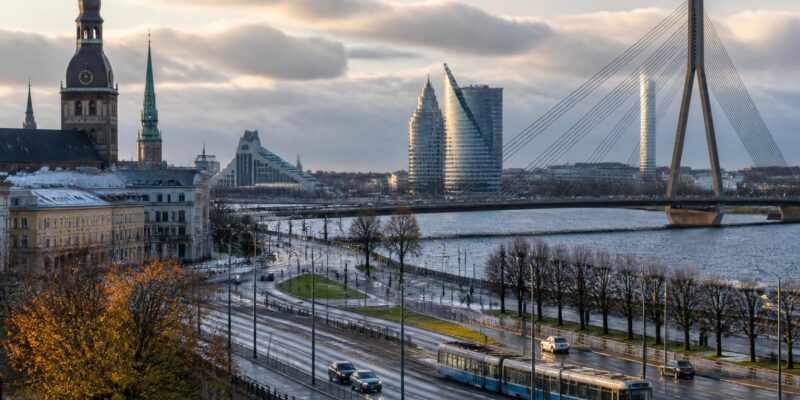
Riga is using this week’s Smart City Expo World Congress in Barcelona to present itself not only as a city interested in new technology, but also as a place where urban solutions can be tested in everyday conditions.
The Riga City Council announced on 3 November that the capital is taking part in the international event from 3 to 5 November. Its programme centres on the city’s smart-city development, the use of municipal data and infrastructure, and opportunities for companies and research partners to develop pilot projects in Riga.
The announcement comes as cities across Europe are looking for practical ways to improve mobility, public services and the management of urban space. For Riga, the event offers a platform to explain what it can provide to potential partners and to compare its approach with projects from other municipalities.
From presentation to testing
Riga is participating in the European Pavilion of LDT CiTiVERSE EDIC, a European collaboration space bringing together public authorities, technology providers and other organisations working on digital urban development. The pavilion is designed to show how city data, digital twins, artificial intelligence and related tools can move from demonstration to practical use.
In Riga’s case, the emphasis is on access to the city as a potential testing environment. The municipality says companies and start-ups will be able to learn about opportunities to test innovative solutions in Riga’s urban environment and to use municipal data and infrastructure in pilot projects.
That distinction matters. A smart-city strategy is most useful when it is connected to identifiable public needs: better traffic management, more convenient travel, clearer information for residents, more efficient maintenance or improved planning of public space. Technology on its own does not change a city. The value lies in whether a tool can be integrated into public services and assessed in real conditions.
A mobility and planning focus
Edgars Bergholcs, chair of the Riga City Council’s City Development Committee, is taking part in a discussion on smart mobility solutions and challenges at the congress. The municipality’s message is that Riga wants to attract international companies and start-ups for pilot projects while learning from the experience of other cities.
Mobility is a natural area for such cooperation. Riga combines a historic centre, large residential neighbourhoods, a river corridor, railway infrastructure and an expanding network of walking and cycling routes. That mix creates a wide range of questions for urban planners: how to connect different modes of transport, how to use street space efficiently, and how to make decisions based on reliable information about movement through the city.
Digital models of the city can support that work by bringing together information about buildings, streets, transport networks and public spaces. They can help officials visualise proposed changes before construction begins and examine how different interventions might affect residents, traffic or the wider urban environment. Such models are decision-support tools, however, and their usefulness depends on the quality of the underlying data and on transparent public administration.
The wider urban innovation conversation
The 2026 Smart City Expo World Congress is built around the theme “Urban Solutions. Real Impact.” Its official programme covers mobility, infrastructure, housing, governance, energy, environmental challenges and inclusion. The agenda also examines the growing role of digital twins, spatial intelligence, robotics and artificial intelligence in city management.
For Riga, participation places the city in a conversation that is broader than technology promotion. Urban innovation increasingly involves questions of design, public value and cooperation between municipalities, universities and businesses. A useful project may be highly visible, such as a new mobility service, or relatively quiet, such as a better way to share data between city departments.
The municipality’s presence also gives Riga a chance to communicate its needs. International partnerships work best when cities are clear about the problems they want to solve, the data they can make available and the conditions under which a pilot can be evaluated.
What comes next for Riga
The announcement does not commit the city to a specific new technology or provide a timetable for individual pilot projects. Instead, it marks a current effort to build contacts and attract proposals that could be tested locally.
The next step will be to translate conversations in Barcelona into carefully selected projects with clear goals, public oversight and measurable results. For residents, the success of a smart-city programme will ultimately be judged in familiar places: on the street, at a transport interchange, in a public space or while using a municipal service.
Riga’s message at the congress is therefore practical. The city is presenting its data, infrastructure and urban environment as resources for experimentation, while seeking partners who can help turn innovation into improvements that are visible in daily life.


















Comments