
 By
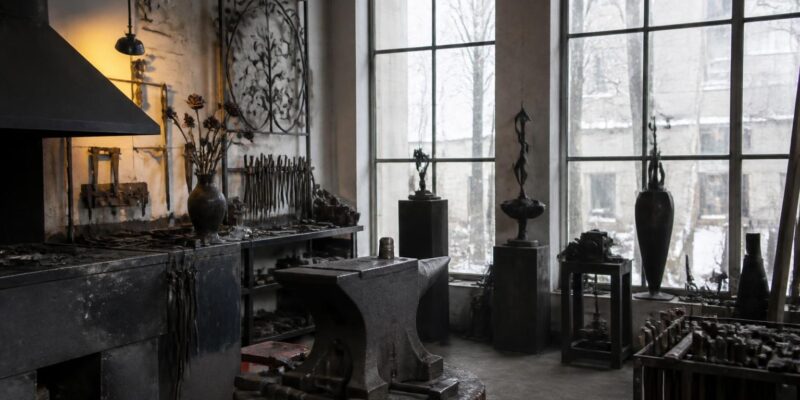
Tallinn is becoming an international meeting point for contemporary iron art this week as the Estonian Academy of Arts hosts STRIKE, a five-day programme dedicated to blacksmithing, metalwork and the cultural meaning of physical craft. The event began on Wednesday, November 4, and continues through Sunday, November 8, with exhibitions, a two-day conference, workshops, student work and public demonstrations.
Organised by the academy’s Jewellery and Blacksmithing Department, STRIKE presents traditional forging not simply as a historical skill but as a living field connecting craft, contemporary art, design, research and education. The programme is open to the public, and the academy says that all events are free of charge.
A craft tradition in a contemporary setting
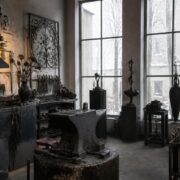
The central question behind STRIKE is how iron and blacksmithing can be understood in the present day. Iron has shaped tools, buildings, transport and everyday objects for centuries, yet the festival places equal emphasis on the knowledge held in the hand: how material responds to heat, pressure, rhythm and repeated physical action.
That approach gives the programme a broad cultural focus. Blacksmithing appears as a practical skill, a form of artistic expression and a way to consider the relationship between people, technology and materials. The discussions also address the future of traditional techniques at a time when much production has moved away from workshops and towards automated processes.
For Tallinn, the event adds a specialist international dimension to the city’s already active design and contemporary-art scene. It also gives students and younger makers an opportunity to encounter established artists and researchers in a setting that combines public access with professional exchange.
More than 300 works to begin a European journey
The programme’s main exhibition opens at the Estonian Academy of Arts’ White House on Friday, November 6. It brings together more than 300 works by over 100 artists and designers selected through an open call.
The exhibition explores the variety of iron as a material and the ways in which traditional forging can intersect with sculpture, jewellery, objects and design. Rather than presenting blacksmithing as a closed specialist discipline, the selection is intended to show how iron can support different artistic languages, from highly functional pieces to experimental and conceptual works.
Tallinn is the first stop for the exhibition. After its Estonian presentation, it is scheduled to travel to several European art and craft centres, including the CODA Museum in Apeldoorn in the Netherlands, the SCHMUCK programme during Munich Jewellery Week, the KORU9 programme in Riihisaari, Finland, and the European Biennial of Blacksmithing in Stia, Italy.
The travelling format gives the Tallinn event an additional role: it is not only a local exhibition but also the starting point for a wider exchange around contemporary metalwork.
Conference connects practitioners and researchers
On November 6 and 7, the academy will host an international conference examining the significance of iron and manual work in contemporary society. Participants are arriving from Europe, Asia, Australia and the United States.
The programme includes lectures on iron’s influence on human development, the future of traditional blacksmithing techniques and the role of physical labour in a technology-rich world. Speakers include philosopher Eik Hermann, archaeometallurgist Ragnar Saage, jewellery researcher Julia Wild, Australian artist and blacksmith Will Maguire, German artist Peter Bauhuis, Japanese photographer Jun Ishikura and Indonesian blacksmith Raditya Mahardhika.
Estonian practice is represented by Sander Haugas, Nils Hint and Urmas Lüüs, who will discuss the current state and future of blacksmithing in Estonia. Their contribution places local knowledge within a broader international conversation, while also showing that the country’s craft traditions remain connected to current artistic and educational work.
Public demonstrations and student work
Alongside the conference and main exhibition, STRIKE includes practical workshops and demonstrations. The academy’s programme lists activities such as knife sharpening, nail forging and demonstrations combining metal and glass. Some workshops have limited capacity, while the conference presentations will also be available through an online stream hosted by EKA TV.
A separate student exhibition, “Strike in the Dark”, opens at Tallinn’s Kuldjala Tower on November 5. It brings together emerging metal artists and recent graduates from Estonia, Sweden, Norway and Finland. The satellite exhibition offers a younger and more exploratory view of the field, presenting work from artists at the beginning of their professional careers.
Together, the events make STRIKE both a showcase and a working forum. Its emphasis is not only on finished objects but also on skills, teaching, materials and the exchange of ideas between generations and countries.
For visitors, the programme offers a chance to encounter a demanding craft in several forms: as exhibition work, live process, academic discussion and student experimentation. For the participants, Tallinn provides the first platform for a travelling project that will continue across Europe after the week ends.
















Comments