

 By
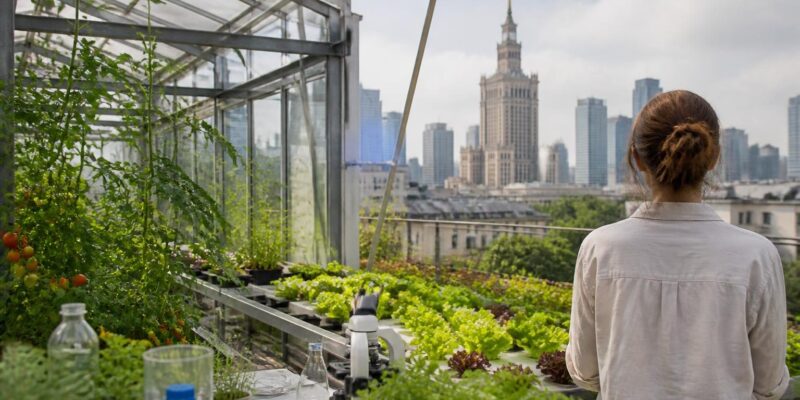
Warsaw is becoming the meeting point this week for an international conversation about how Europe can make its food systems more resilient. On 28 and 29 October, the Polish capital hosts Next Bite Satellite 2026, a focused gathering organised by EIT Food around the theme of resilient agriculture.
The event is taking place at Ujazdowski Castle and is designed for members of the EIT Food community, including researchers, entrepreneurs, investors, companies and other specialists working across the agrifood sector. Participation is by invitation, and the organiser says registration has reached full capacity.
A focused conversation about the future of farming
Next Bite Satellite Warsaw is part of a new format introduced by EIT Food for 2026. Instead of holding one large flagship conference this year, the organisation is staging two smaller satellite meetings with more concentrated themes. The first, held in Brussels in June, examined biotechnology in agrifood. The Warsaw edition turns to the resilience of agriculture.
That subject brings together several practical questions: how farms can remain productive under changing conditions, how technology can support more efficient use of resources, and how innovation can move from research and early-stage entrepreneurship into everyday agricultural practice. EIT Food describes the goal as building farming systems that are sustainable and fit for an uncertain future.
The Warsaw meeting therefore sits at the intersection of food, science and business rather than presenting agriculture as a single-sector issue. Its agenda is intended to connect the people developing new tools with those who finance, test, regulate and eventually use them.
Start-ups put solutions on display
Innovation is one of the visible parts of the programme. EIT Food has announced a group of start-ups that will present their work on stage or in an exhibition area. The participating companies include projects working in areas such as agricultural robotics, crop resilience, biological solutions, farm management, soil systems, water recycling and advanced materials.
Among the companies scheduled to pitch are OMEGA Space Technology, Zymofix, ANT Systems, Agriterna, Kiana Agriculture and Altered Materials. Other start-ups, including Agribot, Alganize, Algisoil, Aquacubes, Bugbiome, Carbone Farmers, Dyneval, MyEasyFarm, Plantik and Veles Sense, are listed for the exhibition area.
The format gives early-stage companies a chance to explain their work directly to potential partners and investors, while giving established organisations a view of technologies that may influence food production in the coming years. It also makes the discussion more concrete: rather than focusing only on broad targets, participants can examine specific tools and business models.
Why Warsaw matters to the agrifood discussion
Poland is a natural location for a conversation about the future of European agriculture. The country combines a large agricultural base with a growing technology and research ecosystem, while Warsaw provides access to national institutions, business networks and international connections.
EIT Food says the event has received honorary patronage from Poland’s Minister of Agriculture and Rural Development. The organisation presents its wider mission as connecting start-ups, corporations, researchers, investors and consumers to accelerate the development of healthier, more sustainable and more resilient food systems.
For Warsaw, the meeting also adds an international food-innovation dimension to the city’s autumn calendar. The event is not a public food festival and does not offer a consumer tasting programme. Its focus is the infrastructure behind food: farming methods, data, finance, technology, skills and cooperation.
From discussion to practical cooperation
The value of a meeting such as Next Bite Satellite will ultimately depend on what happens after the presentations. New agricultural technologies need testing conditions, investment, skilled users and clear routes into markets. Farmers and food companies, meanwhile, need solutions that are workable as well as innovative.
By bringing these groups into the same setting, the Warsaw gathering offers a constructive way to examine that gap. The emphasis on resilience also widens the discussion beyond productivity alone. It asks how farming can become more adaptable, how innovation can support resource efficiency and how European food systems can prepare for long-term change without losing sight of practical needs.
As the two-day programme begins, Warsaw is hosting a conversation that links laboratories, fields and food businesses. Its central message is straightforward: the future of food will be shaped not by one invention, but by the cooperation needed to turn many ideas into reliable practice.
Sources
- EIT Food: Next Bite 2026
- EIT FoodHIVE: Next Bite Satellite Resilient Agriculture
- European Institute of Innovation and Technology: EIT Food
- EIT Food: Start-ups at Next Bite Satellite Warsaw
([eitfood.eu](https://www.eitfood.eu/next-bite/next-bite-2026?utm_source=openai))























Comments