

 By
By 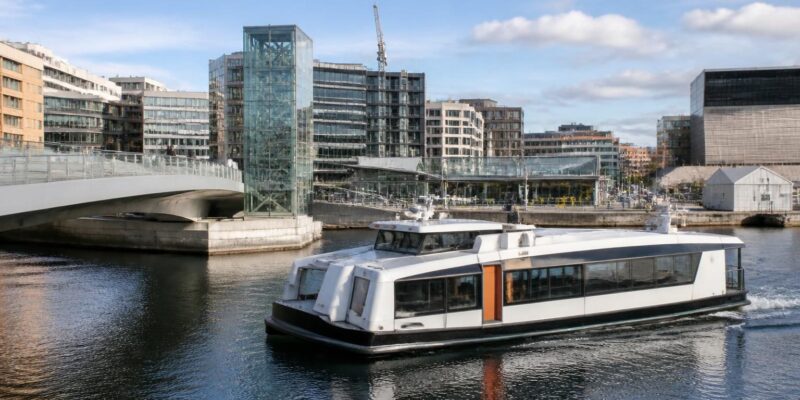
A meeting point for the next phase of urban mobility
Oslo is hosting a two-day Nordic-Baltic meeting focused on one of the practical questions facing growing cities: how can public transport, shared services and urban planning work more closely together? The EIT Urban Mobility North Summit takes place on 9 and 10 September 2026, bringing decision-makers, transport authorities, mobility companies and universities to the Norwegian capital.
The summit is co-hosted by EIT Urban Mobility, the City of Oslo and public transport operator Ruter. Its programme concentrates on sustainable public transport and shared mobility, with discussions on how cities can combine buses, trams, metro services, ferries, cycling, walking and demand-responsive transport into more coherent systems.
The event is especially relevant to the Nordic and Baltic region, where cities are testing different ways to reduce dependence on private cars while keeping neighbourhoods accessible. Organisers describe the summit as a forum for exchanging experience rather than presenting a single model for every city.
From conference room to city street
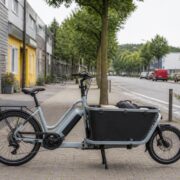
The programme links policy discussion with practical examples from Oslo. On the first day, participants can join a guided Ruter journey combining ferry, metro, tram and bus services. Other site visits focus on shared autonomous on-demand transport and on changes to central streets, including bicycle-priority routes, park streets and new urban development areas.
That structure gives the event a distinctly practical emphasis. Instead of treating mobility as a matter of vehicles alone, the summit presents transport as part of the wider design of the city: where streets are allocated, how neighbourhoods connect to public transport, how people transfer between modes and how new housing or commercial districts are served.
Several Nordic and Baltic cities are represented in the agenda. Speakers and participants include representatives from Oslo and the neighbouring municipality of Bærum, Helsinki’s transport authority HSL, Vilnius city technology services, Riga’s public transport operator, Denmark’s Rejsekort & Rejseplan and Sweden’s Skånetrafiken. The list also includes mobility companies, researchers and operators working on shared transport and digital services.
Why data is becoming an urban-planning issue
A central theme on 10 September is the use of data in Sustainable Urban Mobility Plans, commonly known as SUMPs. The related workshop, organised through the Baltic Sea Region’s urban-mobility platform, examines how cities can move from fragmented information towards more integrated mobility systems.
For local authorities, the challenge is not simply collecting more data. Passenger information, freight movements, infrastructure records, land-use plans and delivery activity are often held by different organisations and governed by different rules. Better coordination could help cities understand how transport changes affect streets, businesses, residents and public services at the same time.
The workshop will also address questions of access, ownership and interoperability. These are important for practical reasons: a journey-planning service, a traffic-management system or a new shared-mobility scheme can only function effectively when the relevant public and private systems can exchange reliable information.
Sharing space as well as vehicles
The summit’s theme extends beyond car-sharing or ride-sharing. Organisers frame “sharing” broadly, including the sharing of public space, data, vehicles and rides. That approach reflects the reality of dense urban districts, where the same street may need to accommodate public transport, deliveries, pedestrians, bicycles, taxis and private vehicles.
Oslo’s site visits provide a local setting for that discussion. The city’s transport network offers several modes within a relatively compact urban area, while its waterfront and central neighbourhoods continue to evolve. Observing how those systems meet in practice can give visiting cities examples to compare with their own conditions.
The summit is not announcing a new regional transport system or a single investment programme. Its immediate development is the creation of a working forum where municipalities, operators and innovators can identify projects and share approaches. The organisers say the event is intended to generate new collaborations and project ideas across Northern Europe.
A constructive regional conversation
For residents, the value of such meetings will ultimately depend on whether ideas discussed by specialists become improvements that can be felt in daily life: easier transfers, clearer travel information, more dependable services, safer cycling connections and better links between new neighbourhoods and established city centres.
Oslo’s summit places those questions in a regional context. Cities from Scandinavia and the Baltic states are facing similar pressures but are experimenting with different combinations of public transport, digital tools and street redesign. Comparing those experiences can help local governments distinguish between solutions that are broadly transferable and those that depend on local geography, governance or travel patterns.
As the event begins on 9 September, its most useful outcome may be less a headline announcement than a more connected network of people working on the same urban challenge. The second day’s data workshop and the practical site visits are designed to keep the conversation close to implementation.

















Comments