

 By
By 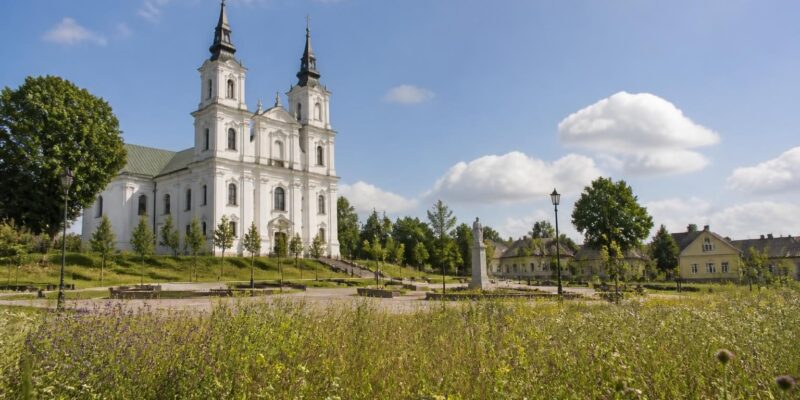
A week-long celebration of Žolinė, Lithuania’s harvest and Assumption tradition, is continuing in the central Lithuanian town of Krekenava through Friday, August 21. The programme combines religious services with concerts, traditional crafts and community gatherings, offering visitors a compact way to experience one of Aukštaitija’s most enduring cultural customs.
The main events are centred on the Basilica of the Assumption of the Virgin Mary, a prominent pilgrimage site in Panevėžys district. The official programme lists August 14–21 as the dates of the Great Žolinė indulgences in Krekenava, with each day assigned a different theme for worship and community participation. ([krekenavosbazilika.lt](https://www.krekenavosbazilika.lt/parapija/aktualu/show/didieji-zolines-atlaidai-krekenavoje-2026?utm_source=openai))
A tradition rooted in the agricultural calendar
Žolinė is celebrated on August 15 and has both Christian and older agrarian associations. The Lithuanian cultural heritage register describes the Krekenava observance as a long-standing regional tradition connected with the maturity of plants, the end of the summer agricultural cycle and the custom of bringing herbs and flowers for blessing.
The heritage register also identifies the Krekenava celebration as a tradition dating back to the late fifteenth century. Its importance lies not only in the religious ceremonies themselves but in the way the event brings together families, local residents, visitors, food producers and craftspeople in the town and around the basilica. ([savadas.lnkc.lt](https://savadas.lnkc.lt/en/elements/element-list/the-tradition-of-z-oline-feast-day-celebration-in-krekenava/?utm_source=openai))
What visitors can find in the programme
The central day of the 2026 programme was Saturday, August 15. According to the basilica’s published schedule, the day included several Masses, a traditional craft fair from 10 a.m., a midday solemn service, a concert in the town square and an evening music programme in and around the basilica.
The schedule continues after the main feast day. Sunday, August 16, is dedicated to farmers and the parish, while later days focus on prayer groups, priests and consecrated people, teachers and catechists, Caritas and the sick, and families. This structure gives the week a distinctly local character: it is not simply a single festival day, but a sequence of gatherings for different parts of the surrounding community.
For travellers, that makes Krekenava suitable for a slower cultural excursion rather than a large-scale entertainment trip. The town can be visited as part of a route through northern and central Lithuania, with the basilica providing the main architectural and cultural anchor. Visitors interested in local history can combine the event with a walk through the town and the surrounding landscape of Panevėžys district.
Why the celebration matters beyond the church calendar
Many Lithuanian seasonal celebrations preserve several layers of meaning at once. In the case of Žolinė, Christian observance sits alongside older practices connected with plants, harvest and household wellbeing. The flowers and herbs associated with the day connect the public celebration to gardens, fields and family traditions.
Krekenava’s programme also illustrates how intangible heritage remains visible through practical participation. A fair, a concert or a procession may be temporary, but together they help maintain knowledge about regional customs and keep the town’s historical identity accessible to visitors who may not already be familiar with Lithuanian traditions.
The event is especially relevant for travellers seeking cultural experiences outside the country’s largest cities. Krekenava offers a direct encounter with a living tradition in its original local setting, rather than a staged presentation created exclusively for tourists. The basilica’s programme provides the clearest current information for those planning a visit during the remaining days of the celebration.
Planning a visit
The Great Žolinė observances run until August 21, 2026. The basilica’s published schedule gives the dates and themes of the remaining days, while the Lithuanian cultural heritage register provides background on the tradition and its place in Aukštaitija’s cultural landscape.
Visitors should check the organiser’s latest notices before travelling, particularly for service times, concert details and any changes to the programme. As a small-town event, the experience is best approached with respect for the religious setting and with time allowed for quiet visits as well as public activities.













Comments