 By
By 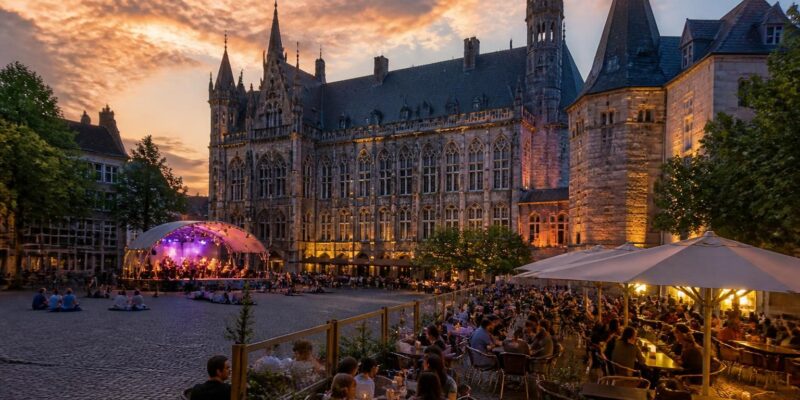
A sporting championship becomes a public city festival
Aachen is using the FEI World Championships Aachen 2026 as a platform for a broader cultural programme in the city centre. From 11 to 23 August, the Aachen WM Special is bringing concerts, exhibitions, guided tours, food and public viewing to the streets and squares around the historic centre.
The programme is designed to connect the competition in the Soers district with everyday urban life. Residents and visitors who do not have tickets for the championship can still follow the event through public screenings, cultural activities and free evening performances. The city describes the initiative as a way to make the atmosphere of the championships accessible beyond the stadium.
The FEI World Championships themselves bring approximately 650 athletes from 35 countries and around 800 horses to Aachen, according to the city’s event information. The competition is expected to attract around 500,000 visitors over its two-week run. The accompanying city programme gives the large-scale event a distinctly local dimension, using Aachen’s squares, museums and public spaces as meeting places.
Free concerts on the historic market square
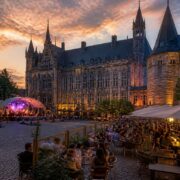
The most visible part of the WM Special is a sequence of free open-air concerts on the Markt. The programme began on 11 August and continues through 23 August, with performances scheduled each evening at 8:30 p.m.
The line-up combines local, national and international acts. It includes the brass-pop group Querbeat, singer Álvaro Soler, the band MIA., Balkan and electronic music artist Shantel, Marley’s Ghost, Knallblech and Harris & Ford. The series closes with Elton & the Joels, a live show built around songs associated with Elton John and Billy Joel, followed by a campfire-themed evening.
On Sunday, 16 August, the Berlin band MIA. is scheduled to perform on the market square. The open-air format is free of charge and is intended for a broad audience, including families, older residents, visitors and people attending the championships primarily for the sport.
The concerts also highlight how Aachen is using existing urban spaces rather than creating a separate festival site. The Markt, located beside the city’s historic town hall and cathedral quarter, becomes a temporary public stage while retaining its role as a central meeting point.
Museums add an artistic perspective
The cultural programme extends into Aachen’s museums. The Centre Charlemagne is presenting “100 Years of CHIO”, an exhibition looking at the history of Aachen’s internationally known equestrian tradition. The exhibition places the current championships within the longer development of the city’s relationship with horse sport and major public events.
At the Suermondt-Ludwig-Museum, “Horses in Art” examines the animal’s place in European visual culture through works associated with artists including Dürer, Rubens and Goya. The Ludwig Forum for International Art is contributing a contemporary perspective with “Centaur – Human and Horse”, a theme that allows the relationship between people, animals and imagination to be considered beyond the sporting arena.
Other activities include guided walks through the old town, a library holiday activity based on hobby horsing and an oversized horse-themed chess installation. These smaller events give the programme a family and educational dimension, while also encouraging visitors to explore parts of the city away from the main competition grounds.
A civic meeting place during a major event
The Aachen WM Special is being organised by the Aachen-based event and marketing network MAC with support from the city and sponsors. The city’s official programme describes the initiative as a combination of culture, food, concerts and shared public viewing.
That combination matters because large sporting events often divide audiences between ticket holders and everyone else. Aachen’s approach is to create several levels of participation: visitors can attend a concert, view an exhibition, watch highlights from the competition, join a guided tour or simply spend time in the centre without entering the stadium complex.
The programme also gives local businesses and cultural institutions a role in the championships. Restaurants, museums, retailers and public venues become part of the visitor experience, helping distribute activity across the city rather than concentrating it at the event site.
With the championships continuing until 23 August, Aachen’s cultural programme will remain active for another week. Its emphasis on free access, established city institutions and shared public spaces offers a constructive model for linking international events with local cultural life.




Comments