
 By
By 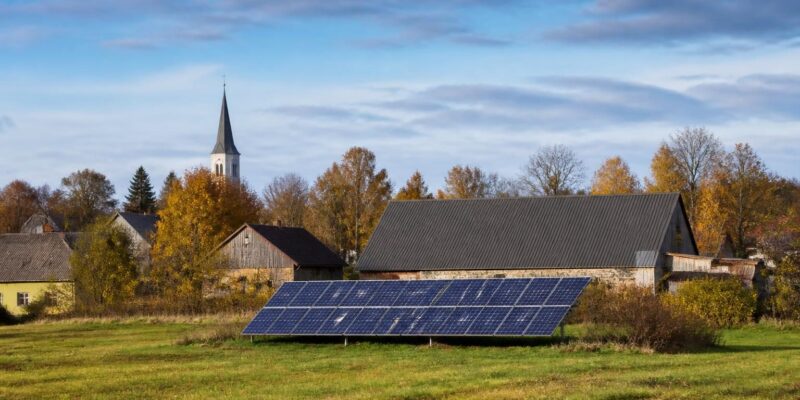
From energy idea to local practice
Estonia is hosting a timely international discussion about one of the most practical questions in the clean-energy transition: how can rural communities move from individual renewable-energy projects to locally organised systems that deliver lasting benefits?
The question is at the centre of the EC4RURAL project’s annual meeting in Tartu on 23–24 September 2026. The gathering brings together project partners working with rural municipalities and communities in Estonia and Galicia, Spain. According to the project announcement by the Galician Federation of Municipalities and Provinces, the meeting is being used to compare pilot experiences, identify obstacles and discuss how local energy communities can remain active beyond the initial project period.
The event is taking place as Estonia’s own debate about community energy becomes more concrete. The University of Tartu and the Estonian University of Life Sciences recently hosted a separate conference on 22 September focused on how solar-energy communities can move from an idea to an operating model. That conference presented practical tools for assessing feasibility, financing and cooperation between local authorities, residents, apartment associations, businesses and researchers.
Why rural communities matter
Energy communities are designed to give local people a more active role in renewable-energy production and use. They can bring together households, companies, municipalities or civic organisations around solar installations, storage, energy efficiency or local energy planning.
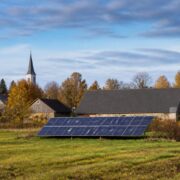
In rural areas, the model can connect energy policy with wider questions of development. A village may be interested not only in producing electricity, but also in lowering the cost of operating a community building, supporting local businesses, improving the energy performance of homes or retaining more value within the local economy.
The EC4RURAL meeting reflects that broader approach. The project’s Estonian partners include the University of Tartu, the Estonian Association of Cities and Municipalities, the Tartu Regional Energy Agency and the Estonian Leader Union. The University of Tartu’s project information says the work is intended to strengthen relationships between municipalities and rural communities while ensuring that less-developed and peripheral areas can participate in the energy transition.
Learning from local pilots
The Tartu programme includes an exchange of experience between Estonian and Galician pilot areas. It also includes a technical visit to Põltsamaa, where participants are examining local renewable-energy initiatives, the Umbusi community and the work of the Jõgevamaa Cooperation Centre, which supports measures designed to reduce energy costs.
That emphasis on visiting operating or emerging initiatives is important. Community energy is often discussed through national targets and large infrastructure, but its success also depends on smaller decisions: who owns an installation, who can use the electricity, how costs are shared, and whether local residents have enough information to take part.
Recent reporting by Estonia’s public broadcaster ERR has highlighted the same practical dimension. Participants in a 22 September conference in Tartu described local energy communities as responses to specific needs, such as high electricity costs or the desire to make better use of locally generated solar power. The report also noted that communities continue to face regulatory and technical barriers, including restrictions on sharing surplus electricity through the grid.
A constructive test for the transition
The Tartu meeting is therefore less about presenting a single universal model than about testing what can work in different places. Rural communities vary in population, infrastructure, income and access to technical expertise. A solution suitable for a village in southern Estonia may need to be adapted elsewhere.
That flexibility is also the project’s constructive contribution. By combining municipal knowledge, research, community experience and European cooperation, EC4RURAL is treating the energy transition as a social and organisational process as well as a technological one.
The meeting’s second day is dedicated to future planning, project indicators, resources and the continuation of results. For Estonia, the significance lies in whether the lessons gathered in Tartu can help more communities evaluate realistic projects, avoid unnecessary complexity and develop renewable energy around local priorities.
Community energy will not replace national grids or larger renewable projects. It can, however, give rural residents a clearer role in the transition and help connect climate goals with everyday concerns such as household bills, local services and regional resilience.












Comments