
 By
By 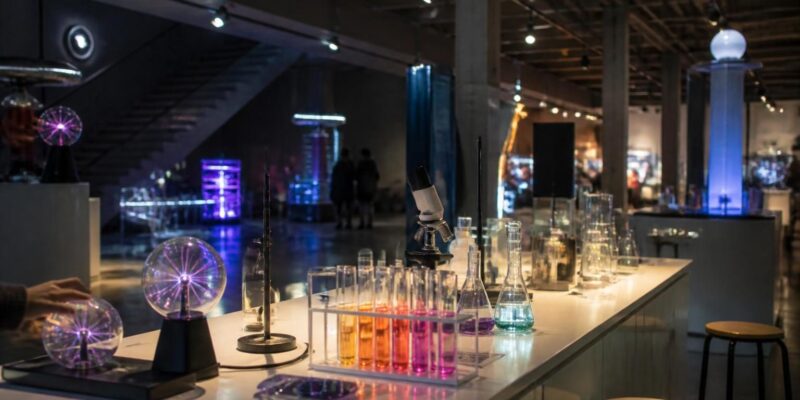
Laboratories, lecture rooms and research facilities across Małopolska are opening to the public on Friday, 25 September 2026, as the region stages the 20th edition of its Night of Scientists. The anniversary programme presents science as a shared civic experience, with residents invited to move beyond passive observation and take part in demonstrations, workshops and discussions.
The event is coordinated by the Małopolska regional government and, for the first time, the Małopolska Science Centre Cogiteon is serving as the central coordinator. The programme brings together universities, research institutes, museums, libraries, cultural organisations and companies with research and development departments. Activities are planned in Kraków and other towns across the region.
From “wow” to “why”
This year’s theme, “From WOW! to WHY?”, reflects the organisers’ emphasis on turning curiosity into understanding. The public will be able to see how researchers work, ask questions and test ideas in settings that are normally reserved for students, staff or specialist teams.
The regional government describes the initiative as both a science-popularisation project and a way of encouraging young people to consider education and careers in research. That social dimension is important: the evening is designed not only for school groups, but also for families, adults and anyone interested in finding out how scientific knowledge is produced.
At Cogiteon, the opening programme will include the announcement of winners in a competition for children and young people. The centre will also host a theatrical production combining puppetry, music and multimedia with questions drawn from neuroscience, philosophy and information theory. The format underlines the organisers’ attempt to connect scientific subjects with wider cultural forms.
Hands-on science in Kraków
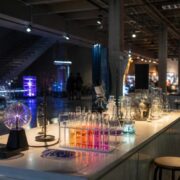
The AGH University of Science and Technology is offering one of the broadest programmes in Kraków. Visitors can take part in a virtual journey into space, explore nanotechnology and materials science, isolate DNA and encounter industrial robots and virtual-reality systems. Demonstrations of electrical discharges are also planned in the university’s high-voltage laboratory.
AGH’s Faculty of Space Technologies is inviting visitors to examine laboratories and meet students involved in space-related research. Its programme includes activities aimed at participants aged 12 and above, giving teenagers an opportunity to see the engineering and scientific work behind technologies often encountered only through images or popular media.
The Academic Centre for Materials and Nanotechnology is presenting chemistry demonstrations, laboratory tours and a hands-on activity involving the casting of a small aluminium owl. Such activities offer a tangible way to explain how materials are made, tested and used in modern technologies.
Research institutions join the regional programme
The Institute of Nuclear Physics of the Polish Academy of Sciences is preparing physics demonstrations, popular-science films and tours of its laboratories and workshops. It is also running competitions for pupils and promoting a “Scientists in Schools” element, in which researchers visit educational institutions to introduce students to their work.
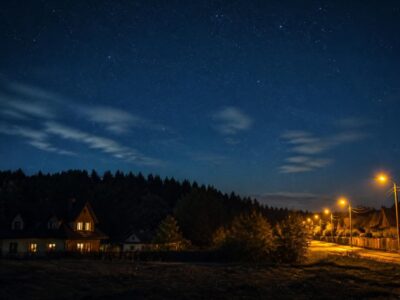
Other participating institutions are preparing programmes in astronomy, pharmacology, biology, engineering, environmental research and the humanities. In Niepołomice, the Youth Astronomical Observatory is inviting visitors of all ages to observe the work of astronomers and take part in free activities combining education with practical demonstrations.
The range of subjects matters because it presents science as a broad social activity rather than a narrow field associated only with laboratories or advanced technology. Visitors can encounter questions about the universe, the human body, materials, communication and the environment within a single regional programme.
A public role for research
Open laboratory evenings cannot replace long-term science education, but they can make research more accessible and less intimidating. They allow residents to see the people, spaces and equipment behind discoveries, while giving institutions an opportunity to explain why research takes time and how evidence is tested.
The 2026 edition also illustrates the value of cooperation between public authorities, universities, cultural institutions and private-sector research teams. Rather than concentrating activities in one venue, the organisers are distributing them across the region, making the event part of local life in several communities.
For Małopolska, the anniversary is therefore more than a celebration of a popular annual event. It is a public invitation to ask questions, examine evidence and understand how research connects with everyday life. The programme begins in the afternoon and evening of Friday, 25 September, with registration required for some activities because of limited laboratory capacity.








Comments