 By
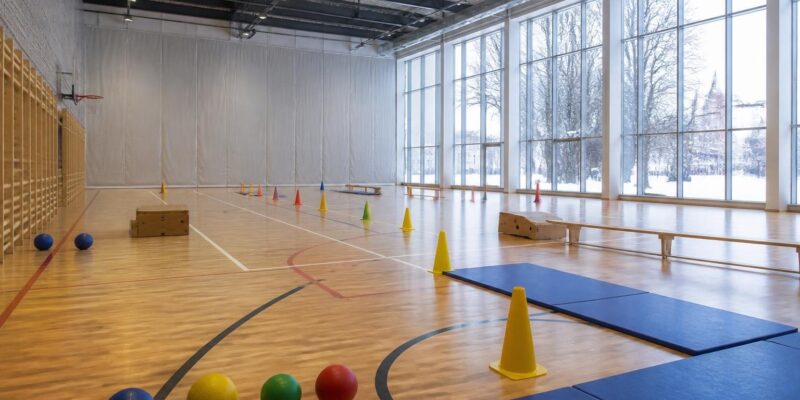
Teachers and specialists from Estonia’s movement-education field are gathering in Tallinn on Friday, November 13, for a two-day conference focused on making school-based physical activity more inclusive, practical and sustainable. The event, titled “Movement Education That Carries and Includes”, is being held at Tallinn University and continues through Saturday, November 14.
The conference is organised by the Estonian Association of Physical Education and held in cooperation with Tallinn University’s Institute of Natural and Health Sciences. Its programme brings together lectures, workshops and practical activities aimed at people who teach movement in schools or support children’s physical development. ([tlu.ee](https://www.tlu.ee/taxonomy/term/2738/sundmused/konverents-liikumisopetus-mis-kannab-ja-kaasab?utm_source=openai))
From physical education to movement education
The choice of title reflects a broader shift in how schools discuss physical activity. Rather than treating lessons mainly as preparation for competitive sport, the organisers present movement education as a way to support participation, social skills, everyday wellbeing and confidence. That approach also recognises that pupils arrive in class with different abilities, interests and experiences.
The opening programme addresses the sustainability of the teaching profession itself. Kaarel Zilmer, a long-serving movement teacher and researcher, is scheduled to speak about how educators can remain effective in demanding work without exhausting their physical and mental resources. The session connects teacher wellbeing with the quality and continuity of classroom practice.
This is a particularly practical angle for a profession in which the teacher is often expected to demonstrate exercises, manage groups, adapt tasks and maintain a positive atmosphere at the same time. The conference programme frames professional endurance not as a private matter, but as part of the conditions needed for good teaching.
Connecting movement with other subjects
Saturday’s workshops are designed to give participants ideas that can be used directly in lessons. One session, led by movement teacher and coach Laura Väljaots, examines how physical education can be naturally integrated with other school subjects. Participants are expected to work through activities that connect movement with wider learning rather than treating interdisciplinary teaching as an additional task placed on top of the regular lesson.
That model can be useful in schools where timetable pressure makes it difficult to create separate programmes for every educational goal. A movement task can, for example, involve communication, problem-solving, cooperation or spatial thinking while still retaining a clear physical component. The emphasis in the conference description is on practical transfer: teachers should leave with approaches they can adapt immediately.
Another workshop, led by volleyball lecturer and games designer Raini Stamm, focuses on group activities. The programme includes ice-breakers that develop attention and reaction speed, team-building exercises that support cooperation, and larger games that combine social development with physical ability.
Inclusion as a classroom method
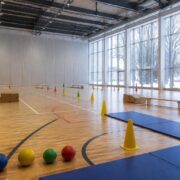
The conference’s focus on inclusion is not limited to access. It also concerns the design of activities so that pupils with different levels of confidence and physical ability can take part meaningfully. Games that offer several roles, adjustable levels of difficulty or cooperative goals can help teachers avoid a simple divide between the fastest or strongest pupils and everyone else.
Such methods are relevant beyond the gym. A classroom that gives pupils a chance to cooperate, negotiate and experience progress can strengthen the same habits needed for group projects and everyday school life. Movement education can therefore be viewed as part of a wider educational environment rather than as an isolated subject.
The event also illustrates the role of universities as meeting places for professional learning. By hosting the conference across Tallinn University facilities, the organisers are linking teacher education, applied workshops and the experience of practising educators. The programme is not presented as a single reform or a new national regulation, but as a forum for exchanging methods that can gradually shape school practice.
A timely professional meeting
The Tallinn conference begins at a moment when schools are paying increasing attention to pupils’ activity, participation and wellbeing. Its value lies in the combination of discussion and demonstration: participants can consider the wider purpose of movement education while also trying out concrete exercises and lesson ideas.
For Estonia’s teachers, the two-day gathering offers a chance to compare experiences across schools and professional roles. For the wider public, it provides a reminder that physical education is not only about sporting performance. It can also be a way to build confidence, cooperation and a more welcoming school culture.







Comments