 By
By 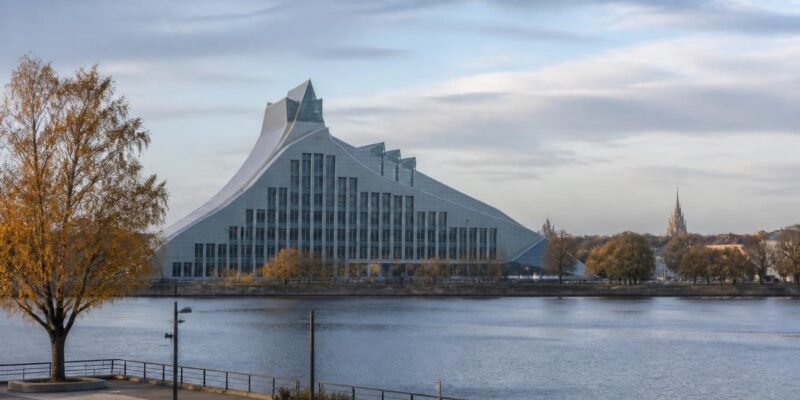
Riga is hosting the eighth Baltic Summer School of Digital Humanities from August 3 to 7, bringing an international group of researchers, students and cultural-heritage professionals to the National Library of Latvia. The 2026 programme, titled “Cultural Data Analytics and Meaning”, focuses on how information held by libraries, museums and archives can be prepared, analysed and interpreted for humanities research.
The summer school is taking place during the week of August 3–7, making it one of the most current culture-and-research developments in Latvia on August 6. It is organised jointly by the National Library of Latvia, the Faculty of Humanities of the University of Latvia and the University of Latvia’s Institute of Literature, Folklore and Art. ([digitalhumanities.lv](https://www.digitalhumanities.lv/bssdh/2026/?utm_source=openai))
From collections to questions
Digital humanities sits at the meeting point of cultural research and computational methods. Rather than treating digitised books, artworks, catalogues or archival records simply as online copies, the field asks how data structures can reveal patterns, relationships and changes across time.
This year’s programme gives particular attention to museum and library metadata: the descriptive information that identifies an object, places it in context and connects it with other records. Such data can help researchers compare collections, trace networks of people and institutions, visualise cultural activity or make large bodies of material easier for the public to explore.
The organisers describe the five-day programme as suitable for participants from beginner to intermediate level, with no prior digital-humanities computing experience required. That broad entry point is important for memory institutions, where curators, librarians and historians may possess deep subject expertise without necessarily working as programmers or data scientists.
Practical workshops alongside public lectures
The workshops are designed around the full research process, beginning with the preparation and cleaning of data. Participants are working with tools including OpenRefine, Orange Data Mining, Gephi and Flourish. These platforms support tasks such as identifying inconsistencies in datasets, examining networks, building analytical workflows and presenting results visually.
The programme also includes an updated workshop on using large language models through an application programming interface for humanities data analysis. In the context of the school, the subject is presented as one method among several rather than as a replacement for scholarly judgement. The emphasis remains on preparing reliable data, interpreting results and explaining how conclusions have been reached.
Lectures address broader questions of meaning and interpretation. Topics listed by the organisers include multimodal interpretation of works of art, the computer as archive and research agent, eighteenth-century print culture, and structured-data approaches to historical collections. The combination of technical workshops and conceptual lectures reflects the central challenge of digital humanities: tools may process information quickly, but researchers still have to decide what the information means.
A Latvian platform with regional reach
The summer school is part of a wider effort to strengthen digital humanities in Latvia. The University of Latvia’s Faculty of Humanities identifies research, education, digital cultural heritage and international collaboration as core areas for its Digital Humanities Center, established in 2025. The Baltic summer school gives those priorities a practical, recurring format in Riga. ([hzf.lu.lv](https://www.hzf.lu.lv/en/about-us/centres/digital-humanities-center/?utm_source=openai))
Latvia’s Ministry of Culture has described the event as an intensive international programme for researchers, teachers, students and professionals working in archives, libraries and museums. The ministry also highlighted the public dimension of the programme: one open lecture each day is being made available through the National Library’s online channels, allowing people beyond the registered group to follow parts of the discussion. ([km.gov.lv](https://www.km.gov.lv/lv/jaunums/atverta-registracija-baltijas-digitalo-humanitaro-zinatnu-vasaras-skolai-2026?utm_source=openai))
The 2026 edition has a participation fee of €60, and the organisers state that registration is now closed. Participants who complete the requirements can receive ECTS points or micro-credentials. The organisers’ programme page also lists daily wrap-up and sharing sessions, intended to help participants compare experiences and build a community around the methods introduced during the week. ([digitalhumanities.lv](https://www.digitalhumanities.lv/bssdh/2026/?utm_source=openai))
Why it matters beyond the classroom
For Latvia’s cultural institutions, the value of this kind of training extends beyond a single week. Digitisation has made more collections available, but accessibility alone does not guarantee that material can be searched, compared or understood. Consistent metadata, transparent workflows and visual explanations can make cultural resources more useful to scholars, teachers and the wider public.
The summer school also illustrates a broader change in the role of libraries and museums. They are not only places where collections are preserved; they are increasingly places where cultural data is interpreted, connected and reused. Holding the programme at the National Library of Latvia underlines that link between traditional memory institutions and newer forms of research.
As the 2026 school continues through August 7, Riga is serving as a meeting point for people working on the practical question of how cultural collections can produce meaningful knowledge in a digital environment. The result is a constructive story about skills, cooperation and the long-term accessibility of Latvia’s cultural heritage.














Comments