

 By
By 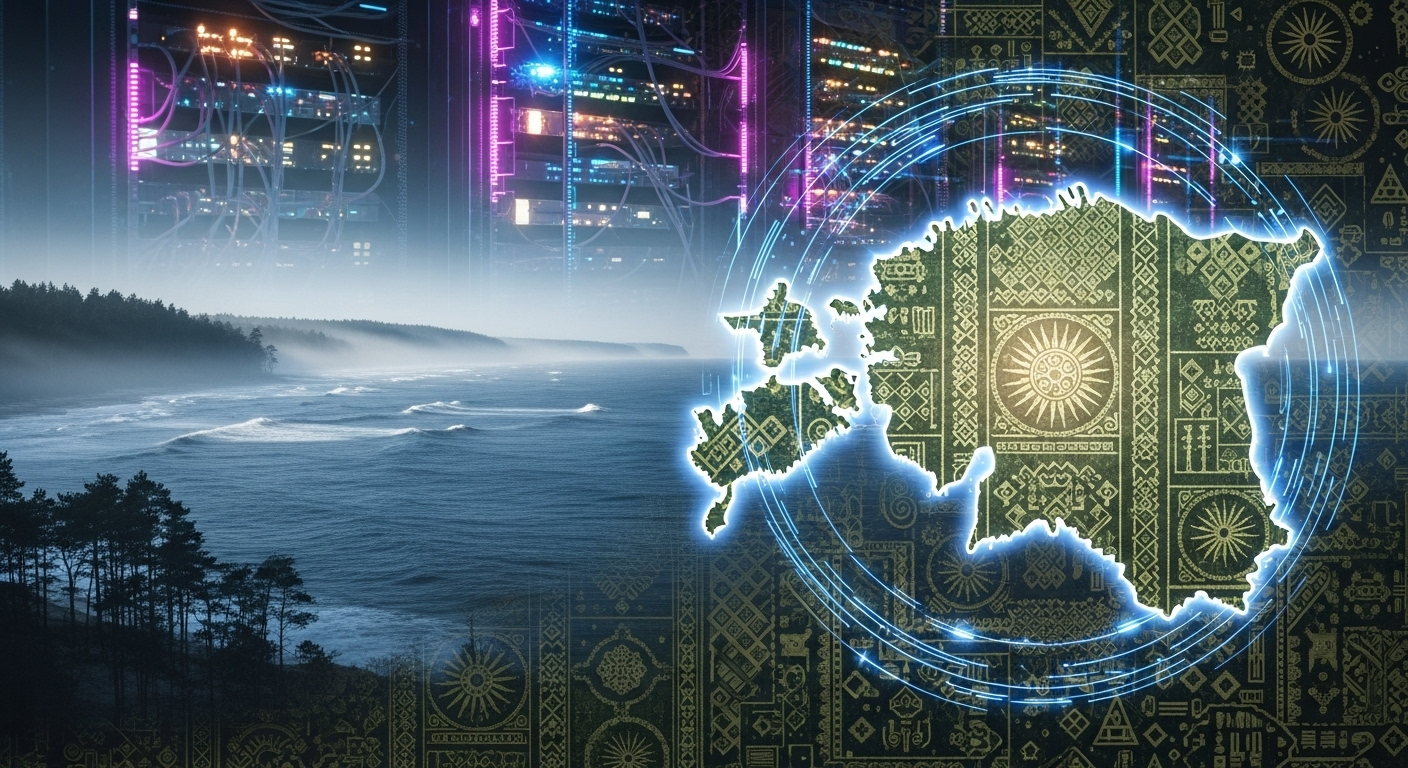
The Baltics are more than just a place on the map. They are a space of cultural crossroads where Scandinavian myths, Germanic heritage, Slavic motifs, and local traditions intertwine.
But in the 21st century, this cultural code is no longer archaic. Today, it thrives on TikTok and Spotify, on the runways of European fashion weeks, and in the urban fabric of new neighborhoods in Tallinn, Riga, and Vilnius.
This transformation is rooted in a deep historical memory. A region that has endured centuries of foreign influence has preserved its unique identity, as evidenced by the peaceful “Baltic Way” of 1989, when two million people formed a human chain to declare their desire for freedom. Today’s artists, designers, and architects are asking themselves a central question: what does it mean to be “Baltic” in an era of globalization? The answer, increasingly, is to preserve depth while speaking to the world in a modern language.
Music: From Folklore to TikTok Trends

There is a special, almost magical, alchemy to Baltic music. It’s not just sounds, but an echo of the ages. In Latvia, cultural life has always found its expression in the vast heritage of folk songs known as dainas. In Estonia, the wisdom of the people is captured in the epic poem “Kalevipoeg,” which is a compilation of ancient folk songs and shamanic chants. Thus, the act of weaving cultural history into music is a centuries-old tradition that precedes modern innovation.
Today, Baltic artists continue this tradition, but with electronic and digital tools. A prime example is the Lithuanian artist Rasa Serra, who organically integrates traditional folk melodies into contemporary electronic tracks. Others, like World Trio, create a unique sound that resonates far beyond the region.
Digital platforms like Spotify and TikTok have become the main showcases for this transformation. Recently, while examining Spotify charts in Lithuania, I noticed an interesting pattern. In the 2024 list of the most popular artists, local stars such as Jessica Shy, Free Finga, and Rokas Yan occupy the same top positions as global superstars Billie Eilish and The Weeknd. This is not a zero-sum game. The digital ecosystem allows for the simultaneous consumption of both local and global content. Baltic culture has ceased to be a protected bubble; it has become part of a single global playlist, where local identity is a genre that coexists on equal footing with others.
| Artist (Country) | Top Spotify Position (Lithuania) | Genre |
| Jessica Shy (Lithuania) | 1 | Pop |
| Free Finga (Lithuania) | 2 | R&B, Pop Music |
| Rokas Yan (Lithuania) | 4 | Pop |
| Billie Eilish (USA) | 3 | Pop |
| The Weeknd (Canada) | 7 | R&B, Pop |
Fashion and Design: Minimalism with a Baltic Soul

If Scandinavian minimalism is often associated with functionality and simplicity, Baltic aesthetics infuse it with deep meaning. It is not an imitation, but an expression of an inner world born from resilience, ingenuity, and a reserved character inherent in the local people. This philosophy is reflected in the “slow fashion” trend embraced by many brands in Latvia and other Baltic countries.
It seems to me that this commitment to slow fashion principles is more than just a commercial strategy. It is a powerful reflection of deeper cultural values. The historical closeness of the Baltic peoples to nature and their agrarian roots make the movement for sustainability and the use of local materials a natural and authentic choice. Latvian brands like Nóló focus on their own production in Riga, which allows them to control quality at every stage, as well as on “speaking” prints with an author’s touch. Another example, Bergs Privé, masterfully combines “Scandinavian restraint with a bright color palette and bold textures,” using high-quality natural materials. By embracing “slow fashion,” Baltic designers are not just joining a global movement; they are exporting their unique, ethical vision that feels genuine and deeply rooted. Thus, what starts as a trend becomes a core statement about the region’s identity.
Architecture: Preserve and Innovate

Baltic cities also carry this cultural code. The Soviet legacy and historical architecture are intertwined with new projects. The revitalization of post-industrial zones represents not just construction initiatives, but fundamental acts of social and architectural re-evaluation, based on the principle of “adaptive reuse,” which minimizes waste and preserves cultural heritage.
In Tallinn, a former railway factory has been transformed into Telliskivi Creative City—Estonia’s largest center for creative industries. More than 300 companies operate here, most of which are creative enterprises. Nearly a thousand cultural events are held annually, and gastronomic establishments, such as the Fotografiska restaurant, have received Green Michelin stars for sustainable development. Similarly, the former Noblessner shipyard has been transformed into a modern residential quarter with a yacht port.
In Riga, old buildings are getting a new lease on life thanks to the Free Riga initiative, which focuses on the creative reuse of abandoned buildings. For example, on Tallinas Street, former buildings have become workshops and residences for artists. Another landmark project is the Kalnciema Quarter, where historic wooden buildings have been turned into a cultural space with a market, gallery, and wine shop.
The most striking example of architectural revitalization in Vilnius is, without a doubt, Lukiškės Prison 2.0. This building, with a 115-year history of enduring tsarist, Nazi, and Soviet occupations, was once a symbol of confinement. Today, it has opened its doors to the public and become home to 250 artists and cultural figures. Its architecture has even attracted the attention of the global film industry, serving as a backdrop for the fourth season of the series “Stranger Things”. What was once a grim place now serves as a venue for concerts and cultural events. This transformation is a powerful metaphor for the entire Baltic experience: a space symbolizing limitation becomes a place of radical creative freedom. Another example is the Paupys Quarter in Vilnius, where a former Soviet factory has become a vibrant and modern neighborhood.
Digital Identity

The cultural code of the Baltics is being exported today not only through material objects but also through the digital space. One vivid example is the Digital Art House in Riga—a multimedia center offering immersive exhibitions dedicated to world masters such as Monet and Kandinsky. The focus on showcasing global art in a cutting-edge digital format demonstrates that the Baltics are not just exporting their own culture but are also becoming a sophisticated center for the reception and curation of world culture.
The use of the digital environment for exporting identity can be compared to the principles of NFTs (non-fungible tokens). At its core, an NFT is a unique digital original that, unlike a regular copy, possesses unique properties and authenticity. In a sense, Baltic identity is a “non-fungible” cultural asset. It is deeply authentic, transparently connected to its history and nature, and focused on high quality. It is not an easily reproducible copy. Digital tools, from Spotify to TikTok, as well as collaboration between countries on digital infrastructure development, such as the Nordic-Baltic eID collaboration , serve as the “blockchain” that allows this unique identity to be transparently “sold” and valued on the global market without losing its original essence.
Identity in Motion
The defining feature of the Baltics is that its identity is not static. It is not a museum piece or a collection of folkloric clichés. It is a process—a constant movement from ancient legends to global pop culture, from old ornamental patterns to modern digital design. To be “Baltic” in the 21st century is to master the art of connecting the seemingly unconnected: the depth of tradition with the lightness of modernity.
A Lesson for the World

The Baltic cultural code is no longer regional exotica; it has become part of a global conversation about how to preserve roots while being modern. Through the examples of music, fashion, and architecture, we see that the common denominator is not the rejection of globalization, but a strategic and innovative interaction with it, where authenticity becomes the main currency.
In the past, the Baltic countries were perceived as the periphery of Europe, but today they are becoming a source of new ideas. Their history of resilience and ingenuity has taught them that the path to the global stage is not paved with imitation, but with the confident export of their unique identity. The Baltics show how the local can become global without losing its soul, and this lesson is universal for the whole world. The region continues to serve as a testing ground for how a small nation with deep roots and progressive thinking can lead a global dialogue on creativity, identity, and technology.
Photos: Associative images by “Sagittarius Studio”
















Comments