
 By
By 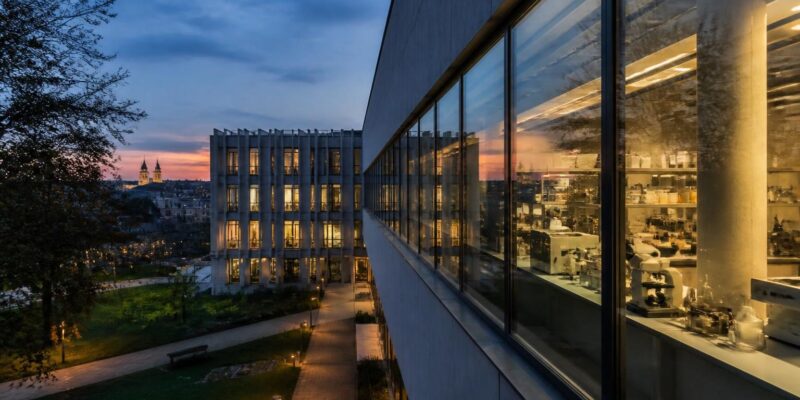
Lithuanian universities and research institutions are preparing to turn science into a public experience on Friday, 25 September 2026, when European Researchers’ Night returns with activities in 11 cities. The annual programme is designed to bring research out of specialist settings and closer to school pupils, teachers, families and anyone curious about how knowledge is created.
Vilnius University announced on 21 September that it will offer more than 25 activities, including lectures, practical sessions, interactive demonstrations, laboratory tours and opportunities to speak directly with researchers. The programme is aimed particularly at pupils from the seventh grade upwards, teachers and members of the general public. ([vu.lt](https://www.vu.lt/visos-naujienos/paskutini-rugsejo-penktadieni-vilniaus-universitetas-kvies-i-europos-tyreju-nakties-renginius?utm_source=openai))
From laboratory doors to hands-on discovery
The Vilnius programme is being organised around the theme of light, with the Lithuanian slogan “Šviesu, kai žinai” — “It is brighter when you know.” That idea gives the event a broad scientific frame: visitors can encounter questions about vision and perception, microscopy, biology, chemistry, digital technologies and the physical properties of light without needing specialist knowledge beforehand.
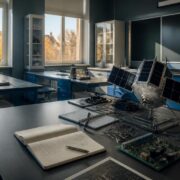
At the university’s Life Sciences Center, visitors are expected to be able to see molecular-biology and stem-cell laboratories, the VU Herbarium and the Zoology Museum. Practical activities will include work connected with biomedical research, DNA, plant identification, holograms and microorganisms. A lecture by researcher Mindaugas Mitkus will examine sight and seeing, linking everyday experience with the science of vision. ([vu.lt](https://www.vu.lt/visos-naujienos/paskutini-rugsejo-penktadieni-vilniaus-universitetas-kvies-i-europos-tyreju-nakties-renginius?utm_source=openai))
The emphasis is not simply on displaying equipment. The format invites visitors to ask questions, try experiments and meet the people who carry out research. That matters for science education because it gives pupils a more concrete sense of what researchers do, how evidence is gathered and why even apparently simple questions can require years of investigation.
A nationwide programme rather than a single-city event
Although Vilnius University is one of the most visible hosts, the Lithuanian programme extends beyond the capital. Events are planned in Vilnius, Kaunas, Klaipėda, Šiauliai, Panevėžys, Marijampolė, Alytus, Utena, Tauragė, Telšiai and Molėtai. Some accompanying activities began on 21 September, while the main European Researchers’ Night takes place on 25 September.
The 2026 Lithuanian programme is part of “Cities in STEAM”, a project involving Klaipėda University, Vilnius University, Vytautas Magnus University, Mykolas Romeris University and Mokslo Sala. The partnership reflects a wider effort to connect science communication with schools, regional institutions and public participation instead of concentrating activity only in the largest academic centres. ([vu.lt](https://www.vu.lt/visos-naujienos/paskutini-rugsejo-penktadieni-vilniaus-universitetas-kvies-i-europos-tyreju-nakties-renginius?utm_source=openai))
For visitors in Vilnius who prefer physics and engineering, the Center for Physical Sciences and Technology is also preparing an evening programme called “See the Unseen”. On 25 September, from 18:00 to 21:00, it will offer quantum-levitation demonstrations, liquid-nitrogen experiments, optics activities, engineering challenges, laboratory puzzles and conversations with researchers. The centre says participation is free, although capacity is limited and advance registration is not required. ([ftmc.lt](https://www.ftmc.lt/events-and-ads/european-researchers-night-ftmc-see-the-unseen/?utm_source=openai))
Connecting local science with a European tradition
European Researchers’ Night is part of a Europe-wide science-communication initiative supported through the European Commission’s Marie Skłodowska-Curie Actions. The 2026 edition will take place on 25 September across Europe, with universities and research institutes offering experiments, games, talks, exhibitions and other public activities. The European Commission describes the event as an opportunity for people of all ages to meet researchers and explore how research affects everyday life. ([erc.europa.eu](https://erc.europa.eu/news-events/events/erc-grantees-european-researchers-night-2026-edition?utm_source=openai))
For Lithuania, the event offers a practical way to strengthen the relationship between scientific institutions and their surrounding communities. A pupil who visits a laboratory, handles a scientific instrument or speaks with a doctoral student may not leave with a complete understanding of a research field. They may, however, leave with a clearer idea that science is a human, collaborative and accessible activity.
That public dimension is especially relevant at a time when schools are seeking more opportunities for pupils to connect classroom subjects with possible future studies and careers. Researchers’ Night does not present science as a finished collection of facts. Instead, it shows the questions, methods and people behind those facts — and gives visitors a chance to take part, even if only for an evening.
Planning a visit
Activities differ by city, institution and age group. Visitors should consult the organisers’ programme before travelling, particularly for laboratory tours or sessions with limited capacity. In Vilnius, the main university and research-centre activities are scheduled for 25 September, with evening events extending into the night. The wider European programme also encourages families, teachers and pupils to attend together.
For Lithuanian science institutions, the event is both an open day and a public conversation: a chance to show what is being studied locally, explain why research takes time and invite a new generation to see laboratories as places of possibility rather than closed professional spaces.









Comments