 By
By 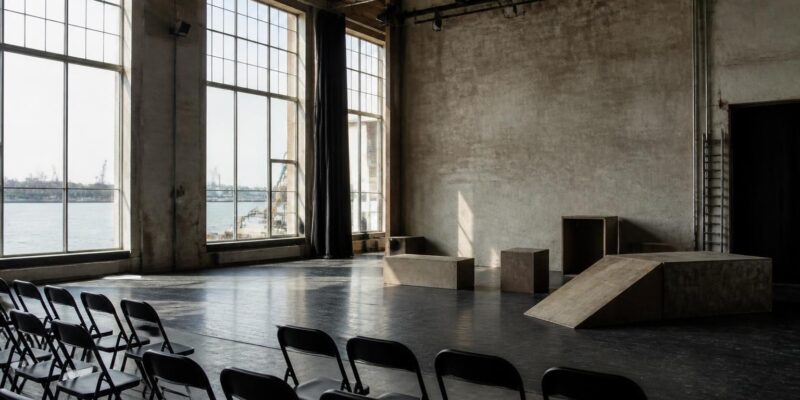
Klaipėda is hosting the 14th edition of Young Theatre Days from 5 to 8 August, bringing together directors, actors, set designers, composers and other performing-arts professionals for four days of experimentation and collaboration. The festival’s public programme culminates on Saturday, 8 August, when audiences can see the newly created theatre sketches free of charge in different locations around the port city.
The event is organised by Klaipėda Youth Theatre and supported by the Culture Factory, one of the city’s main creative-industry spaces. Rather than presenting finished productions, Young Theatre Days focuses on the early stages of artistic work: teams are formed at the beginning of the festival, ideas are developed over several days and the results are then shared with an audience.
A festival built around making, not only presenting
The format gives audiences an opportunity to observe theatre before it becomes a conventional performance. According to the organisers, four creative teams are working with directors Agnė Matulevičiūtė, Darius Gum auskas, Uršulė Bartoshevičiūtė and Naubertas Jasinskas. Each group brings together artists from different disciplines, allowing a director’s initial idea to be tested through movement, sound, visual design and acting.
That emphasis on process is central to the festival’s identity. Young Theatre Days has become a meeting point for emerging and established professionals who may not normally work in the same team. The compressed schedule encourages decisions, exchange and practical experimentation, while the final sketches give artists a first response from people outside the rehearsal room.
The Culture Factory describes the festival as an opportunity for theatre professionals to create, experiment, exchange ideas and collaborate. The programme also includes professional workshops, including sessions led by contemporary dance artist and choreographer Mantas Stabačinskas.
Klaipėda becomes part of the programme
The festival is not confined to a single theatre auditorium. Its organisers say the four-day programme will unfold across different theatre and cultural spaces in Klaipėda, connecting artistic work with the city’s wider cultural life. The final sketches on 8 August are designed as public events rather than closed industry presentations, making the work accessible to residents and visitors who may not usually attend professional theatre gatherings.
This approach reflects Klaipėda’s position as a city where cultural activity often intersects with industrial architecture, waterfront identity and public space. By moving between venues, the festival invites audiences to encounter new work in a less formal setting and gives creators an opportunity to consider how a performance changes when it leaves a traditional stage.
Open encounters around the final presentations
The festival’s accompanying programme also creates informal opportunities for contact between artists and audiences. Earlier in the week, the organisers have scheduled gatherings focused on professional stories and theatre knowledge, while the closing evening is planned as an informal celebration for participants and spectators.
These events complement the main creative work without turning the festival into a conventional showcase of completed productions. The emphasis remains on exchange: how artists from different backgrounds develop a shared language, how a short working period can generate a performable idea and how public feedback can become part of the creative process.
Why the format matters
For a regional cultural scene, an event of this kind offers more than a sequence of performances. It helps build professional networks, gives younger artists a setting in which to test ideas and brings experimental work into contact with a wider public. The festival’s public-facing structure also reduces the distance between theatre professionals and the people who live in the city.
Young Theatre Days therefore presents theatre as a collective practice rather than only a finished product. The sketches shown on 8 August may be brief and unfinished by design, but that is precisely the point: audiences are invited to see how a performance begins, how different artistic roles meet and how a city can become an active setting for new cultural work.







Comments