

 By
A new price signal for maritime operators
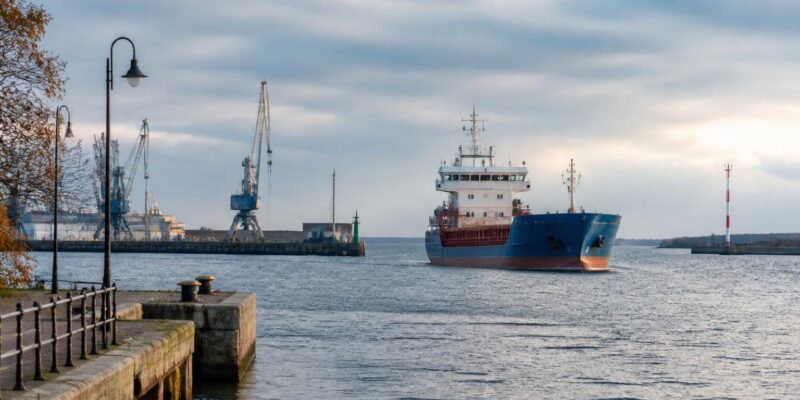
Estonia’s parliament has approved a change to the country’s maritime fee system that will make environmental performance a more visible part of the cost of calling at an Estonian port. From 1 January 2027, ships with above-average environmental ratings will be eligible for reductions of up to 25 percent on standard waterway fees.
The measure is intended to combine two objectives: encourage shipping companies to invest in cleaner vessels and help Estonian ports remain commercially attractive as maritime operators face rising costs linked to emissions regulation. The Riigikogu approved the amendments to the Maritime Safety Act on 27 November 2026. ([news.err.ee](https://news.err.ee/1610208847/estonia-cuts-port-waterway-fees-up-to-25-percent-for-cleaner-ships?utm_source=openai))
How the new system will work
Waterway fees are charged when ships enter an Estonian port or the roadstead of a port. They help finance navigation management, icebreaking, information services and infrastructure connected with maritime safety. Under the new approach, the amount paid will depend more directly on a vessel’s environmental characteristics.
The maximum discount will be available to ships whose environmental rating is above the standard used in the fee system. The precise effect for an individual operator will depend on the vessel’s classification and the applicable rate, but the principle is straightforward: cleaner ships will pay less for access to the public maritime infrastructure.
Infrastructure Minister Kuldar Leis said the revised structure should help offset some of the compliance costs associated with the European Union’s Emissions Trading System for shipping. The government also presents the change as a way to strengthen Estonia’s position in competition with other Baltic ports.
Alternative fuels remain favoured
The legislation also changes the treatment of bunkering at anchorages. The previous exemption for bunkering fossil fuels will be removed because the activity can create environmental risks in marine areas outside port facilities.
In 2027, fossil-fuel bunkering at anchorages will be charged at half of the standard waterway fee, with the full rate applying from 2028. Bunkering involving alternative or renewable fuels will remain exempt from the waterway fee. That distinction gives operators a practical financial reason to consider lower-emission fuels when planning maritime operations in Estonian waters. ([news.err.ee](https://news.err.ee/1610208847/estonia-cuts-port-waterway-fees-up-to-25-percent-for-cleaner-ships?utm_source=openai))
A gradual adjustment for cruise shipping
The law also addresses cruise vessels, which currently pay a lower unit rate than many other commercial ships. Their existing fee structure and the maximum charge per port visit will remain unchanged during 2027.
The planned increase in the maximum cruise-ship fee has been postponed by one year and will now take effect in 2028. The current maximum charge per visit is €12,000, while the higher ceiling will be introduced later rather than immediately in 2027. The adjustment reflects feedback from the maritime sector during the legislative process.
This staged approach gives cruise operators and ports more time to plan. It also separates the immediate environmental incentive for cleaner vessels from the later alignment of cruise-ship charges with those paid by other types of commercial shipping.
What it means for Estonia’s ports
For port operators, the reform creates a clearer link between environmental policy and commercial positioning. A vessel owner deciding where to make a call will not look only at the headline fee. Fuel availability, cargo connections, turnaround times, winter services and the ability to meet emissions requirements all influence that decision. A fee discount can therefore become one element in a wider offer built around efficient and lower-emission shipping.
For Estonia, the measure is also a modest example of how public infrastructure charges can be used to support technological change without imposing a single solution on every operator. Shipping companies are not required to adopt one particular fuel or propulsion system. Instead, the system rewards stronger environmental performance and maintains a separate exemption for alternative and renewable fuels.
The policy will be especially relevant as ports, shipping companies and logistics businesses adapt to a more carbon-conscious operating environment. Its practical impact will depend on how the environmental ratings are applied, how many vessels qualify for the highest discount and whether the incentive influences port-selection decisions.
A broader transition for maritime business
Estonia’s new rules do not transform shipping overnight, but they add a clear economic signal to the country’s maritime framework. From 2027, the cost of using Estonian waterways will reflect environmental performance more directly, while the treatment of fuel bunkering will favour alternatives to fossil fuels.
The result is a policy that connects port competitiveness with the gradual modernisation of maritime transport. For Estonia’s ports and logistics sector, the test will be whether the new fee structure can attract cleaner vessels while preserving reliable commercial links across the Baltic Sea.






















Comments