

 By
By 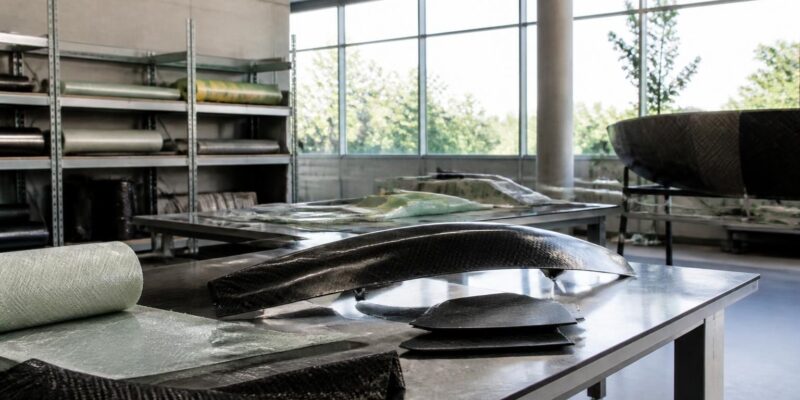
Latvia’s composites industry is taking a step towards closer cooperation with university researchers and students. The Latvian Composites Association and Riga Technical University have signed a cooperation agreement designed to bring industrial challenges into research and study programmes, while helping companies access new technical knowledge and future specialists.
The agreement was reported this week after the partners began their cooperation with a joint visit to Liepāja. On 30 September, representatives of the association, RTU and the University of Latvia visited Brimer Liepaja, RTU’s Liepāja Academy and RTU’s Liepāja Maritime College. The programme gave participants an opportunity to discuss production processes, training needs and possible areas for applied research.
For a relatively small economy, the arrangement addresses a familiar innovation challenge: promising research and practical business needs do not always meet early enough. The new partnership is intended to create a more regular channel between the companies represented by the association and RTU’s research and academic expertise.
From research topic to industrial solution
According to the partners, the agreement creates a basis for joint research and innovation projects, technology transfer and student involvement in tasks identified by companies. The emphasis is therefore not only on exchanging information, but on developing work that can lead to usable materials, components, production methods or engineering solutions.
RTU’s Institute of High-Performance Materials and Structures is one of the university’s relevant research centres. Its work includes the development and testing of materials and structures, the modelling of their properties and the adaptation of technologies to industrial needs. The partnership could help the institute and participating companies identify research questions that are sufficiently specific to be tested in laboratories and sufficiently practical to matter on the factory floor.
Līva Pupure, director of the institute, said the cooperation should allow research themes and study content to be aligned more closely with the real needs of companies. She also highlighted the opportunity for students and early-career researchers to work on industry-related tasks while still studying.
A regional dimension in Liepāja
The initial visit placed Liepāja at the centre of the new cooperation. The city has manufacturing and maritime expertise, while RTU’s local academic and maritime institutions offer a base for training and applied work outside Riga. The visit to Brimer Liepaja allowed university and industry representatives to see how composite products are manufactured and used in industrial solutions.
Brimer’s Latvian operations produce specialised composite products, including large-scale protective structures for marine and ocean communications. Such products require engineering knowledge across several stages, from design and material selection to production and finished construction. That makes them a useful setting for discussions about how education and research can respond to export-oriented manufacturing.
Brimer Liepaja board member Gatis Ginters said the company needs young specialists and researchers to become familiar with modern production processes during their studies. In practical terms, that can mean better-defined student projects, placements, laboratory testing, joint applications for research funding and a faster exchange of knowledge between production and academia.
Building a wider composites ecosystem
The association presents itself as a professional organisation bringing together Latvian composites manufacturers and seeking to strengthen the sector’s position in European markets. Its priorities include knowledge sharing, talent development, sustainable production and export growth.
That wider ambition will depend on what follows the signing. The agreement itself does not announce a specific new product, investment figure or funded research project. Its immediate importance is institutional: it establishes a framework for companies and university departments to work together more systematically across Latvia.
The association and RTU are expected to develop the cooperation through concrete projects, student and researcher participation and discussions about the skills required by manufacturers. A working meeting planned at RTU in November is set to examine how composites topics can be integrated into study programmes, whether an accredited laboratory could be developed and which project proposals might be prepared jointly.
For Latvia’s innovation economy, this is a constructive development because it focuses on the practical middle ground between research and production. Composites are used in sectors where strength, weight, durability and specialised design matter. A stronger domestic link between companies, laboratories and engineering education could help Latvian firms turn technical expertise into products with greater added value, while giving students a clearer route from classroom learning to industrial work.


















Comments