
 By
By 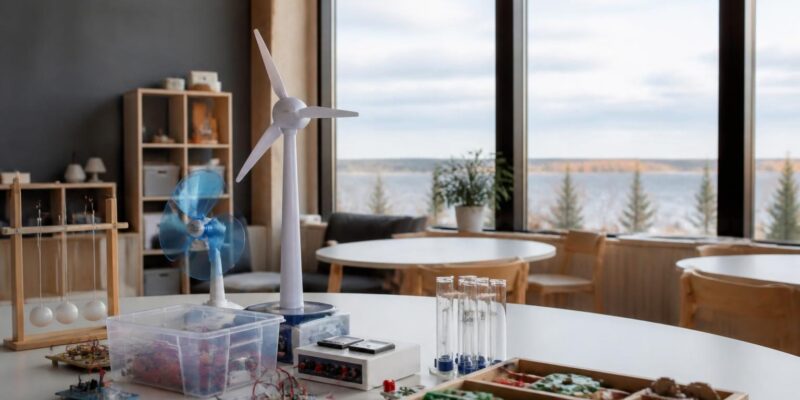
Estonia’s annual Researchers’ Night Festival is turning the country into an open science classroom this weekend, with events continuing through Sunday, 27 September. The 2026 edition began on 21 September and has placed energy at the centre of a nationwide programme designed to connect researchers with schoolchildren, families and the wider public.
The festival is a timely reminder that science communication does not have to be confined to university laboratories or specialist conferences. Its organisers describe the programme as a broad public initiative in which people can meet researchers, take part in workshops and experiments, visit laboratories and explore how science affects ordinary life. The 2026 edition is also the 20th Researchers’ Night Festival held in Estonia.
Rather than limiting the theme to electricity, the organisers are using “energy” as an umbrella for a wide range of questions. The official programme links it with food, human performance, the environment, biodiversity, technology, fuels, solar power, nuclear energy and the way societies make decisions about the future. That breadth gives schools and cultural institutions room to approach the subject through practical demonstrations as well as discussion.
A national programme with local character
The festival is organised in Estonia by the AHHAA Science Centre in cooperation with Rakett69 Science Studios and the Energy Discovery Centre. Its programme is built through partnerships with universities, schools, research institutions, museums, businesses and youth organisations across the country. This distributed structure means that the festival is not a single event in Tallinn or Tartu, but a collection of local encounters with science.
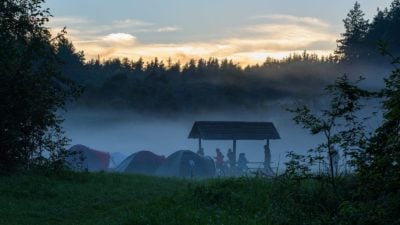
The online programme lists activities in places including Tallinn, Tartu, Jõhvi, Põlva, Võru, Pärnu, Saaremaa, Viljandi, Haapsalu and other parts of Estonia. The formats range from lectures and science cafés to laboratory visits, fairs, demonstrations, school workshops and overnight science camps. Several activities are free, while others require registration or a ticket.
For families and younger visitors, the appeal is deliberately hands-on. Participants can test ideas, calculate, build, observe and ask questions rather than simply listen to a presentation. The organisers say particular attention is being paid to children and young people, both to strengthen interest in science and technology and to make research careers more visible.
From ice-age landscapes to future energy choices
One of the weekend’s most distinctive programmes is taking place on Saturday, 26 September, at the Ice Age Centre in Äksi, in Tartu County. The full-day programme, “Energy through the Ice Age: from the past to the future”, connects the centre’s focus on glaciers, climate and landscape formation with the festival’s 2026 theme.
Visitors are invited to examine how glaciers shaped the Estonian landscape and to consider the energy needs of living organisms in demanding environments. A playful activity asks participants to think about how much food energy a mammoth would have needed to survive in a cold climate. Later, the programme turns toward present and future energy production, conservation and environmental impact. A role-playing exercise allows participants to choose an energy-production method, explain their reasoning and defend their decision.
The structure is significant because it joins natural history with contemporary science literacy. It does not present energy only as an engineering problem. Instead, it places physical processes, climate, food systems, biodiversity and human choices in the same conversation.
Universities open their doors
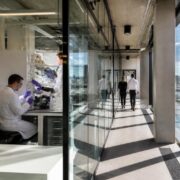
University-based events form another important part of the weekend. In Tartu, the Researchers’ Night programme includes activities at the University of Tartu’s molecular and cell biology and genomics institutes, as well as a programme at Maarjaväli involving the university’s chemistry, technology and physics institutes. In Tallinn, TalTech is hosting an evening programme of lectures, workshops and demonstrations.
These events make research environments more accessible while giving institutions a chance to explain why their work matters beyond academic publication. The programme also includes school-based activities, science sleepovers and public sessions in regional centres, widening access for people who may live far from Estonia’s largest universities.
Science as participation
The festival’s constructive value lies in its method as much as in its theme. It presents science as something people can question and practise, not merely consume. That is particularly important for young visitors, who encounter researchers not only as distant experts but as people willing to explain methods, uncertainty and evidence.
On 26 September, the programme continues with activities including an energy workshop at the Ice Age Centre, a practical heart laboratory session at the Estonian Health Museum and further science events listed by the festival organisers. The nationwide programme concludes on 27 September, although its educational partnerships and school-oriented activities are intended to continue beyond the festival week.
For Estonia, Researchers’ Night offers a useful public bridge between education and research. For visitors, it offers something more immediate: a chance to see how questions about energy connect the classroom with the landscape, the laboratory, the kitchen and the choices that shape everyday life.








Comments