

 By
By 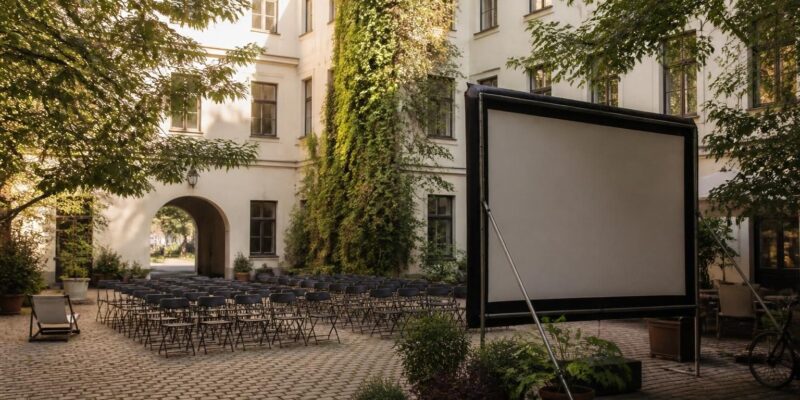
Warsaw’s National Film Archive–Audiovisual Institute, known by its Polish abbreviation FINA, is preparing to turn its Służew courtyard into a temporary neighbourhood meeting place on Saturday, 29 August. The free, intergenerational programme will run from 10:00 to 23:00 at FINA’s site on Wałbrzyska Street, bringing together outdoor activity, practical workshops and cinema as the summer season comes to an end. ([fina.gov.pl](https://www.fina.gov.pl/wydarzenia/piknik-sasiedzki-na-filmowym-dziedzincu-fina-2026/?utm_source=openai))
The event is the second edition of FINA’s Neighbourhood Picnic, organised as the closing day of the 2026 Film Courtyard series. During the summer, the institution has used its outdoor space for Friday evening screenings. The final Saturday is designed differently: rather than offering only a film programme, it opens the courtyard for a day of shared activities aimed at residents, families and other visitors.
A cultural institution as a local meeting place
FINA’s programme reflects a broader, practical understanding of what a cultural institution can do in an urban neighbourhood. The courtyard is not being presented only as a performance venue, but as a space where people can eat breakfast, exchange plants, take part in workshops, browse publications and watch films together. The approach places informal participation alongside scheduled cultural events.
The morning programme will include breakfast prepared with the Dobrze cooperative and a Plant Zone, where participants can adopt or exchange plants. FINA is also offering a book and publication fair, “Kino na półce. Vol. 2”, giving visitors a chance to explore film-related materials beyond the screen. These elements make the day accessible to visitors who may come for a social activity or workshop rather than for a particular film.
Nature, food and activities for different generations
Several activities are designed to connect everyday urban life with the natural environment. The “Secrets of the Beehive” programme will include workshops and meetings with a beekeeper, while later sessions will focus on herbs and sensory experiences. The sensory workshops, titled “Służew Bees”, are intended for children and provide a hands-on element within the wider programme.
The combination of planting, beekeeping, food and film gives the picnic a deliberately mixed character. It is not a specialist festival built around one artistic discipline. Instead, visitors can move between activities according to age, interest and time available. FINA says admission to the programme is free; prior registration is requested for the beekeeping workshops. ([fina.gov.pl](https://www.fina.gov.pl/wydarzenia/piknik-sasiedzki-na-filmowym-dziedzincu-fina-2026/?utm_source=openai))
Film remains at the centre
Although the picnic expands beyond cinema, moving images remain the organising thread. The family screening will present The Wild Robot, the 2024 animated film directed by Chris Sanders. Later, the programme will show Honeyland, the 2019 documentary by Tamara Kotevska and Ljubomir Stefanov. The two films offer different ways of thinking about relationships between people, technology, animals and the natural world.
The selection also connects with the wider Film Courtyard season, which has grouped screenings around summer activities, water sports and the changing mood of the end of the holidays. On Friday, 28 August, the series is scheduled to conclude its regular weekly screenings with Tadeusz Konwicki’s The Last Day of Summer. The following day’s picnic shifts the emphasis from a single screening to a shared public programme. ([fina.gov.pl](https://www.fina.gov.pl/wydarzenia/filmowy-dziedziniec-fina-2026-uwalniamy-obrazy-uwalniamy-emocje/?utm_source=openai))
A low-barrier summer finale
The evening will end with a silent disco featuring Reni Jusis and Ola Teks. Wireless headphones allow the event to continue in the courtyard while limiting sound travelling into the surrounding residential area. Earlier in the day, visitors can also attend a Coffee Rave with DJs Sam Karol and Bliss Kiss.
That mix of quiet-format entertainment, family cinema, workshops and open-ended social space is significant because it lowers the threshold for participation. Visitors are not required to commit to a single kind of cultural experience. They can arrive for breakfast, bring a plant, attend a children’s workshop, watch a film or stay for the evening music.
FINA’s announcement makes no claim that one event can transform neighbourhood life. Its more modest contribution is clear: for one Saturday, a national audiovisual institution is making its courtyard available as a free and varied public space. In a city where cultural participation often depends on tickets, travel and fixed schedules, the format offers a simple invitation to spend time together close to home.
For Warsaw residents and visitors, the Neighbourhood Picnic provides a constructive end to the summer courtyard season: a day where cinema is combined with food, plants, learning and informal contact between generations.











Comments