 By
By 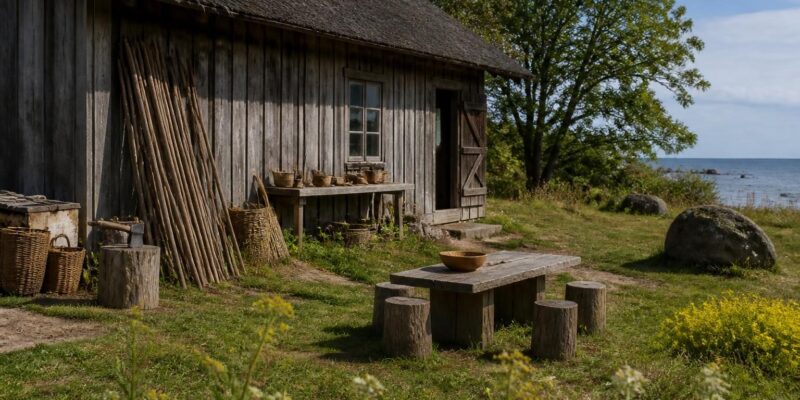
A week of collective making on Muhu Island reaches its public discussion phase on Friday, August 28, as the Estonian Academy of Arts opens the 2026 edition of its SISU interior architecture symposium. Held at the academy’s Tamse Study Base, TALGU TALK examines how architecture, design and construction can move beyond individual authorship through practical cooperation.
The symposium continues a five-day workshop that began on August 24. According to the organisers, students and participants have been working with the building and its surroundings before the formal talks begin. The programme includes the making of furniture, renovation work connected with a sauna, improvements to shared areas and the restoration of stoves. The work is intended not simply as maintenance, but as a way to study collaboration through direct experience.
A symposium built around doing
SISU 2026 is centred on the Estonian word talgud, which describes a form of communal work traditionally used for demanding tasks such as harvesting, building or repairing shared infrastructure. The organisers present the practice as a form of collective self-help: people contribute time and practical skills to a common task, while also receiving support from the wider group.
That idea gives this year’s symposium a distinctly grounded character. Rather than treating spatial design as a purely professional or visual discipline, TALGU TALK asks participants to consider how places are made, maintained and adapted through relationships between people. The focus is therefore as much on process as on the finished object.
The Estonian Academy of Arts describes the programme as an invitation to explore the boundaries between architecture, interior architecture, design and construction through hands-on collective work. That approach is especially relevant in rural and island settings, where buildings often depend on shared knowledge, local materials and practical networks of care.
From Muhu’s landscape to wider design questions
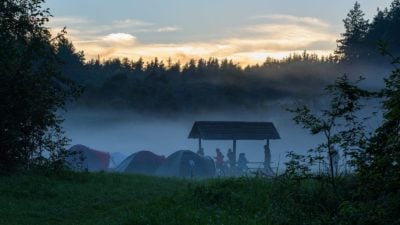
The Tamse Study Base lies in the northern part of Muhu, a small island between Saaremaa and the Estonian mainland. The organisers describe the location as quiet and close to nature. The setting is more than a backdrop: it helps place the discussion of design within a real landscape, where transport, weather, building traditions and available materials all shape what can be made.
Material mapping is included in the workshop schedule. Participants have been asked to examine what is available locally, prepare workstations and reflect on how materials can guide the scope of a project. Such an approach can encourage more careful use of resources, although the organisers do not present the symposium as a formal environmental project or claim quantified sustainability results.
The programme instead offers a modest but practical perspective on environmental responsibility. Repairing existing elements, using materials already at hand and sharing facilities can reduce the distance between design ambitions and the realities of a place. These are not presented as universal solutions, but as questions for participants to test through making.
A Baltic and Nordic vocabulary of cooperation
TALGU TALK also connects Estonia’s communal-work tradition with related practices elsewhere in northeastern Europe. The organisers point to similar terms used in Poland, Lithuania, Finland and Sweden, suggesting that cooperation around shared labour forms part of a wider regional cultural memory.
This regional perspective gives the event an international dimension without turning it into a conventional conference. The organisers say that the workshop brings together 30 participants from Estonia and abroad, while the symposium programme includes presentations, lectures and conversations with professionals from several creative fields.
The Estonian Academy of Arts has also presented the event as an international summer school for students of interior architecture, architecture, design, crafts and fine arts. Participants stay together at the Tamse base, with shared accommodation and communal facilities forming part of the learning experience. The arrangement makes everyday cooperation visible: cooking, cleaning, planning and building are all connected.
Why the format matters
Contemporary design increasingly asks how public spaces, homes and institutions can become more adaptable and inclusive. Yet those ambitions can remain abstract if the people who use or maintain a place are treated only as observers. TALGU TALK takes the opposite route by making participation itself the subject of study.
The event does not claim to offer a single model for future architecture. Its value lies in creating a setting where designers can test how decisions change when work is shared, materials are limited and outcomes emerge through discussion. That makes Muhu a useful meeting point for practical knowledge and professional debate.
The two-day symposium runs from August 28 to August 30. The organisers state that the communal work and symposium are free for guests, while the broader summer-school format is supported through European exchange arrangements for international participants. After the programme ends, the knowledge and experiences generated at SISU are intended to feed into the creative research journal SISU-LINE.
In a field often associated with signature buildings and individual vision, Muhu’s TALGU TALK proposes a quieter measure of success: whether a group can leave a place more usable, more understood and more connected than it found it.













Comments