 By
By 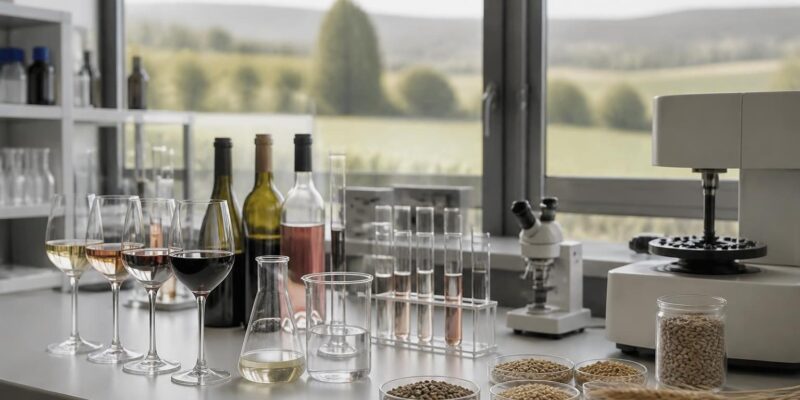
Food science is often most useful when it works quietly in the background: checking what is in a product, explaining how it changes during production and helping consumers make informed choices. That practical side of research is at the centre of the 54th German Food Chemistry Days, which begin on Monday, September 14, 2026, at Rheinland-Pfälzische Technische Universität Kaiserslautern-Landau.
The three-day meeting, running through September 16, is organised by the Food Chemistry Society, a specialist group within the Society of German Chemists. Its programme links laboratory research with questions familiar from daily life, including the quality of alcohol-free wine, the analysis of food contaminants and the role of additives in cured products.
From the laboratory to the shopping basket
One of the more lifestyle-oriented subjects is the development of alcohol-free white wine. As demand for lower- or no-alcohol drinks grows, producers are looking for ways to preserve the aroma and character expected by consumers. Researchers from the Dienstleistungszentrum Ländlicher Raum Rheinpfalz examined 20 alcohol-free white wines from retail channels using sensory and chemical methods.
The research focuses on so-called green off-flavours, which can produce impressions associated with stale beer or sour, cheese-like notes. By combining tasting assessments with gas chromatography and olfactometry, the team identified several chemical compounds that may contribute to these unwanted aromas. The intended outcome is practical: better understanding of the compounds could help wineries adjust production methods and improve the drinking experience.
The subject is a good example of how food chemistry connects technical analysis with changing habits. Alcohol-free wine is not simply a substitute product; it is part of a broader shift in how people approach moderation, hospitality and everyday enjoyment.
Food safety and evidence-based oversight
Other presentations address issues that are less visible but equally relevant to consumers. Researchers at RPTU Kaiserslautern-Landau have examined what happens when sodium nitrite used in curing reacts with the blood pigment haem. Their work looks at nitrosylated haem, known as NO-haem, and its effects in human intestinal cells.
The study found that NO-haem was more damaging to cells than haem alone and that it was associated with DNA damage in the tested model. The researchers are also examining the role of haem oxygenase-1, an enzyme involved in breaking down haem inside cells. These findings do not amount to a direct dietary conclusion for every cured product, but they contribute to the wider scientific process of assessing how processing methods and food compounds may affect health.
The conference also includes work on food testing methods. One contribution explores a DNA-based rapid method for detecting allergens, while other sessions cover plant toxins, mycotoxins, packaging-related substances and food microbiology. Such methods can support official laboratories, manufacturers and quality-control teams in identifying problems more quickly and consistently.
A wider consumer-protection perspective
Although food is the main focus, the programme reflects the broader remit of food chemists. One presentation examines tattoo inks and permanent-make-up products, including questions of permitted pigments, preservatives, labelling and contamination. The connection with food chemistry lies in the shared need to identify substances accurately and assess whether consumer products meet legal and safety requirements.
The Society of German Chemists describes food chemists as specialists who investigate the composition, analysis and transformation of food, additives, cosmetics and everyday articles such as packaging. Their work supports both regulatory compliance and consumer protection, giving the discipline a role that extends from academic research to public administration and industry.
Public lecture on wine
The meeting will also have a public-facing element. On the evening of September 14, Professor Dominik Durner of Hochschule Kaiserslautern and Weincampus Neustadt is scheduled to give a free lecture on wine at the university’s Audimax. The event forms part of Kaiserslautern’s programme marking 750 years of city rights and is open to anyone interested.
That combination of specialist conference and public lecture gives the event a useful civic dimension. Researchers can exchange detailed findings among themselves, while residents have an opportunity to hear how chemistry shapes the taste, production and evaluation of a familiar cultural product.
For Kaiserslautern, the Food Chemistry Days place a local university and its specialist expertise in a national network of researchers, laboratories, regulators and industry professionals. For the public, the meeting offers a reminder that food quality is not only a matter of tradition or personal taste. It is also the result of careful measurement, transparent standards and continuing research.















Comments