

 By
By 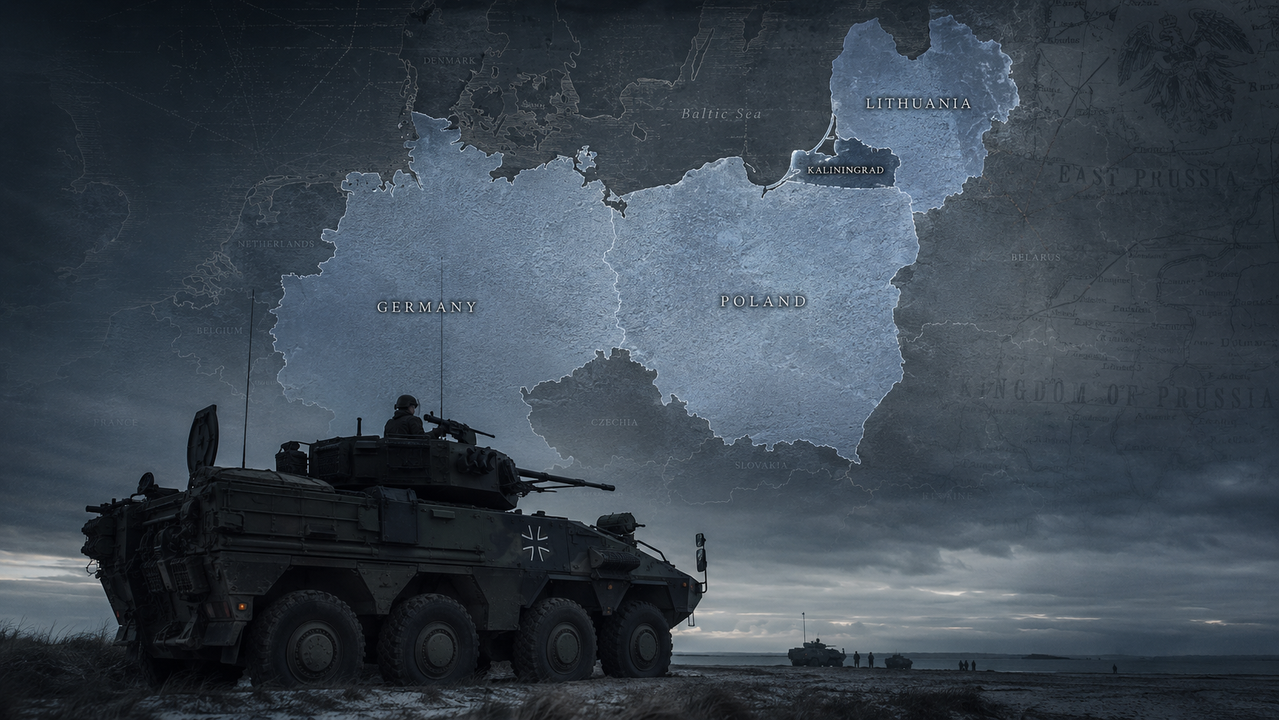
Europe is entering a new strategic age. Words that for decades sounded almost unthinkable in German politics — combat readiness, deterrence, mobilisation, war preparedness — are now part of the official vocabulary in Berlin.
Germany’s defence minister Boris Pistorius has repeatedly warned that the country must become capable of defending itself and its allies. In 2024, he said Germany must be “ready for war” by 2029 — not as a declaration of aggression, but as a call to restore deterrence after Russia’s full-scale invasion of Ukraine. Germany is also preparing the permanent deployment of a brigade in Lithuania, with around 4,800 soldiers and 200 civilian personnel expected by the end of 2027.
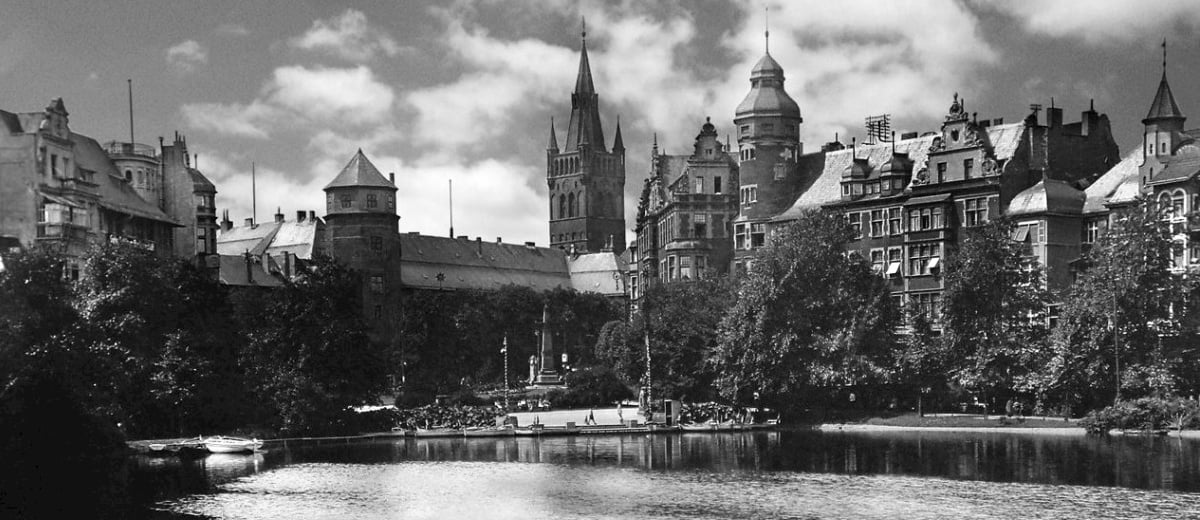
For Eastern Europe, this development carries a complex historical charge. Germany is not just today’s democratic federal republic, a member of the European Union and NATO. It is also the country historically linked with Prussia, East Prussia, Silesia, Pomerania, the Memel/Klaipėda region, wartime occupation, border changes and forced population movements.
This raises an uncomfortable question: is Germany simply preparing to deter Russia, or could its military return to Eastern Europe revive older territorial ambitions connected with former Prussian lands in today’s Poland and Lithuania?
A serious answer requires caution. Germany is indeed remilitarising in the strategic sense. But there is no credible evidence that Berlin is preparing to reclaim former Prussian territories.
The German brigade in Lithuania is perhaps the strongest symbol of the new era. It is the first permanent deployment of a Bundeswehr brigade abroad on such a scale. Yet politically and legally, it is not an occupation force or a unilateral German move. It is a NATO deployment, agreed with Lithuania, designed to strengthen deterrence on the Alliance’s eastern flank. Lithuanian defence authorities describe the brigade as part of NATO collective defence and Lithuania’s forward defence posture.
The historical anxiety is nevertheless understandable. The lands once associated with Prussia now belong to several states. Large parts of Germany’s former eastern territories became part of Poland after the Second World War. The northern part of East Prussia became the Kaliningrad region of Russia. The Memel territory, today Lithuania’s Klaipėda region, has its own complicated history: detached from Germany after the First World War, incorporated into Lithuania under international arrangements, then annexed by Nazi Germany in 1939 under pressure.
But modern Germany is not legally positioned to reopen these questions. The 1990 Treaty on the Final Settlement with Respect to Germany — the so-called Two Plus Four Treaty — was the international framework that made German reunification possible. It confirmed the final character of Germany’s borders and was tied to Germany’s acceptance of the post-war territorial settlement. The treaty was signed in Moscow on 12 September 1990 by the two German states and the four occupying powers.
That legal architecture matters. Any German territorial revisionism would not be a mere policy adjustment; it would be a fundamental challenge to the foundations of post-Cold War Europe, Germany’s reunification settlement, NATO trust and EU stability.
So why does the suspicion arise?
First, Germany’s military language has changed dramatically. A country that long defined itself through restraint is now discussing readiness, reserves, defence industry capacity and the possibility of major war in Europe.
Second, German troops are physically returning to Eastern Europe — including Lithuania, a country whose geography is close to the old Prussian world. Even when the political context is entirely different, the symbolism is powerful.
Third, historical memory in Poland and Lithuania does not treat German military power as neutral. For these societies, German soldiers near their borders evoke not abstract strategic theory but concrete twentieth-century trauma.
Fourth, the topic can be exploited in information warfare. Presenting Germany’s NATO role as disguised revanchism is useful for actors who want to divide the Alliance and weaken trust between Berlin, Warsaw and Vilnius.
The real danger, therefore, is not that Germany is secretly preparing to retake Klaipėda or Polish territories. The real danger is that Europe is once again entering a military logic in which old maps, old fears and old propaganda narratives can become politically active.
Germany’s challenge is not only to rebuild its armed forces. It must also convince Eastern Europe that its renewed military strength serves the defence of the European order — not its revision.
The conclusion is clear: Germany is preparing for the possibility of war in Europe, primarily in response to the Russian threat and within NATO structures. But the claim that Germany is preparing to reclaim former Prussian territories in Poland or Lithuania remains unsupported by evidence. It is a historically understandable fear, not a proven strategic plan.















Comments