

 By
A regional answer to rising demand for AI computing
A new technology consortium is proposing a distributed artificial-intelligence infrastructure network stretching across the Nordic and Baltic region. Announced on November 16, AI Gigafactory Northern brings together Finland’s Nokia and Verda, Sweden’s Telia, Estonia’s Skeleton Technologies and the British company Nscale.
The group says it intends to submit a bid under a European call for AI Gigafactory consortia. The announcement marks the formation of the partnership, not a final investment decision or a confirmation that the proposed network has secured public funding.
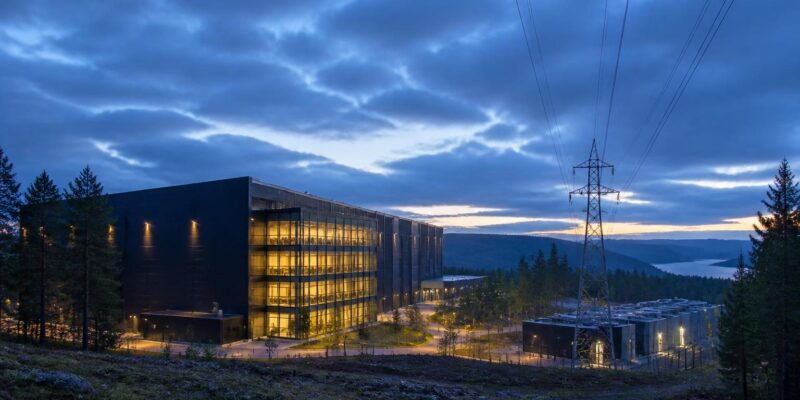
At the centre of the proposal is a federated model. Instead of placing all computing capacity in one large installation, the consortium would connect several sites and operate them as a coordinated platform. The initial locations identified are Oulu in Finland, Iru in Estonia and Valmiera in Latvia, while a Swedish site has not yet been selected.
What the proposed platform would provide
The planned network is intended to combine large-scale computing with cloud services, high-capacity telecommunications and energy systems designed for efficient operation. In practical terms, the partners are presenting it as infrastructure for training and running artificial-intelligence applications rather than as a single building or conventional data centre.
Nokia would contribute connectivity and network infrastructure. Nscale and Verda would provide cloud and AI-computing expertise, while Telia and its subsidiary Telia Cygate would support connectivity, data transmission and infrastructure operations. Skeleton Technologies would contribute power-management systems aimed at improving efficiency and reducing pressure on electricity grids.
The consortium’s own description also highlights the role of research organisations. Finland’s VTT Technical Research Centre and Sweden’s KTH Royal Institute of Technology are named as innovation partners, with expertise spanning areas such as AI research, quantum computing, semiconductors, photonics, education and skills development.
Why the Nordic-Baltic region is being considered
The proposal rests partly on existing regional advantages. The partners point to relatively cool weather, established digital networks, engineering capacity and access to low-carbon electricity as conditions that can support energy-intensive computing. Cooler air can reduce the need for mechanical cooling, while a network spread across several locations can make it easier to expand where electricity and physical capacity are available.
The approach is also designed to give companies and researchers access to computing resources without requiring every organisation to build its own infrastructure. Start-ups, universities, manufacturers and public-sector bodies are identified as potential users. For smaller firms in particular, shared access could lower the initial cost of experimenting with large AI models and industrial applications.
That potential should be understood as an objective rather than a guaranteed outcome. The consortium has not published a complete construction timetable, final capacity figures, detailed financing plan or confirmed Swedish location. Those details would need to be developed through the tender process and subsequent investment decisions.
From separate sites to a regional innovation platform
The proposed arrangement reflects a broader shift in how AI infrastructure is being planned. Demand is growing not only for software and specialised chips, but also for reliable electricity, data connections, cooling, cloud management and technical staff. A multi-site model attempts to bring these elements together while allowing capacity to grow in stages.
For the Nordic and Baltic economies, the possible benefits extend beyond data-centre construction. New computing capacity can support research partnerships, university training, industrial automation and the development of local software companies. It may also create demand for energy-management technology, network engineering, maintenance and specialised professional services.
Distributed infrastructure could be particularly useful for research and businesses that need predictable access to computing but cannot justify building dedicated facilities. The consortium says its planned ecosystem would be open to start-ups, researchers and other next-generation companies. Whether that openness becomes a meaningful commercial advantage will depend on pricing, access rules and the availability of skilled personnel.
A proposal still awaiting the next stage
The announcement comes as European institutions seek to expand the continent’s capacity for AI development. AI Gigafactory Northern is positioning itself for that policy and funding environment, but its next milestone will be the preparation and submission of the consortium’s tender proposal.
For now, the most concrete development is the partnership itself: several companies from different parts of the European technology supply chain have agreed to pursue a common, cross-border infrastructure model. If selected and financed, the project could give the Nordic-Baltic region a larger role in providing computing services for European research and industry. If not, the collaboration still illustrates where regional technology companies see future demand: in the combination of connectivity, computing, energy efficiency and applied innovation.
Sources
Nokia: consortium announcement, 16 November 2026
AI Gigafactory Northern: project overview
Data Center Dynamics: report on the proposed multi-site network


















Comments