 By
By 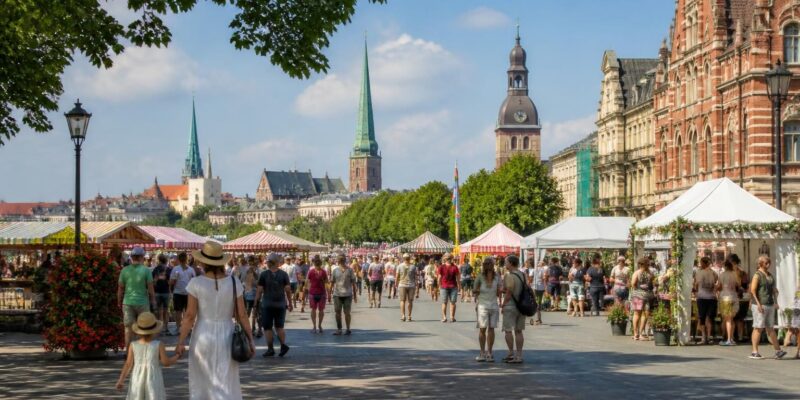
Riga’s 825th birthday is being celebrated on Saturday, August 15, with a city-wide programme designed not only as an anniversary festival but also as an invitation to explore the capital through its neighbourhoods, traditions and public spaces.
The main programme is spread across the Old Town, the 11 November Embankment, Vērmanes Garden, Victory Park, Esplanade, Eksporta Street, Opera Square and the area around the Riga Congress Centre. The broad layout gives the event a distinctly civic character: instead of concentrating the celebration in one venue, the city is using its central districts as a connected series of meeting places.
A birthday programme built around participation
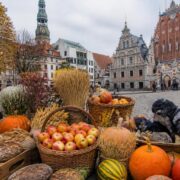
According to the Riga municipality, the anniversary programme includes an artisans’ market in Dome Square, family activities, creative workshops, performances, food events and sporting activities. The municipality has presented the celebrations under the theme “Open Riga! Code: 825!”, encouraging residents and visitors to approach the city through its stories, courtyards, parks and cultural meeting points.
The concept is particularly visible in the programme’s emphasis on participation. Visitors are not being offered only a sequence of concerts to watch. They can browse traditional crafts from different Latvian regions, join workshops, discover local food and move between several public spaces on foot. That format makes the anniversary accessible to people who may not normally attend formal cultural institutions.
Culture and informal education in public space
One of the more distinctive features of this year’s wider anniversary programme is the presence of informal learning alongside entertainment. Earlier in August, the city’s Left Bank Festival included science demonstrations by the AHHAA Science Centre, creative workshops and a children’s theatre production explaining the water cycle. The combination placed scientific curiosity alongside music, movement and street performance.
Although the main birthday programme on August 15 is broader than a science festival, it continues the same approach to public engagement. Activities in parks and squares are designed for different age groups and interests, allowing families to encounter history, craft, performance and civic life within a single day.
This approach reflects a wider trend in European cities: major anniversaries are increasingly used to make knowledge and cultural participation visible outside conventional venues. Museums, galleries and universities remain important, but public squares can also become places where residents learn about local identity, materials, food traditions and the history of their surroundings.
Heritage presented as a living resource
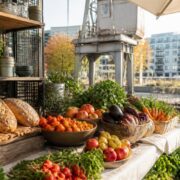
The artisans’ market in Dome Square is central to that idea. The municipal programme describes the market as a place where visitors can see and purchase traditional crafts from different parts of Latvia. Rather than treating heritage as a static display, the market connects it with contemporary makers, everyday use and direct contact between producers and the public.
Other parts of the programme reinforce that connection. Vērmanes Garden is being used as a meeting place for cultural diversity and cooperation, while the city’s central squares are hosting food, music and family activities. The result is a form of heritage programming that is social rather than ceremonial: people encounter the city’s traditions through conversation, taste, performance and practical demonstrations.
A city anniversary with a local focus
LiveRiga’s programme overview describes the August celebrations as a month-long series culminating on August 15. The anniversary day itself includes creative workshops, street food, market stalls and family-friendly activities, alongside concerts and a large evening programme on the riverfront.
For Riga, the anniversary is therefore more than a symbolic date. It is an opportunity to show how the capital functions as a network of neighbourhoods, institutions, creative communities and public spaces. The programme’s strongest feature is its openness: visitors can participate at their own pace, choose between cultural and recreational activities, and experience different parts of the city without needing a single ticketed venue.
As Riga marks 825 years, the city is presenting its history not as something finished, but as a shared resource that can be explored, interpreted and renewed by residents and visitors alike.






Comments