 By
By 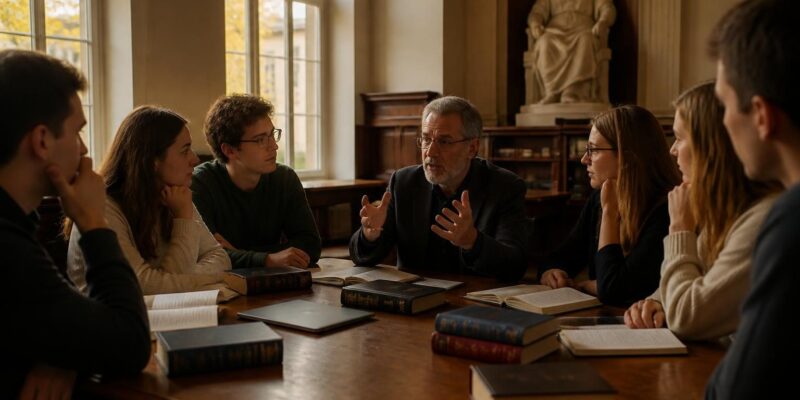
Vilnius will host an international symposium on women’s legal status, agency and gender equality on 20 October, with organisers presenting the event as an open forum for researchers, legal practitioners, students and civil-society representatives.
The symposium, titled “Women’s Agency and Status in Europe: Challenges and Achievements from the Perspectives of Supranational and National Law”, is being organised by the Academic Department of Social Sciences at the European Humanities University. It will take place at the university’s premises on Savičiaus Street and will also be available online.
The announcement was published on 14 October, placing the event within the final days before Lithuania’s Constitution Day on 25 October. Registration is required, with the deadline set for 18 October. The timing gives the discussion a clear civic context: Lithuania marks the adoption of its current Constitution by referendum on 25 October 1992.
A legal perspective on equality
Rather than focusing on one single policy area, the programme is designed to examine women’s position through several layers of law. According to the organisers, speakers will address European-level developments, constitutional questions, national legal frameworks, women’s migration-related status, access to courts and labour rights.
This structure matters because equality is shaped not only by formal constitutional guarantees but also by the way rights are interpreted and applied in courts, workplaces and public institutions. A discussion that connects these levels can help audiences understand how broad principles translate into everyday legal and social protections.
The organisers describe the symposium as an opportunity for questions and exchange rather than a closed academic conference. Its intended audience includes students and researchers, but also practitioners and members of civil society who follow human-rights and equality issues.
Connecting Lithuania with wider European debate
The European Humanities University is an internationally oriented institution based in Vilnius. Its symposium format reflects that outlook by placing Lithuania’s constitutional experience alongside supranational and national perspectives from across Europe.
The event’s title refers to both “agency” and “status”. The distinction points to two related questions: how the law recognises women’s rights, and how women are able to exercise those rights in practice. Examining both dimensions allows the discussion to move beyond a purely symbolic account of equality and towards questions of participation, access to justice and decision-making.
The programme also includes consideration of women and migration. That topic brings questions of legal identity, residence, access to services and the protection of rights into the same conversation as constitutional equality. The organisers have not presented the event as a political campaign, but as an academic and public discussion grounded in legal analysis.
Why the date is significant
Lithuania’s Constitution Day commemorates the referendum of 25 October 1992, when citizens adopted the country’s current constitutional framework. The Seimas describes the Constitution as the foundation of the republic’s democratic and rule-of-law order, while its text states that all people are equal before the law and that rights may not be restricted on grounds including gender.
Holding a symposium on women’s legal position during Constitution Day week creates a direct link between those general principles and the continuing work of interpretation, implementation and public discussion. It also gives students and members of the public a chance to approach constitutional values through a concrete social question.
For Vilnius, the event adds another public-facing discussion to the city’s autumn calendar. Participation is possible in person or online, making the programme accessible beyond the university campus. Those interested in attending must register by 18 October through the organiser’s registration process.
The symposium is scheduled to begin at 13:00 Eastern European Time on 20 October at Savičiaus Street 17 in Vilnius. Its central subject is specific, but the wider question is familiar across Europe: how can legal systems ensure that equality exists not only in constitutional language, but also in the institutions and decisions that shape daily life?

















Comments