

 By
By 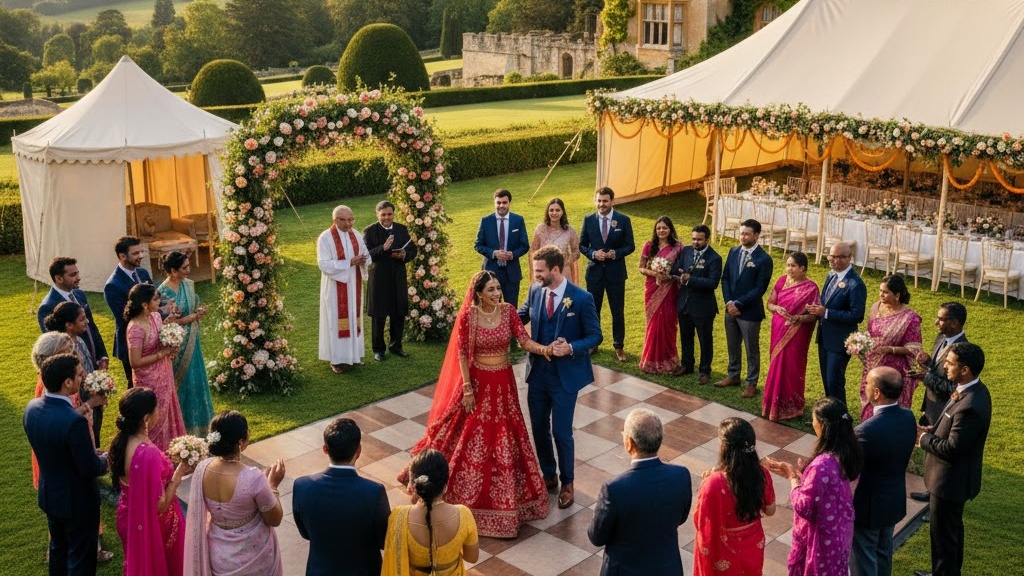
Multicultural weddings are an established and growing part of England’s wedding landscape. Reflecting the country’s cultural diversity, these celebrations often bring together different traditions, religions, languages, and family customs within a single event or series of events. As a result, the choice of venue plays a particularly important role, as it must support a wide range of practical and cultural requirements.
Across England, venues increasingly recognise the need for flexibility, space, and cultural awareness to accommodate multicultural wedding celebrations.
The Nature of Multicultural Weddings
Multicultural weddings are defined less by a single format and more by their adaptability. Some combine religious and civil ceremonies, while others involve multiple rituals spread over several days. Family involvement is often significant, and ceremonies may require specific layouts, timings, or ceremonial spaces.
These weddings often place equal importance on tradition and inclusivity. Couples may aim to honour heritage while ensuring all guests feel comfortable and engaged, regardless of cultural background.
Venue Flexibility and Layout
One of the most important considerations for multicultural wedding venues is flexibility. Venues must often accommodate large guest numbers, extended event durations, and multiple room setups. Separate areas may be needed for ceremonies, dining, dancing, and quieter family gatherings.
Venues that offer adaptable indoor spaces alongside outdoor areas are often better suited to multicultural celebrations. This allows different elements of the wedding to take place without disruption and provides options in case of changing weather conditions.
Cultural and Religious Considerations
Multicultural weddings may involve religious practices that place specific demands on venues. These can include requirements around orientation, prayer spaces, ceremonial fire use, or separation of certain activities. Understanding and accommodating these needs is essential when selecting a venue.
Catering facilities are also an important consideration. Many weddings require specialist catering arrangements, such as halal, vegetarian, or culturally specific menus. Venues that allow external caterers or have experience working with diverse cuisines are often preferred.
Geographic Preferences Across England
England offers a wide range of wedding venues, from countryside estates and historic buildings to modern event spaces and hotels. Geographic location can influence venue choice due to family proximity, transport links, and accommodation availability.
In the South East, couples may search specifically for an Asian wedding venue in Surrey when looking for locations that can support larger guest lists, culturally specific ceremonies, and extended celebrations while remaining accessible from London and surrounding areas.
Capacity and Guest Experience
Guest experience is a central consideration in multicultural weddings. Many celebrations involve large extended families and community members, making capacity a key factor. Adequate parking, nearby accommodation, and accessible facilities contribute to the overall experience for guests of all ages.
Venues that can comfortably manage high guest volumes while maintaining clear organisation are often better equipped to handle the complexity of multicultural events.
Décor, Styling, and Personalisation
Décor plays a significant role in multicultural weddings, often reflecting cultural symbolism through colour, fabric, and design. Venues that allow a high degree of personalisation are better suited to these celebrations, as couples may wish to incorporate traditional elements such as ceremonial stages, floral installations, or bespoke lighting.
Neutral base interiors can be advantageous, allowing décor to be adapted without clashing with existing features.
Legal and Practical Considerations
Alongside cultural elements, legal requirements must be considered. Civil marriage regulations apply regardless of cultural background, and couples may need to coordinate official ceremonies alongside traditional or religious ones.
Practical planning is also important, particularly when events span multiple days. Scheduling, staffing, and access arrangements need to be clearly defined to ensure smooth delivery across all stages of the celebration.
The Evolving Landscape of Multicultural Wedding Venues
As multicultural weddings continue to grow in prominence, venues across England are adapting to meet evolving needs. Experience, flexibility, and cultural awareness are increasingly valued over fixed wedding packages or rigid schedules.
By choosing venues that understand and support diverse traditions, couples are better able to create celebrations that reflect their identities while bringing families and communities together in a meaningful way.

















Comments