

 By
By 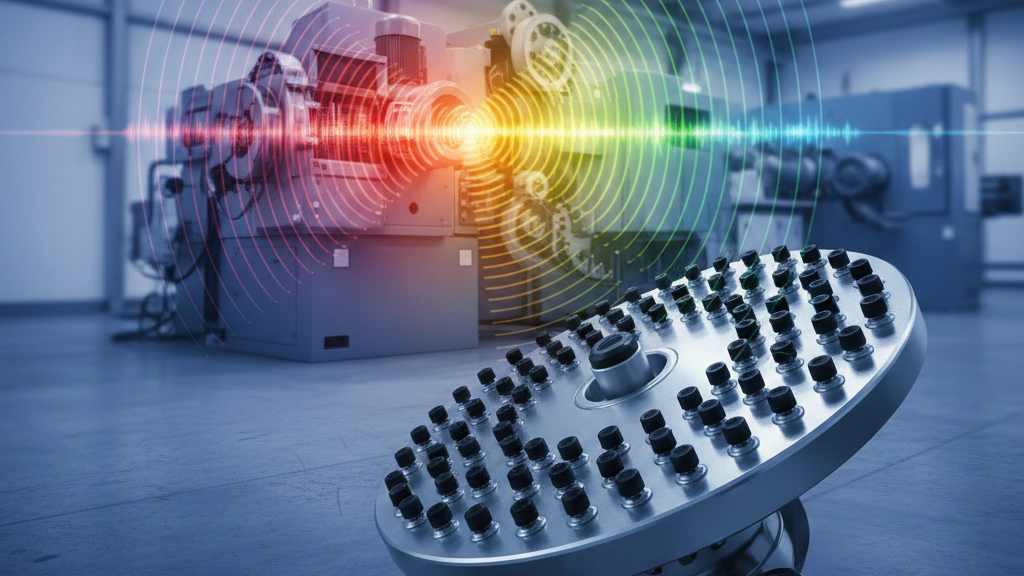
Acoustic imaging is a technique used to visualise sound by converting acoustic data into images. Rather than relying solely on numerical measurements or subjective listening, this approach allows sound sources to be identified and analysed visually. It is widely used in engineering, research, and industrial applications where understanding the location and behaviour of sound is important.
By mapping sound pressure levels across a defined area, acoustic imaging helps identify where noise originates and how it propagates through an environment.
How Acoustic Imaging Works
Acoustic imaging systems typically use an array of microphones arranged in a specific pattern. Each microphone captures sound at slightly different times depending on its position relative to the sound source. By analysing these time differences, software can determine the direction and intensity of sound waves.
The processed data is then overlaid onto a visual image or video of the environment. This produces a clear representation of sound sources, often using colour gradients to indicate intensity. Louder sounds are usually shown in warmer colours, while quieter areas appear cooler.
The Role of Microphone Arrays
Microphone arrays are central to acoustic imaging. The number of microphones, their spacing, and their configuration influence the system’s resolution and frequency range. Larger arrays generally provide better spatial resolution at lower frequencies, while smaller arrays may be more suitable for higher-frequency analysis.
Accurate synchronisation between microphones is essential. Even small timing errors can affect the accuracy of the resulting image, particularly when analysing complex or overlapping sound sources.
Common Applications of Acoustic Imaging
Acoustic imaging is used in a range of practical applications. In industrial environments, it is often employed to locate sources of unwanted noise, such as leaks, mechanical faults, or airflow issues. Identifying these sources visually can be more efficient than traditional methods that rely on point-by-point measurement.
In product development, acoustic imaging supports the analysis of noise generated by machinery, vehicles, and consumer products. Engineers use the data to refine designs and reduce noise emissions.
Environmental noise studies also make use of acoustic imaging. By visualising how sound travels through outdoor spaces, researchers can assess the impact of infrastructure, traffic, or construction activity on surrounding areas.
Acoustic Imaging in Research and Education
In academic and research settings, acoustic imaging provides a way to study sound phenomena that are difficult to observe through listening alone. It allows researchers to explore sound fields, reflections, and interference patterns in controlled environments.
Educational institutions may also use acoustic imaging to demonstrate acoustic principles visually. Seeing how sound behaves in real time can enhance understanding of concepts such as wave propagation and resonance.
The Use of an Acoustic Camera
An acoustic camera combines a microphone array with optical imaging and analysis software in a single system. It allows users to capture both visual and acoustic information simultaneously, producing a real-time representation of sound sources within a scene.
This type of system is particularly useful when investigating complex environments where multiple noise sources are present. By correlating sound data with visual context, users can distinguish between different sources and assess their relative contributions.
Frequency Range and Resolution
The effectiveness of acoustic imaging depends on the frequency range being analysed. Higher frequencies are generally easier to localise due to their shorter wavelengths, while lower frequencies require larger arrays and more advanced processing to achieve comparable resolution.
Resolution is also influenced by distance. As the distance between the system and the sound source increases, spatial resolution typically decreases. Understanding these limitations is important when interpreting results and planning measurements.
Data Interpretation and Limitations
While acoustic imaging provides valuable insights, it is not without limitations. Reflections, background noise, and environmental conditions can affect results. Careful setup and interpretation are required to ensure that images accurately represent the sound field.
Acoustic images should be considered alongside other measurement data rather than in isolation. Combining visualisation with traditional acoustic metrics helps build a more complete understanding of noise behaviour.
The Value of Acoustic Imaging
Acoustic imaging offers a powerful way to analyse sound by making it visible. It supports efficient diagnosis, informed decision making, and clearer communication of acoustic issues.
As technology continues to develop, acoustic imaging tools are becoming more accessible and capable. Their ability to translate complex acoustic data into intuitive visual formats ensures they remain a valuable resource in technical and analytical environments.





















Comments