

 By
By 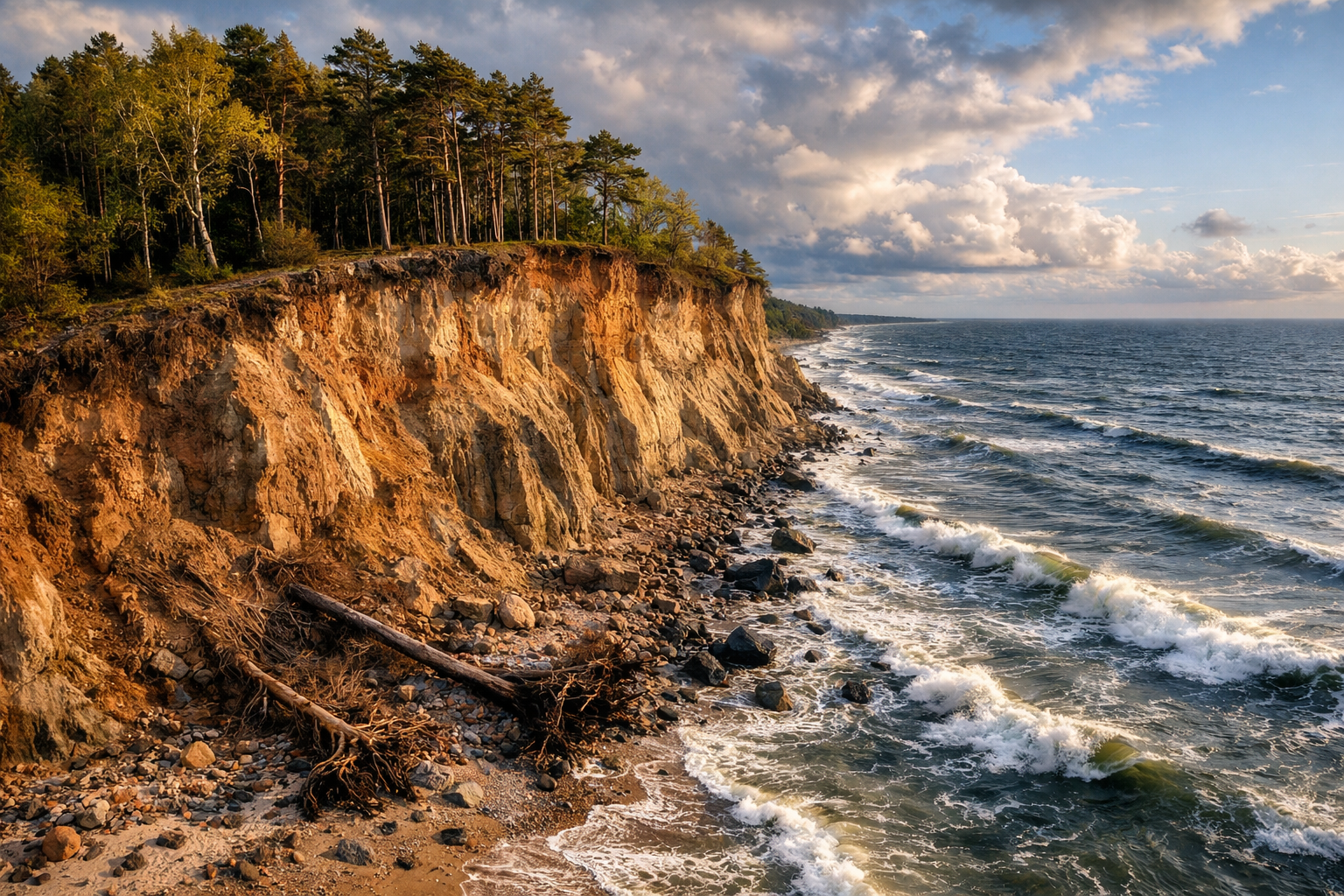
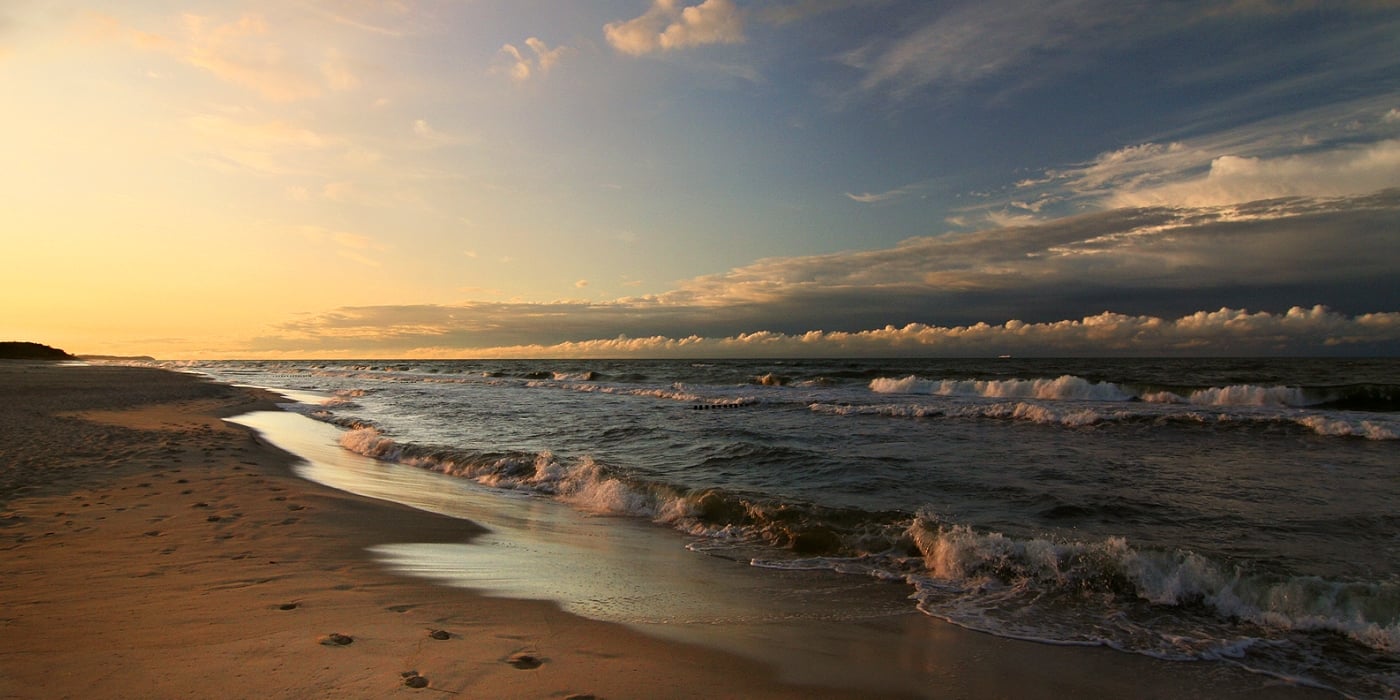
The sound of the surf crashing against boulders, the resinous scent of centuries-old pines, and the cry of seagulls soaring at eye level. If you’ve ever stood atop the “Dutchman’s Cap” (Olando Kepurė) cliff, you know this feeling of absolute freedom. However, this spring, Lithuania’s most popular natural site reminds us that nature is not a static backdrop, but a living, breathing, and sometimes harsh organism.
A Magnet for Travelers
Lithuania’s coastline does not lack picturesque spots, but the Dutchman’s Cap holds the absolute lead in tourists’ hearts. According to the Directorate of Protected Areas of Lithuania Minor, this 24-meter cliff is visited by over 420,000 people annually, surpassing even the famous Parnidis Dune. Formed 12–15 thousand years ago by the retreating Baltic glacier, this high hill, overgrown with oaks and pines, served as a natural beacon for sailors. From the sea, its contours resembled a traditional Dutch hat, which gave it its famous name.
Caution: The Mountain is Changing Shape
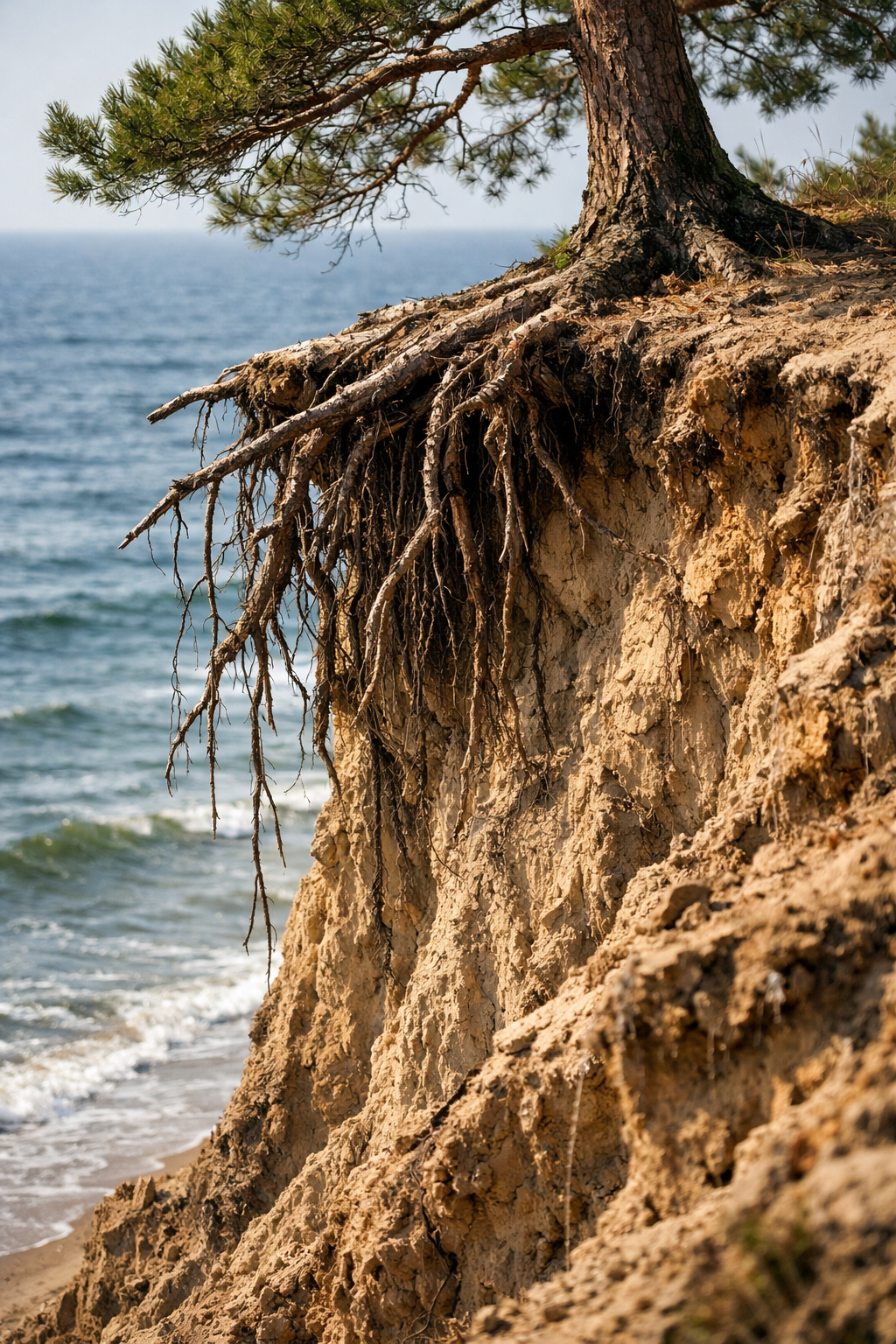
Spring is a time of awakening, and the Dutchman’s Cap is waking up actively. Currently, experts are sounding the alarm: dangerous landslides are forming on the cliff. Due to temperature swings—where spring warmth is followed by night frosts—meltwater penetrates deep into the soil. As it freezes, it expands, literally breaking off large chunks of moraine rock. As a result, huge masses of sand, clay, and stones, along with trees growing on the edge, slide down onto the beach. This is a natural process called coastal erosion, but it poses a real threat to careless tourists.
How to Enjoy the Views Safely You shouldn’t cancel your trip to the sea, but follow these mindful traveler rules:
- Keep your distance. The perfect social media shot is not worth your life. Do not approach the edge of the cliff closer than a few meters.
- Beware of “hanging” trees. If you see a pine or oak with roots ominously exposed on the edge, avoid the area. The tree could fall at any moment.
- Be careful on the beach. If walking below, do not press yourself against the cliff face. Soil or stones may fall from above.
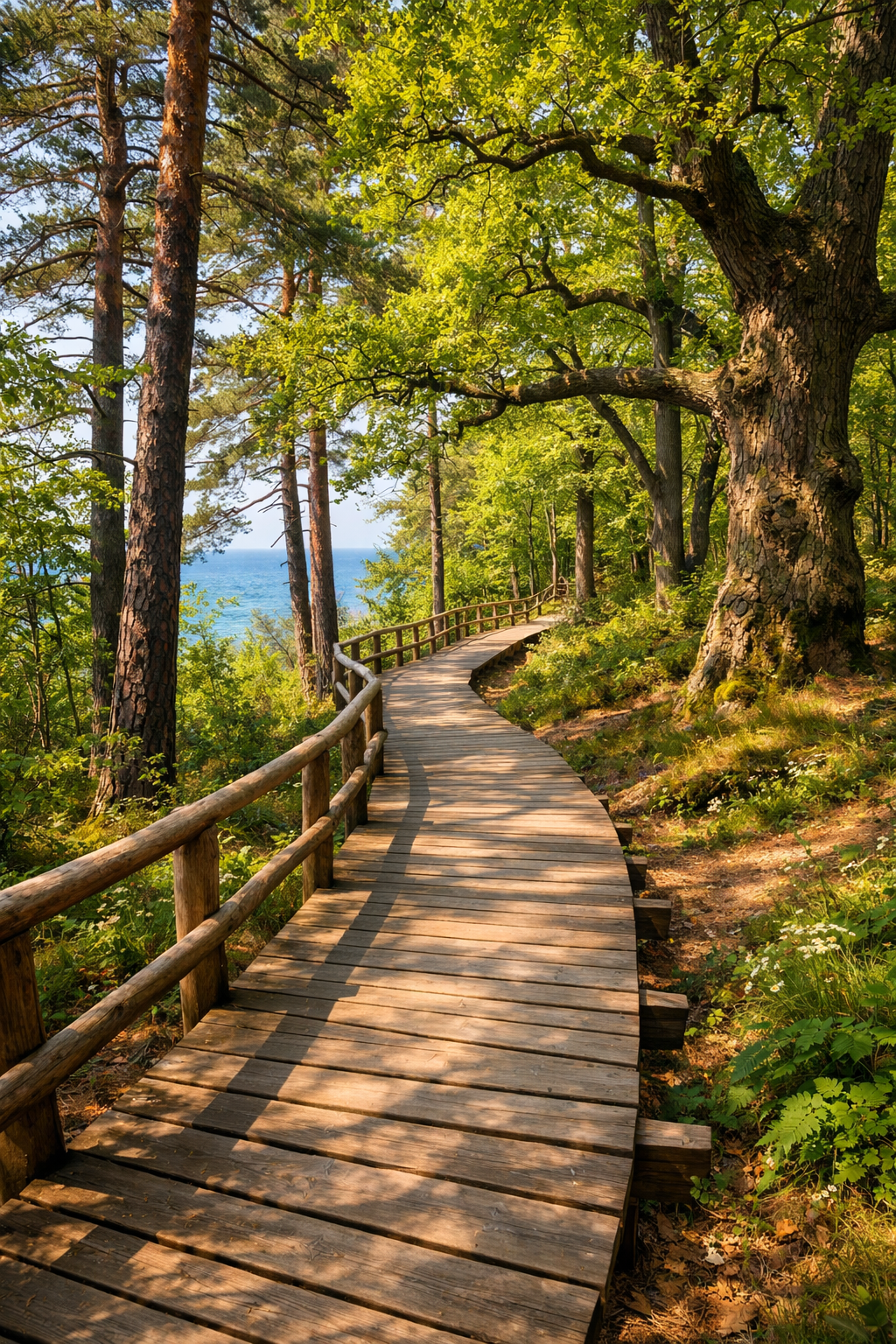
- Choose the right routes. Use the Litorina trail, which winds through the relict forest slightly away from the dangerous edge.
Respect the elements, breathe in the salty Baltic wind, and remember that we are only guests here.


















Comments