

 By
By 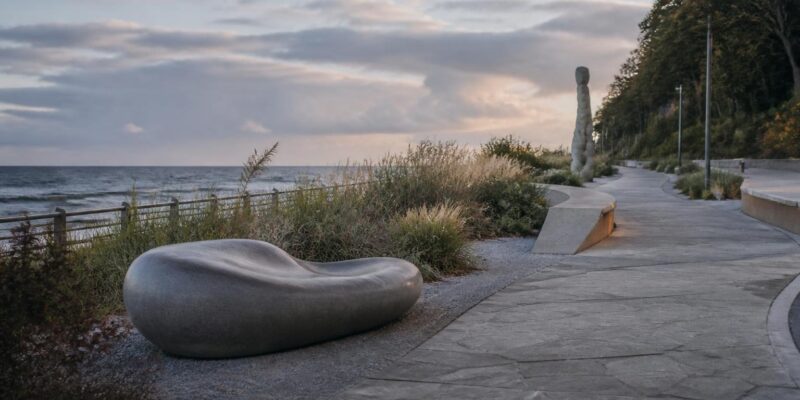
A seafront festival with the town as its gallery
Svetlogorsk will host the seventh edition of the contemporary-art festival Sea Within on August 8 and 9, 2026. The event is scheduled for the resort town’s coastal promenade, including the descent toward the town’s sundial and the nearby Marine Boulevard.
According to the Kaliningrad Region tourism information centre, the festival is designed as an open creative platform for artists, designers, choreographers, theatre practitioners, musicians and other participants working in public space. Rather than concentrating activity inside one museum or concert hall, the programme places art in contact with the town’s promenade, architecture and seaside landscape.
The timing makes the announcement particularly relevant for visitors already planning a late-summer trip to the Kaliningrad coast. The festival begins tomorrow, Saturday, August 8, and continues through Sunday, August 9. Entry is listed as free and the event carries a 0+ age rating in the regional tourism calendar.
From installations to family activities
The published programme description includes art flashmobs and installations, exhibitions of sculpture and illustration, photography displays, film screenings, music and poetry concerts, theatre performances, lectures and interactive activities for children and adults.
That range gives the festival a deliberately broad profile. Visitors may encounter visual art on the way to the seafront, then move between a performance, a discussion or a family workshop without leaving the public route. The format also allows people to participate at different levels: some may come for a particular presentation, while others can simply explore the promenade and discover works along the way.
The organisers describe the festival’s artistic approach as “atmospheric surrealism”, a concept built around placing contemporary art in a natural and urban environment. In practical terms, that means the landscape is not merely a backdrop. The coast, viewpoints, paths and built fabric of Svetlogorsk become part of how the works are experienced.
A recurring cultural project for the resort town
The 2026 edition is titled “My Favourite City”. The theme connects the festival with the eightieth anniversary year of the Kaliningrad Region while keeping the focus on everyday urban experience: how residents and visitors perceive a familiar place, and how public art can encourage them to look at it differently.
Local reporting by Klops, published in March, described the forthcoming event as a two-day open-air exhibition stretching along the central coastal area, from the descent near the sundial toward the Panorama lift viewing point. The report also presented the festival as a meeting place for artists and audiences, with the city itself serving as the setting rather than a conventional exhibition building.
For Svetlogorsk, a resort whose visitor appeal depends heavily on its seafront, wooded streets and historic atmosphere, this format links cultural programming with place-based tourism. It offers an experience that can be added to a walk, a beach visit or a short weekend stay without requiring a separate journey across the region.
Growing beyond a single weekend
The festival’s wider cultural footprint is also visible in the Kaliningrad Museum of Fine Arts. The museum has announced Echo. Sea Within, a retrospective exhibition presenting selected works from the project’s first five years. The exhibition is scheduled for October 10 to November 16, with accompanying lectures, film screenings, poetry meetings and curator-led tours.
The museum describes the festival as a project that has attracted artists from the Kaliningrad Region and other parts of Russia. Taken together, the outdoor festival and the later museum exhibition show how a temporary public-space event can generate a longer cultural programme, preserving works and ideas beyond the dates of the seaside gathering.
For visitors arriving this weekend, the most immediate attraction will be the combination of contemporary art and Baltic scenery. For the town, the event offers a constructive example of how public spaces can host cultural activity without losing their everyday function. The promenade remains a place to walk and meet the sea, while the festival adds another layer of interpretation to the landscape.
















Comments