

 By
By 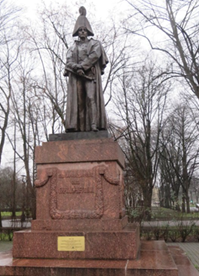
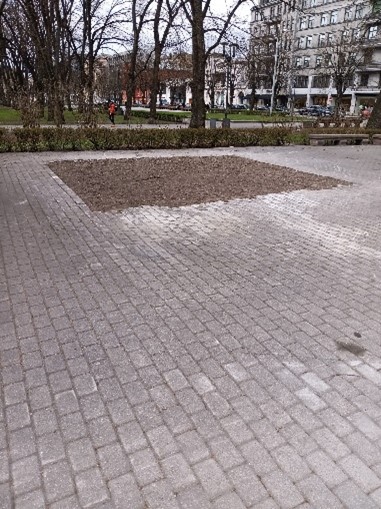
Even the historical pedestal, which had survived Soviet times, was taken down. The decision of the Riga City Council on October 16, 2022, made after heated debates, caused a storm of emotions.
The Mayor of Riga, Vilnis Ķirsis, stated:
“The Esplanade Square is now free contextosymbols of Russian imperialism.”
But is this really the case? And why did the figure of the commander, whose fate is closely linked to the history of Livonia, provoke such fierce disputes?
Who Are You, Field Marshal Barclay?
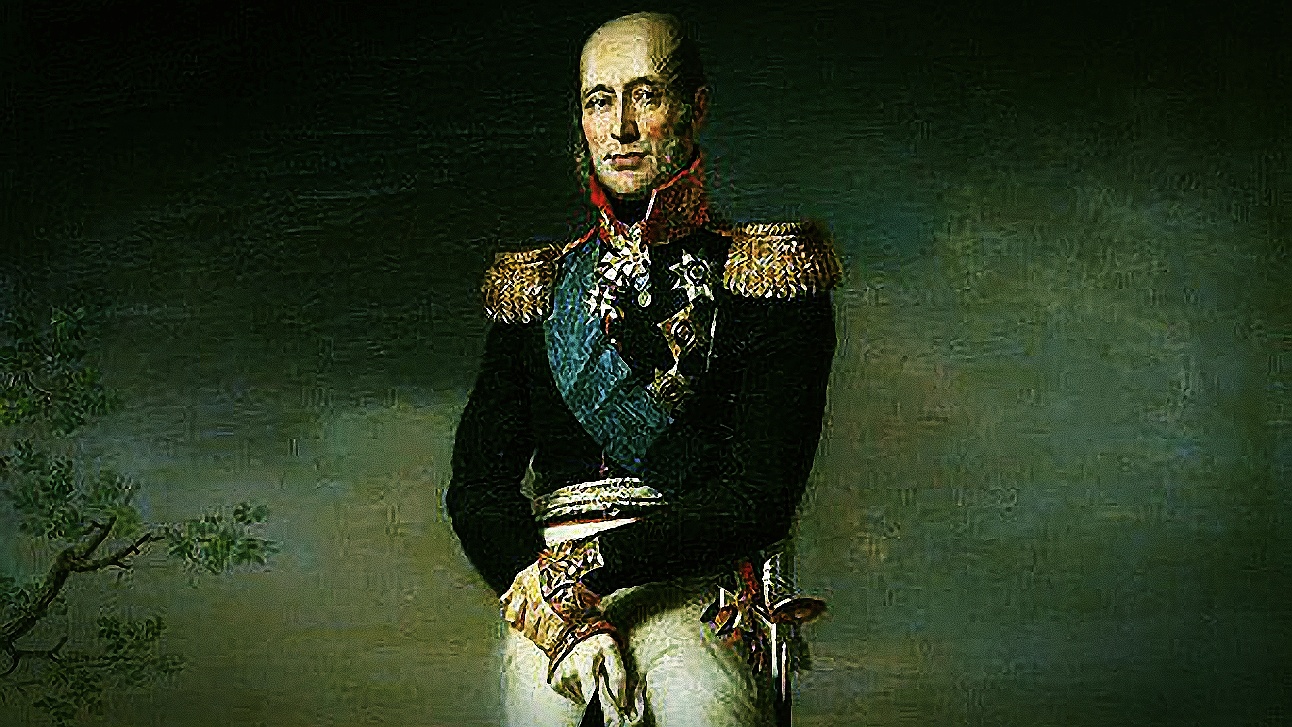
Before judging, it is worth remembering who Michael Barclay de Tolly (1761–1818) was. A descendant of a Scottish family that had settled in Livonia, he made a brilliant military career in the Russian Empire. He was a hero of the Patriotic War of 1812, a Field Marshal, Minister of War, and after the victory over Napoleon, a Prince. His “scorched earth” strategy and retreat at the beginning of the war with Napoleon drew fierce criticism but ultimately proved to be life-saving.
Interestingly, Barclay was by no means a stranger to the Baltics. His wife was from the Livonian nobility, and it was in Livonia that he spent the last years of his life. He died on his way to a spa in Bohemia, not far from Insterburg (now Chernyakhovsk), and is buried in a small mausoleum in Jõgeveste (Estonia), which is still popular with tourists today.
Moreover, Barclay de Tolly was revered not only in Russia. Monuments to him stand in St. Petersburg in front of the Kazan Cathedral, in Chernyakhovsk, Tartu, and his bust has held a place of honor in Walhalla – the hall of fame for “heroes of the German tongue” near Regensburg, Germany, since 1841. This alone makes one ponder the unambiguity of his interpretation.
The “Odyssey” of the Riga Monument
The history of the Riga Barclay monument is a real detective story.
- Birth and First Glory: The idea to erect a monument emerged in 1911, ahead of the 100th anniversary of the Patriotic War of 1812. A building committee was founded, donations were collected, and a competition was held. And so, on October 13, 1913, a 4.77-meter high bronze sculpture on a granite pedestal was solemnly unveiled on the Riga Esplanade.
- Evacuation and Sinking: The glory was short-lived. As early as 1915, facing the threat of German occupation, the monument was removed from its pedestal to be evacuated and, according to some sources, melted down in St. Petersburg. But the steamer “Serbino,” which was carrying the statue, was sunk by the German U-boat U 9 off the island of Worms (Estonia) on August 16, 1915. Thus, the original monument ended up at the bottom of the Baltic Sea. Only an author’s model of about 70 cm survived.
The Man Who Returned Monuments (and Controversies) to Riga
Decades later, Latvian entrepreneur and philanthropist Evgenijs Gombergs took on the task of restoring historical justice. It was on his initiative and with his funds that a copy of the Barclay de Tolly monument was cast from the surviving model. On July 1, 2002, it took its historical place on the pedestal that had been preserved since 1912. In 2008, the city of Riga accepted the monument as a gift and included it in the balance sheet of the Monument Agency.
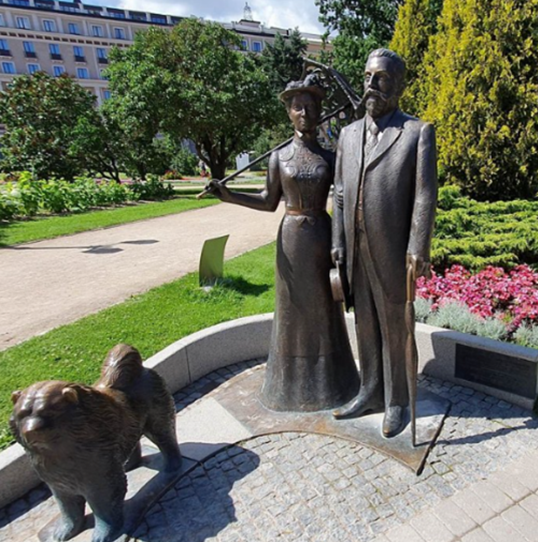
Gombergs is known for his passion for restoring historical monuments in Riga, which has not always met with unambiguous approval. Among his projects are the monument to Riga’s Mayor George Armitstead (Queen Elizabeth II even attended its unveiling in 2006), the sculpture of the hero of the Latvian epic Lāčplēsis on the Saeima building, and the monument to the Governor-General of the Baltic provinces, Filippo Paulucci.
The restoration of the equestrian statue of Peter I, on which Gombergs spent $200,000 and which was installed in Kronvalds Park in 2001 for only three days during Riga’s 800th-anniversary celebrations, caused particular controversy! “People are afraid it’s a symbol of power. But you can’t compare Peter the Great to Lenin,” Gombergs said. He himself explained his actions simply: “I only did it because I find the statue beautiful, and it belongs in Riga.”
The Context of “De-Imperialization” and Barclay’s Complex Identity
The decision to demolish the Barclay de Tolly monument in 2024 fits into a broader context. After the Russian invasion of Ukraine, on May 12, 2022, the Saeima of Latvia decided to demolish all objects glorifying totalitarian regimes by November 15 of the same year. This list included 69 objects. Thus, on August 25, 2022, the grandiose Soviet Victory Monument in Riga was blown up and demolished. The demolition of the Lenin monument in August 1991 was also perceived as a logical step.
But can Barclay be put in the same category as symbols of Soviet totalitarianism? The author of the original article doubts the objective justification for demolishing Barclay’s monument.
After all, the Field Marshal’s identity was far more complex than just a “Russian imperial figure.”
- “Local” to the Baltics: His ancestors were Scottish, his grandfather was the mayor of Riga, as was his cousin. His wife and mother-in-law (née Baroness Stackelberg) came from respected German-Baltic families. In essence, apart from the name, there was little Scottish about him.
- “German” at the Tsar’s Court: Significantly, at the Tsar’s court, many enviers branded Barclay a “German,” making him a scapegoat for supposed and real mistakes in the war against Napoleon. The Tsar’s younger brother, Grand Duke Constantine, shouted at the general in front of the troops: “You German, you sausage-maker, you traitor, you scoundrel; you are selling Russia! I refuse to serve under your command any longer.”
- Hero of “the German Tongue”: The aforementioned bust in Walhalla once again emphasizes that interpreting Barclay solely as a Russian war hero is too narrow.
Monuments, Streets, and the Politicization of Memory
The issue of monuments is highly politicized today and has long gone beyond a purely historical and cultural discussion. If the political climate hardens, will it not also affect street names? After all, Riga has Elizabetes Street (named in 1812 after the Russian Empress Elizabeth Alexeievna, wife of Alexander I, née Princess of Baden), Marijas Street (named in 1860 after Maria Alexandrovna, wife of Alexander II, née Princess of Hesse), and Katrinas Street (named in 1868 after Catherine II, née Sophia of Anhalt-Zerbst). Given their German origin, they might be “spared,” although Maria Alexandrovna held pronounced Pan-Slavist positions. And what will happen to the Pētersala district, named in 1711 after Peter I, who had his country house there?
Final Destination – Jūrmala?
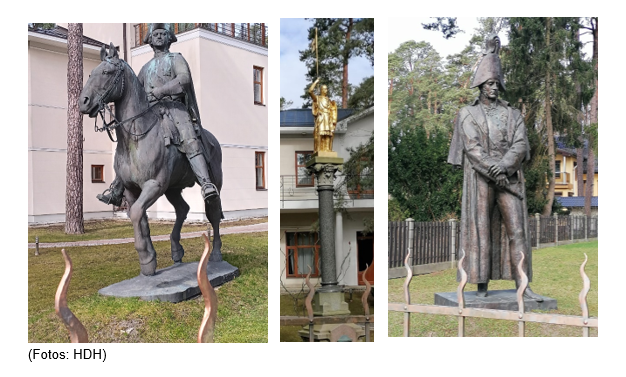
After the city terminated the donation agreement, the Barclay statue was installed on the property of the restorer and donor Evgenijs Gombergs in Jūrmala (Dzintari) – next to the equestrian statue of Peter the Great and the Column with the Golden Knight. The historical pedestal from the Esplanade, however, was moved to the Monument Agency’s warehouse.
Opinions were divided. Philosopher Vilnis Zariņš called the erection of the Barclay monument an “absurd insult to the Latvian people,” while Riga’s Vice-Mayor Sergejs Dolgopolovs spoke of “provincialism and stupidity” as “our most terrible legacy of imperialism.” The head of the Museum of Decorative Arts and Design, art historian Inese Baranovska, a member of the Riga City Council’s Monument Council, admitted that demands for the relocation or demolition of some monuments in Riga were often “marked by bias, negativity, and even anger.” Meanwhile, public opinion polls showed a slight majority in favor of preserving the monument.
Evgenijs Gombergs himself does not believe that the monuments to Peter or Barclay will return to their historical places in his lifetime but hopes that someday “reason will prevail.”





















Comments